Sepilok & Kinabatangan River, Malaysia – May & June 2017
Our time in Peninsular Malaysia had come to an end (for now)…Our next stop, the state of Sabah on the island of Borneo, Malaysia.
Our travel to Borneo was relatively easy. It consisted of two relatively short flights (45 minutes and 2-1/2 hours) with a 4 hour layover in between. Our first flight was from Terangganu to Kuala Lumpur (or KL as everyone refers to it). Our second flight took us from Peninsular Malaysia to Borneo landing in the capital, Kota Kinabalu, more commonly referred to as KK. We spent a few days in KK catching up on a number of everyday things (unfortunately things like laundry and updating phones and computers do not go away while traveling;) ). A good portion of our time was spent researching and planning for our next stops. We had hoped Borneo, Malaysia would have better travel information available and better internet infrastructure than Peninsular Malaysia, but no such luck. We brought with us our patience and determination and eventually found most of the information we needed to get us headed to our next destinations.
Prior to arriving in Borneo, we had originally planned on first traveling to Kinabalu National Park then traveling east toward the jungle. However, due to the park’s popularity most accommodations were fully booked. We altered our itinerary and opted to hop on a 30 minute flight to the East side of Borneo and head to the jungle first.
In the last week of May, we finally made it out of the city and to our first destination in the jungle in Sepilok. Most of Sepilok’s accommodations and featured attractions are smack dab in the middle of the rainforest. Typical weather was hot and sunny in the mornings followed with a mid-afternoon or evening downpour. We spent several wonderful days in Sepilok visiting the Orang Utan Rehabilitation Centre, the Borneon Sun Bear Conservation Centre, the Rainforest Discovery Centre, and the Proboscis Monkey Sanctuary. We saw many wild animals, birds, and other creepy crawlies in the jungle.
Following Sepilok, we ventured 1-1/2 hours further into the rainforest to the Kinabatangan River for a 3 day 2 night adventure sleeping in an eco-camp in the middle of the jungle. The eco-camp itself was very simple with no electricity. It had a common area and deck for meals and hanging out. The sleeping arrangements were in several raised A-Frame structures with small mattresses on the floor covered by hanging mosquito nets. We had a personal guide, Azman, who took us on a night jungle walk, morning and evening river cruises to spot wildlife, and a daytime jungle trek. Despite the fact, the middle of the jungle was very hot and humid with many mosquitos which can bite through several layers of clothing, the entire river trip was well worth these small inconveniences.
Overall, our time in the jungle in Sepilok and the Kinabatangan River were beyond fantastic and words cannot begin to describe the experience. We saw some unbelievable wildlife you only dream about seeing in person and up close. We were able to capture some amazing photos and video footage of some very cool animals doing their “thing” in the wild. In an effort to share the majority of these images our photo galleries, videos, and post for this location are considerably longer than usual. Hope you enjoy!
See video and photos below highlighting our days in Sepilok & the Kinabatangan River, Malaysia. To see all images of this location click the link at the bottom of this post or go to our gallery.
Our Stops in the Jungles of Borneo, Malaysia…
Sepilok Orang Utan Rehabilitation Centre
The Sepilok Orang Utan Rehabilitation Centre is located within the Kabili-Sepilok Forest Reserve (10,610 acres), a virgin jungle reserve rich in tropical rainforest and mangrove swamps. The centre opened in 1964 with an aim to train and return orphaned, injured or displaced orang utans back into the wild. Eventually, most animals achieve total independence and become integrated into the Sepilok wild orang utan population. Wild orang utans live in the nearby jungle, and, if you’re lucky, might be spotted in the trees while walking along trails. There are also several wild orang utans who still return for supplemental food provided by the Sanctuary at several feeding platforms throughout the jungle. Only one feeding platform is accessible to visitors, twice daily for limited times. There is NO guarantee orang utans will come for food during the feeding times.
Video – Sepilok, Malaysia (Orang Utan Rehab Centre)
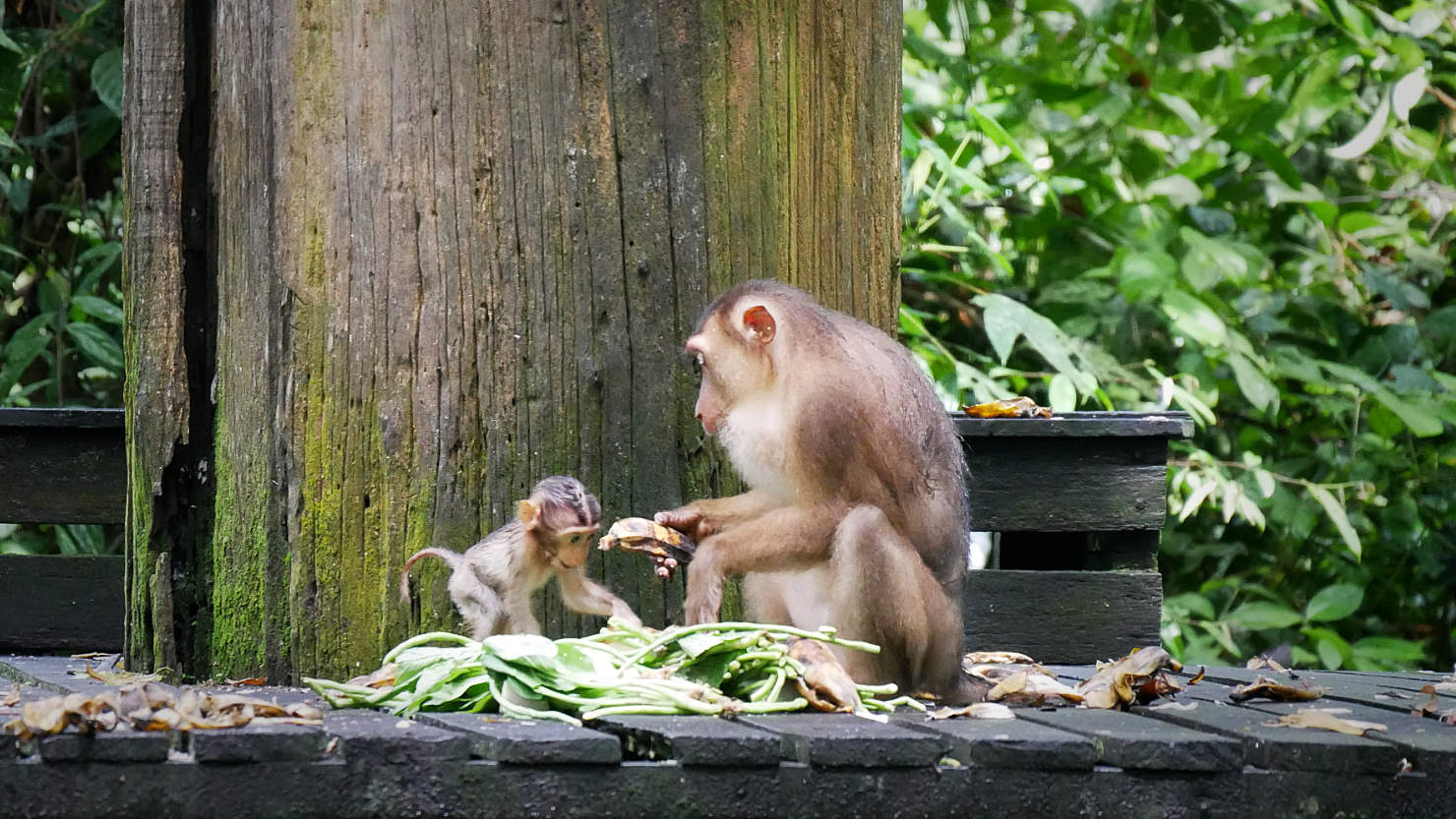
Mom and baby Pig Tailed Macaque stealing food from the supplemental feeding area in the morning prior to any orang utan showing up. They say if the macaques show up first, the orang utans will not…this seemed to be true. No orang utans showed during the morning feeding time.

In the morning, a large Pig Tailed Macaque walking like a human after stealing food from the feeding platform. The macaques were the only ones who showed up during the morning feeding time, but they were still quite entertaining to watch and worth a few photos.
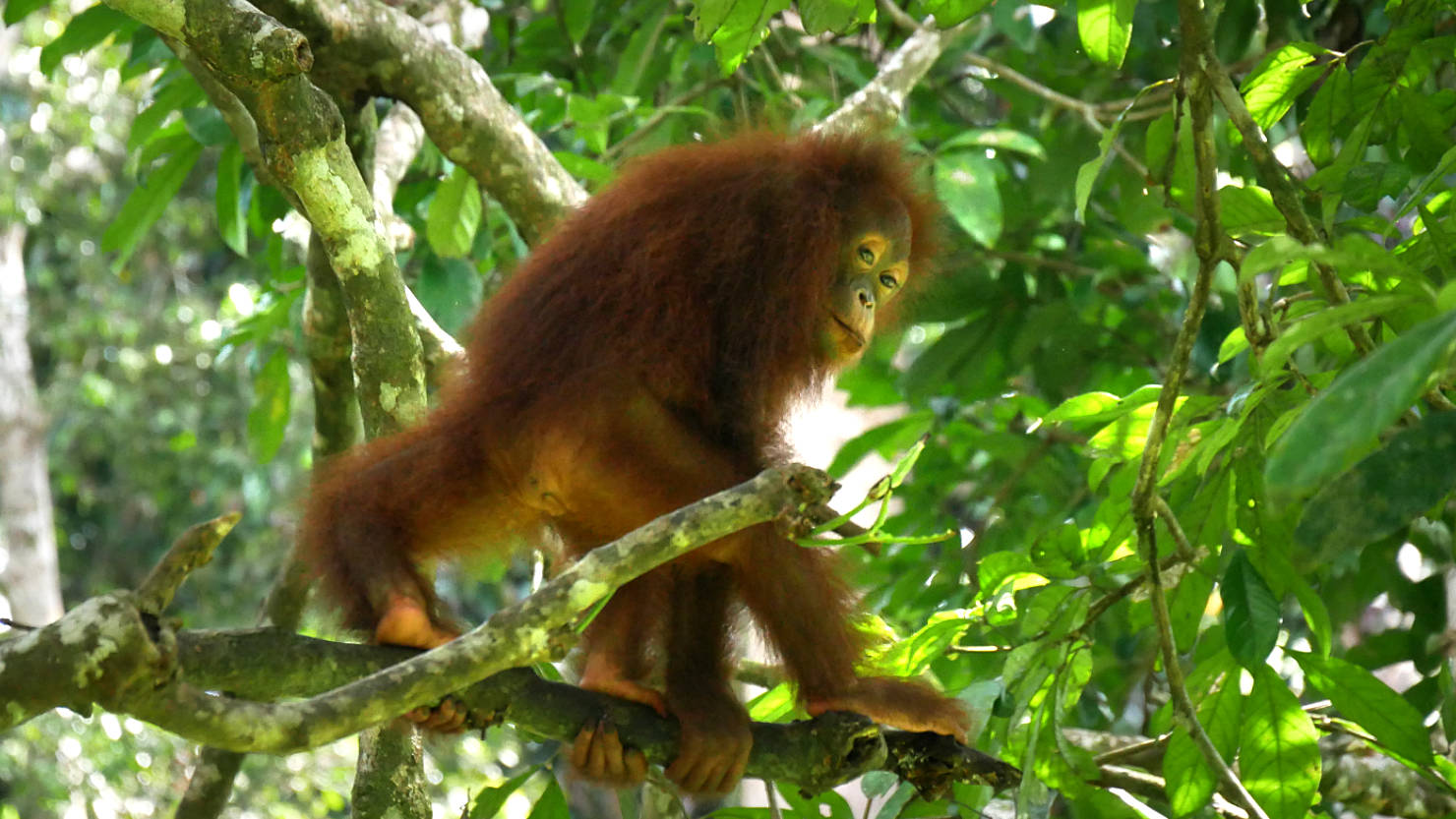
During the afternoon feeding time, this little guy was the first to show up early. He played in the trees and swung around the platform showing off for over 30 minutes before they put any food out for them. He was having a ton of fun.
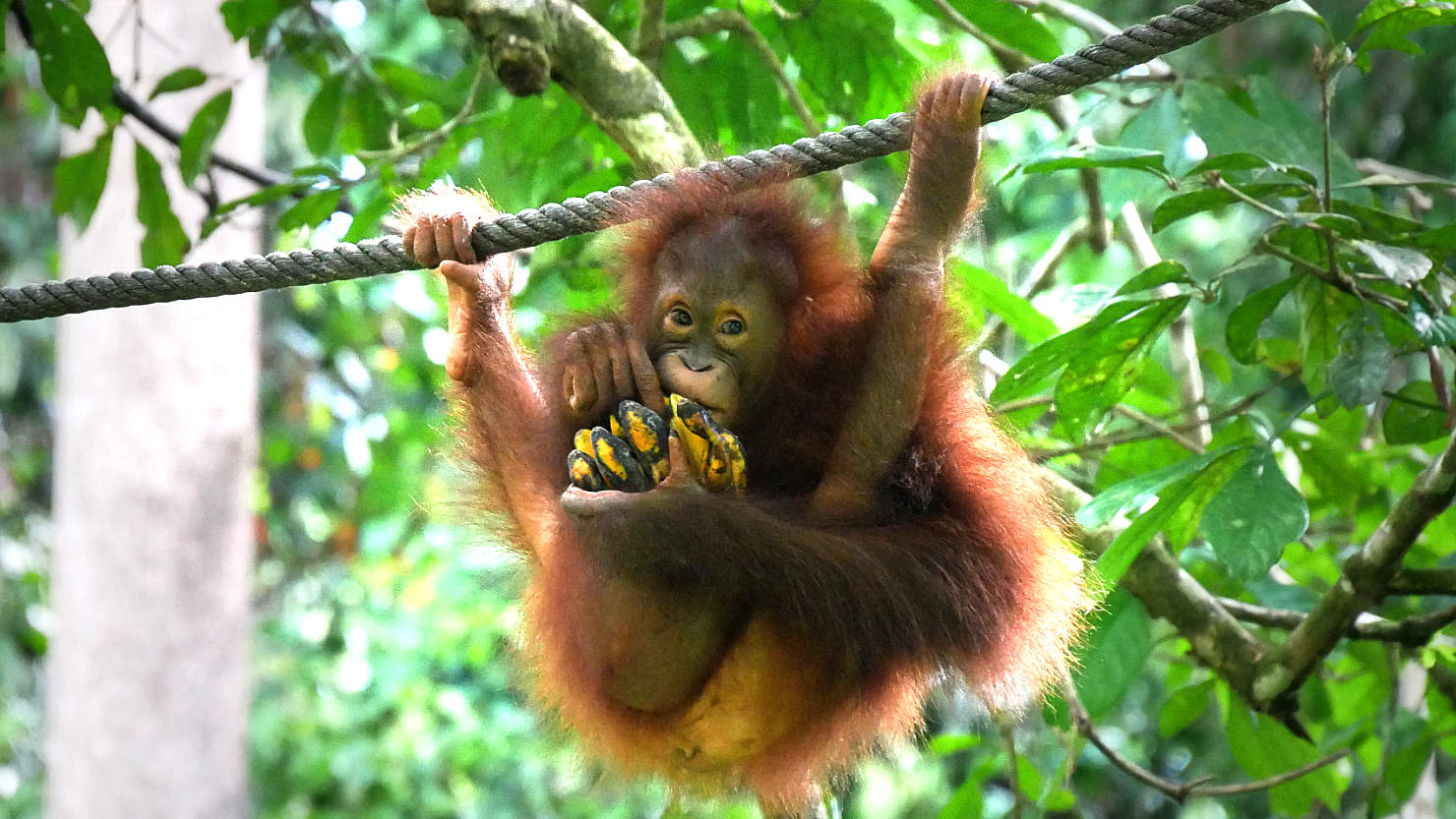
Once the food was place on the platform, this juvenile swung down and took several bunches of bananas. He climbed up away from the platform to eat them. He’d peel them without any problem and push the entire banana into his mouth all at once. Very fun to watch.
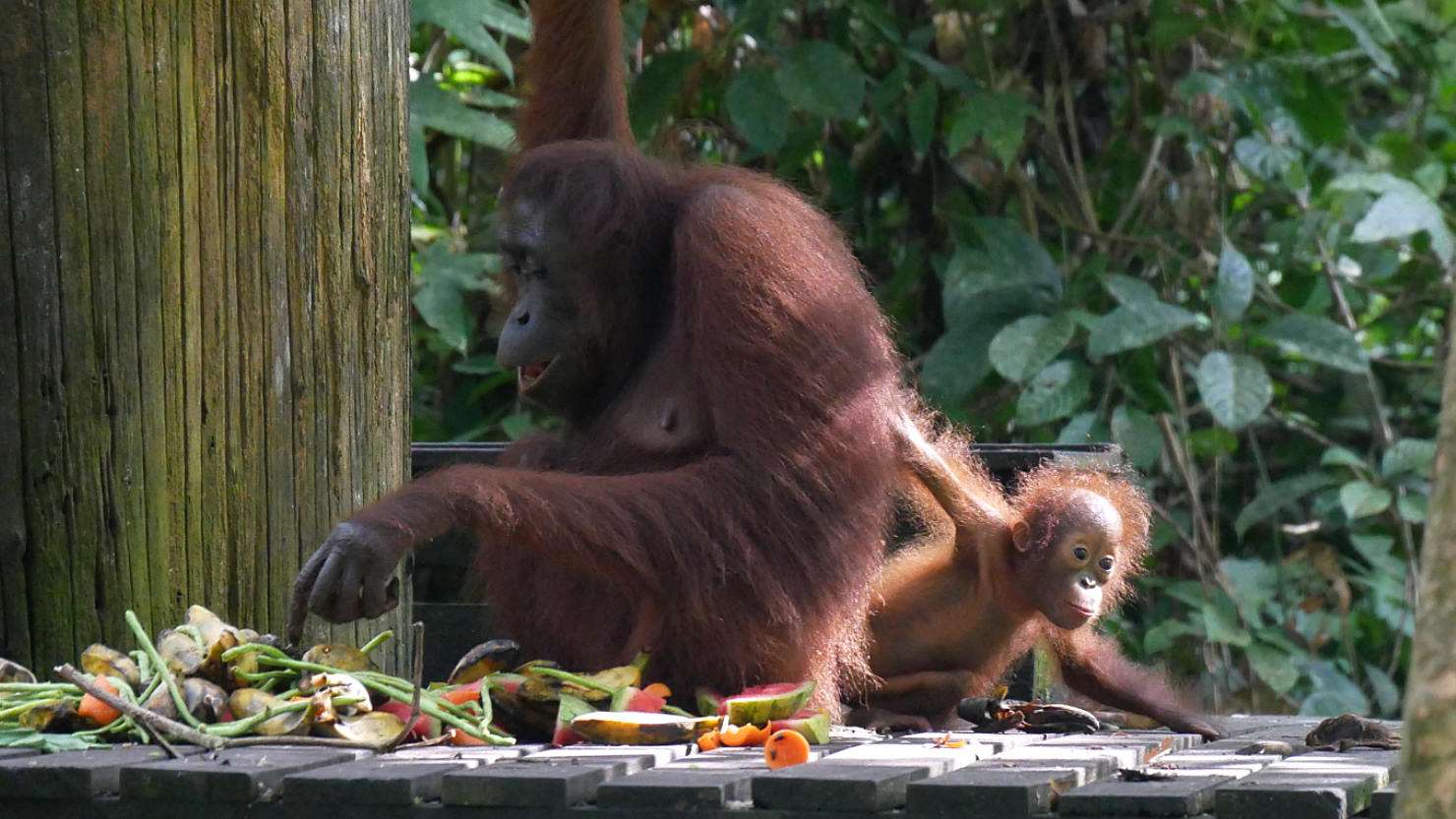
Mom and baby orang utan who showed up during the afternoon feeding time. They were so cute to watch, the baby was very inquisitive and interested in everything mom was eating.

Dad joined the Mom and baby on the platform. They sat together like a family and ate the supplemental food provided for them. At one point, there were 3 moms all with babies on the platform eating. It’s pretty incredible to see up close out in the wild.
We spent an entire day at the Orang Utan Rehabilitation Center walking around the grounds and also hanging out at the feeding areas during the two allotted times for the day. We were very quiet and patient while walking through the rainforest and saw several orang utans doing their thing in the wild. We got video of a young male building himself a nest high up in a tree. What a treat to see them up close and in their natural environment. There are no real words to describe the experience.
Rainforest Discovery Centre (RDC)
The Sepilok Rainforest Discovery Centre (RDC) opened to the public in 2007 and is considered one of Sabah’s most popular environmental education centres. It’s located within the famous Kabili-Sepilok Forest Reserve, home of the orang utans at the Sepilok Orang Utan Rehabilitation Centre. We spent a day walking the canopy walkway, climbing the tall lookout towers, and hiking several rainforest hiking trails. We also spent 2 hours one evening on a guided night jungle walk.
Video – Sepilok, Malaysia (Rainforest Discovery Center)
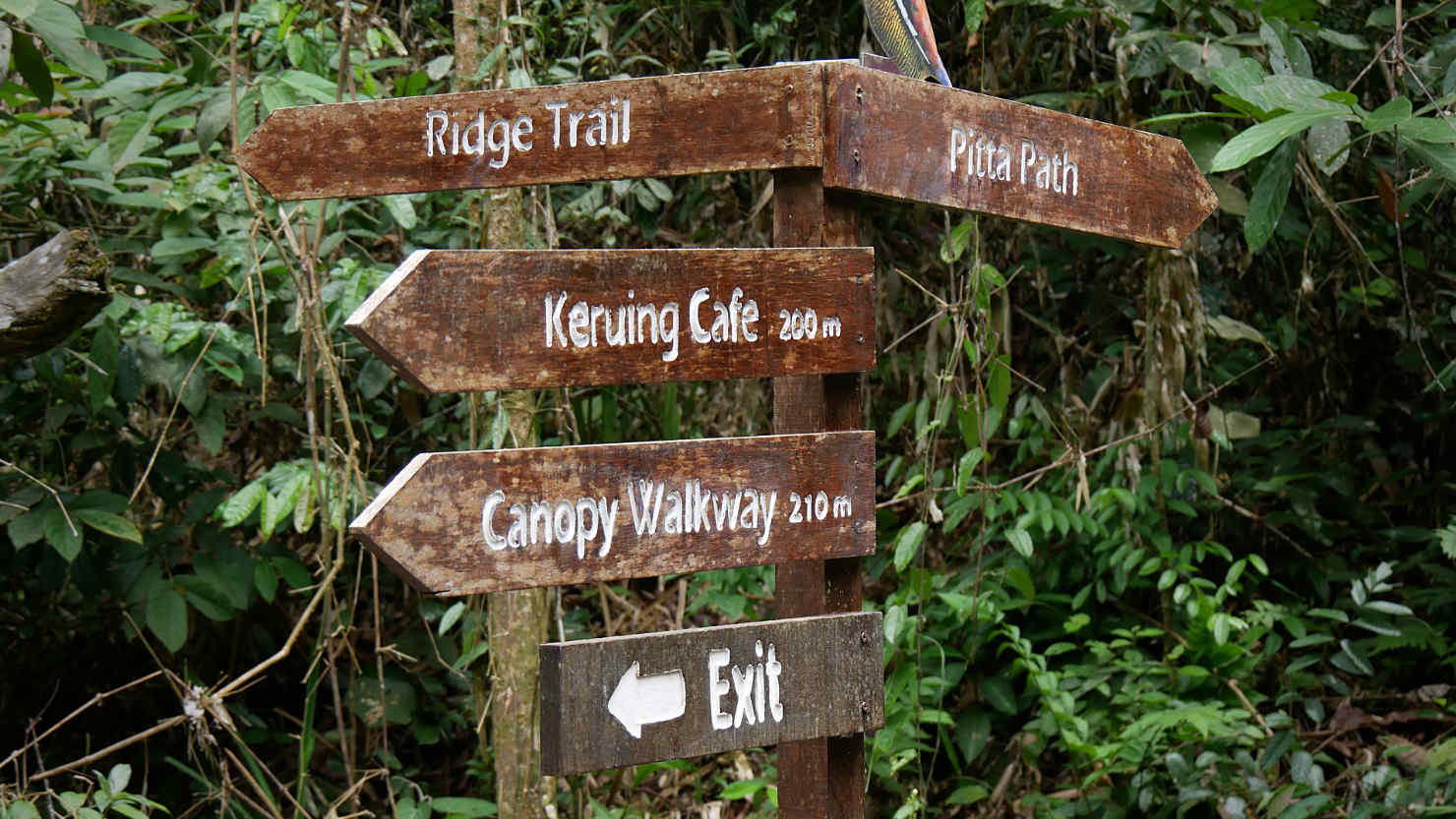
Trail markers at the Rainforest Discovery Center (RDC). On our first night in Sepilok, we signed up for a guided 2 hour night jungle walk at the RDC. We walked the canopy walk first followed by several other jungle trails in the dark looking for nocturnal wildlife.

Alisa on one section of the RDC canopy walk and also our first stop on our night jungle walk to look for flying squirrels.
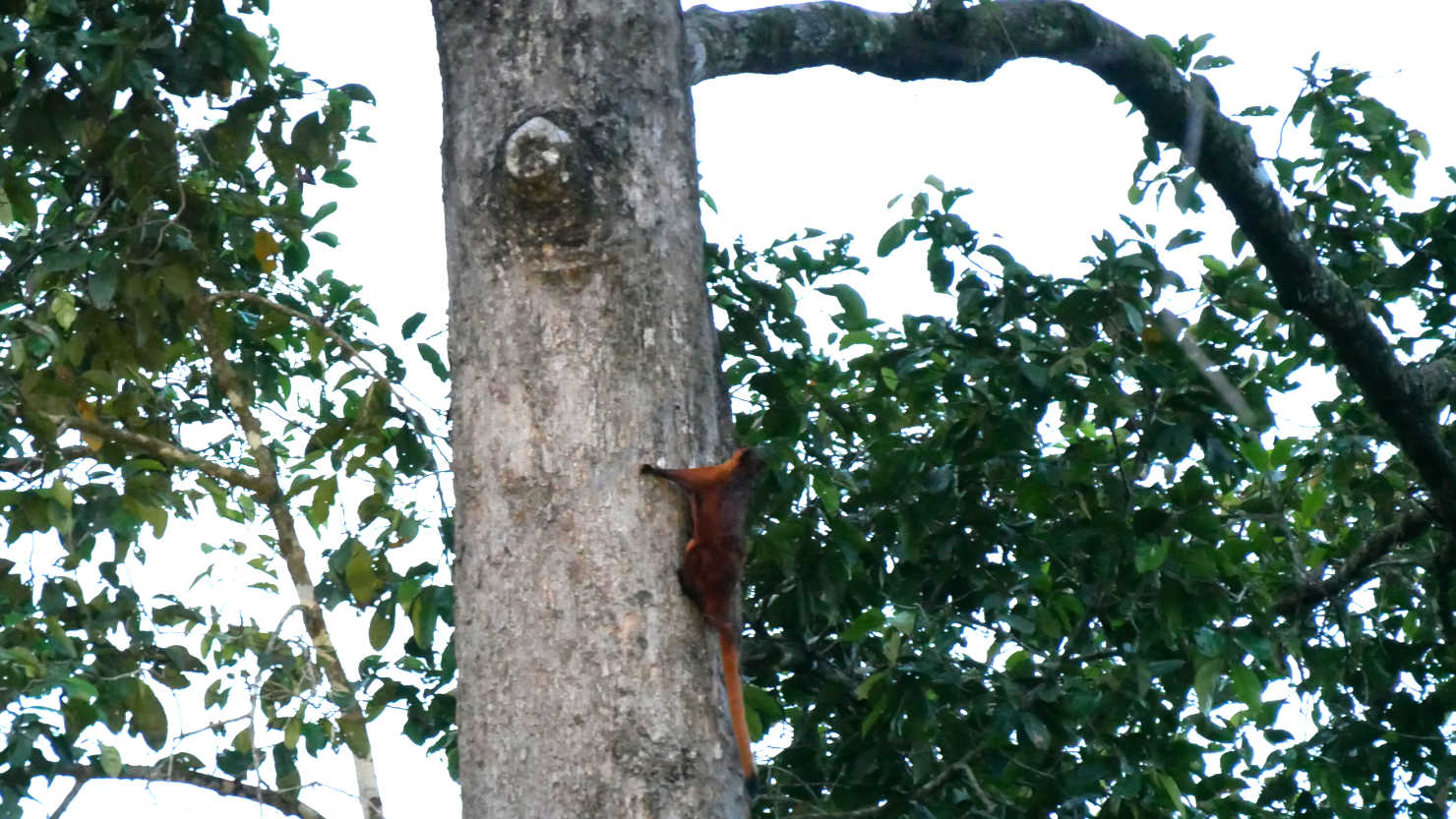
A flying squirrel climbing up a tree getting ready to fly (as seen from the canopy walkway). The flying squirrels come out of their holes between 5:30pm and 6:30pm nightly and will only fly during the twilight hour. Once it’s completely dark, they’re done flying. The squirrels were fast and hard to see, they climb up and then fly from one tree to another.
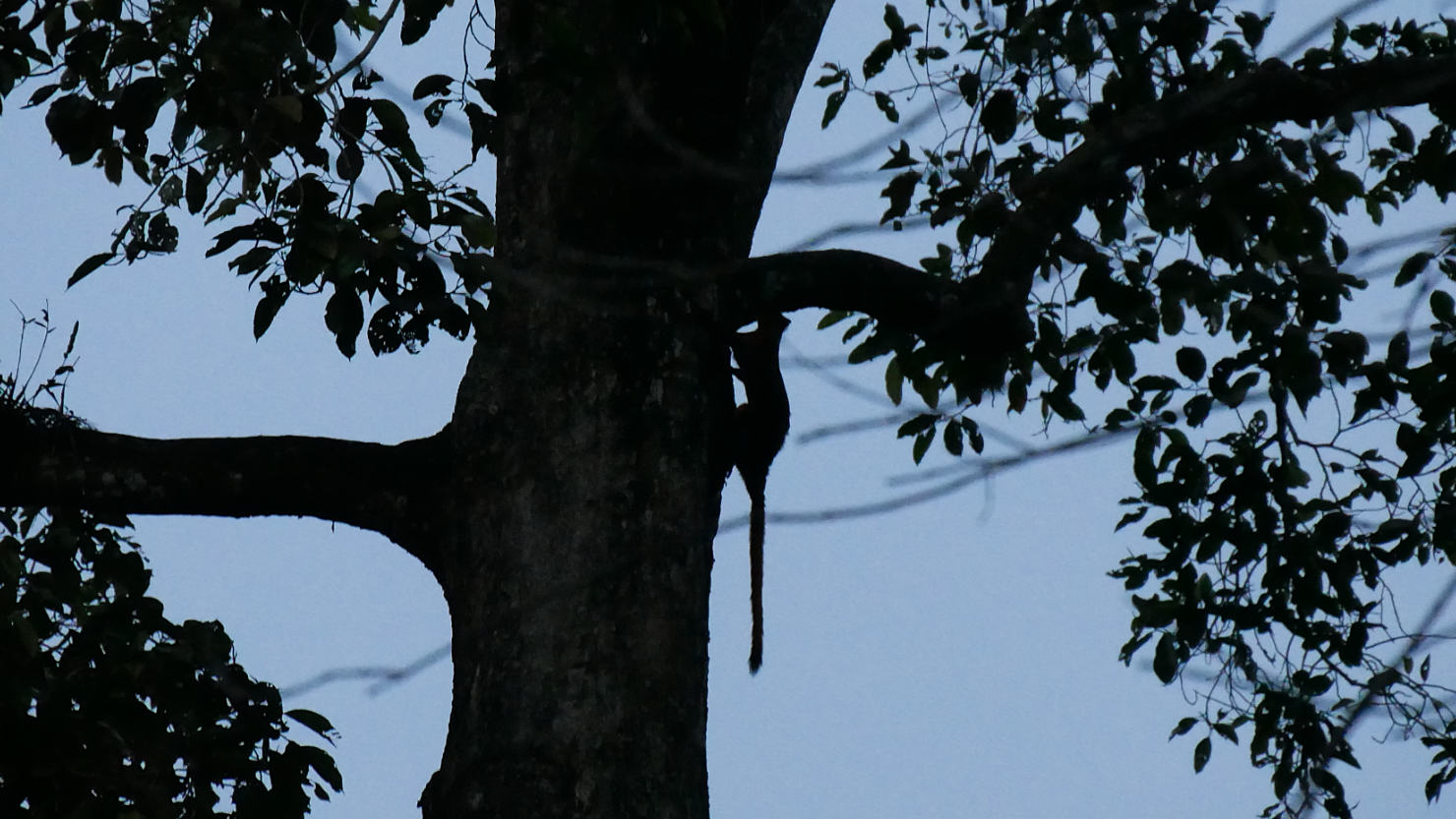
Another flying squirrel climbing up to a high point on the tree prior to flying to another. Very cool to see, but difficult to capture on photo or video. This was the best we could do.
During our guided 2 hour night jungle walk, we saw several nocturnal animals: birds (two kingfishers, a racket-tailed drongo, a nesting bird, an oriental bay owl, and a hawk eagle), a tarantula, flying squirrels, a large caterpillar, giant ants, masked large spider, and a mouse deer. Walking the jungle at night with a head lamp was an interesting experience and was worth doing to see some of the animals that comes to life after dark.
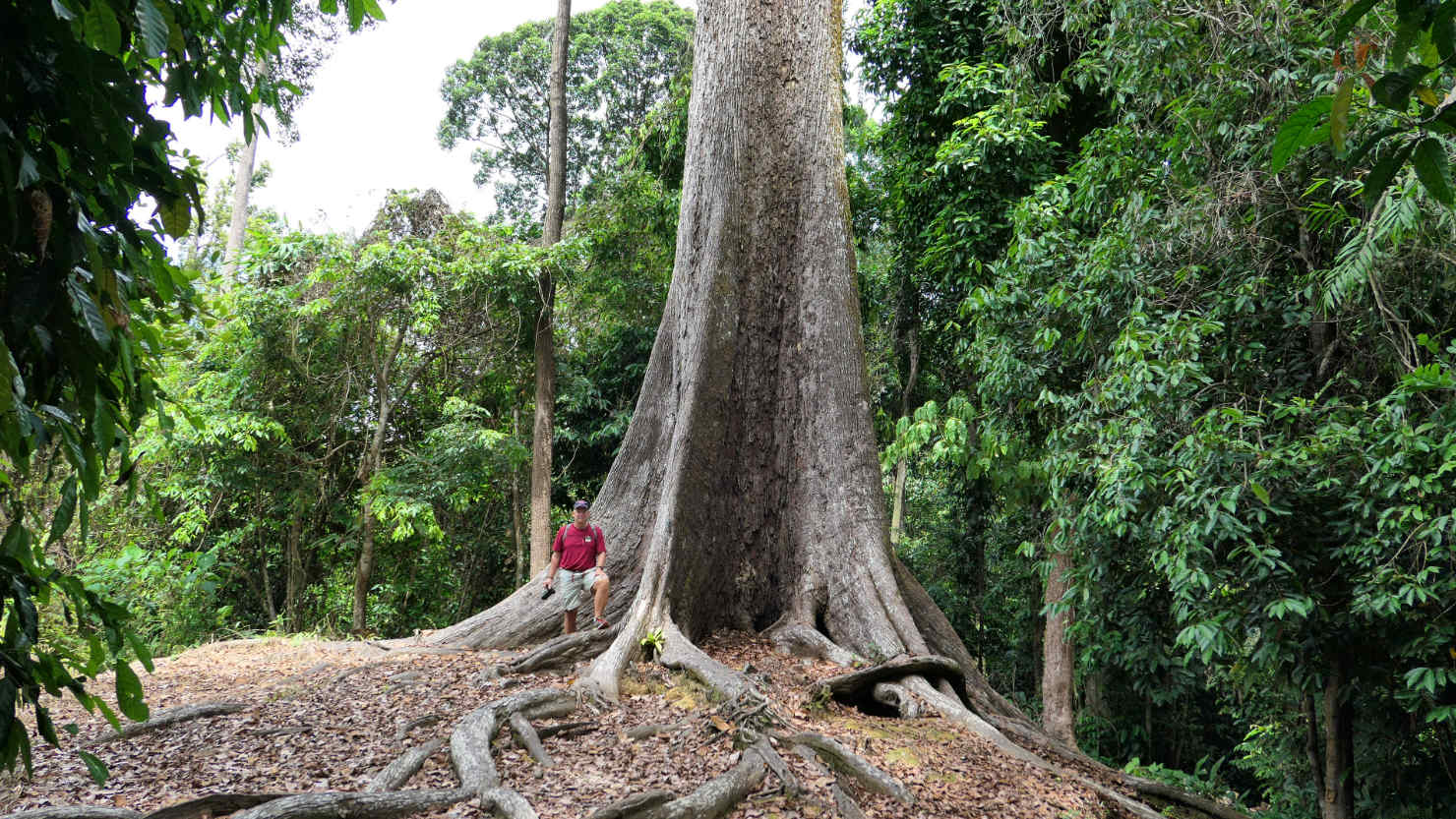
Rick standing next to the “Sepilok Giant” tree. We spent an entire day at the RDC hiking around and came upon this tree which was located half way out on one of the RDC jungle trails. The size was enormous.
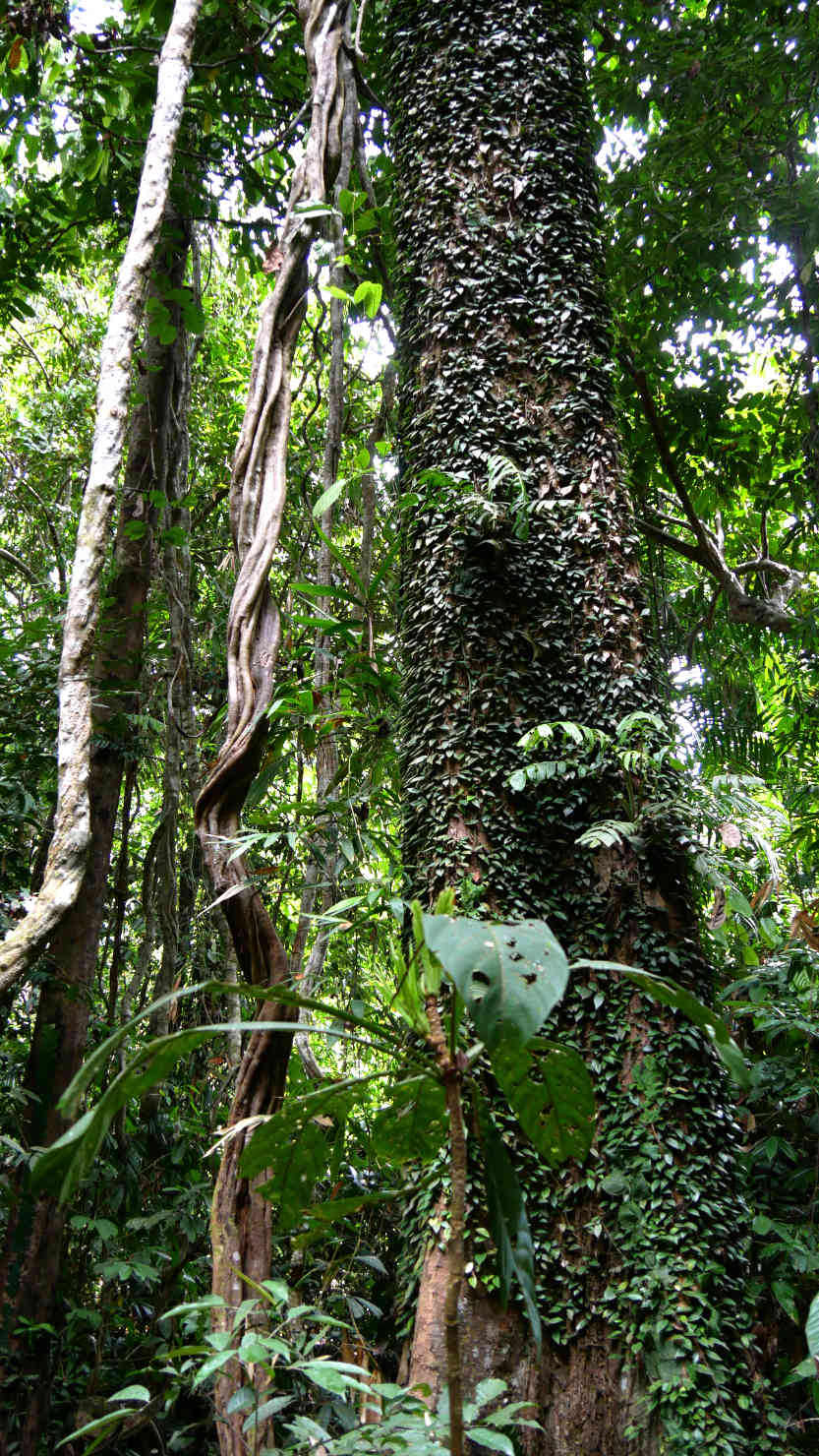
Dense and lush jungle along the RDC trails.
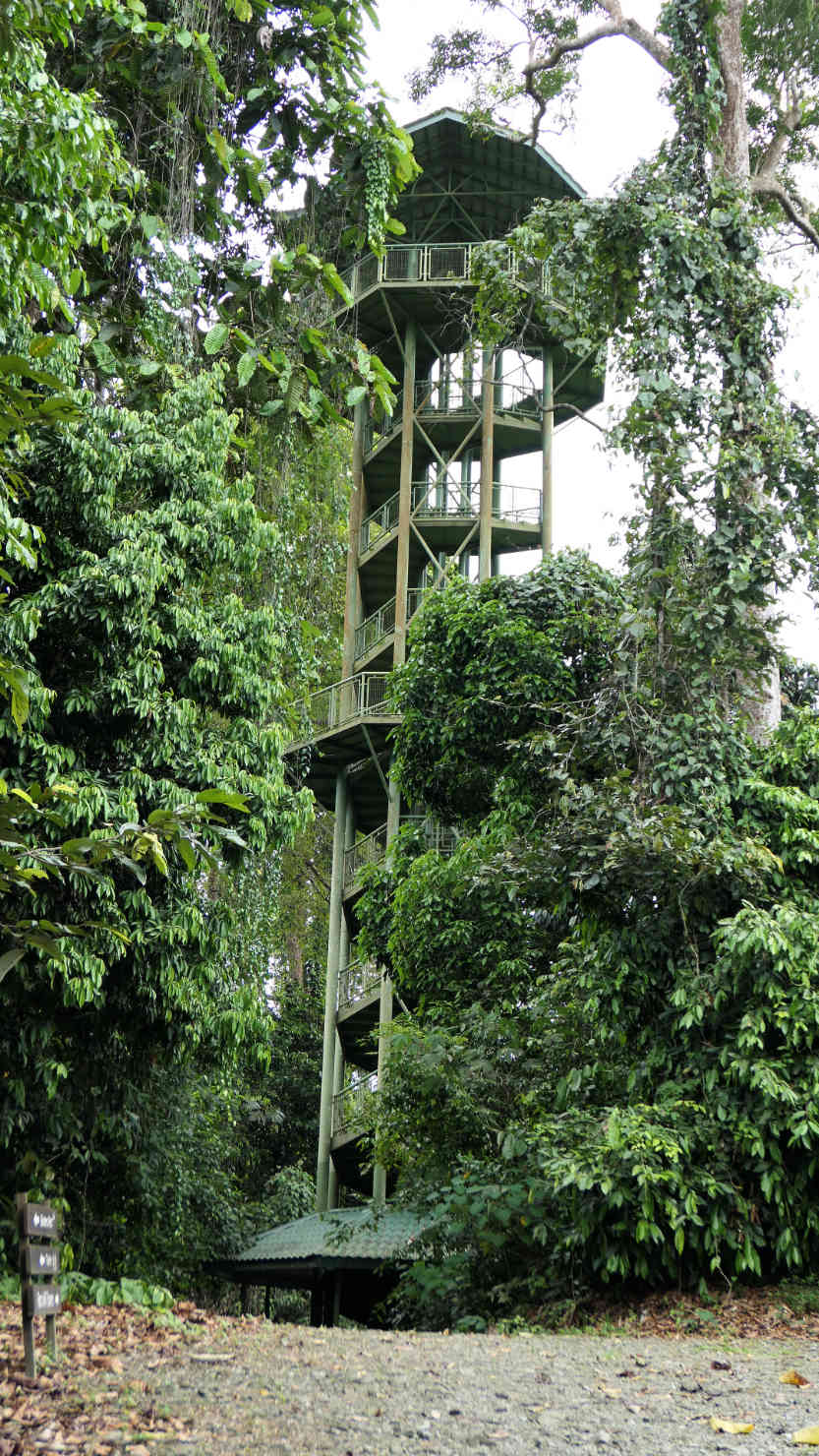
One of the viewing towers (roughly 8 stories high). We climbed up to check things out.
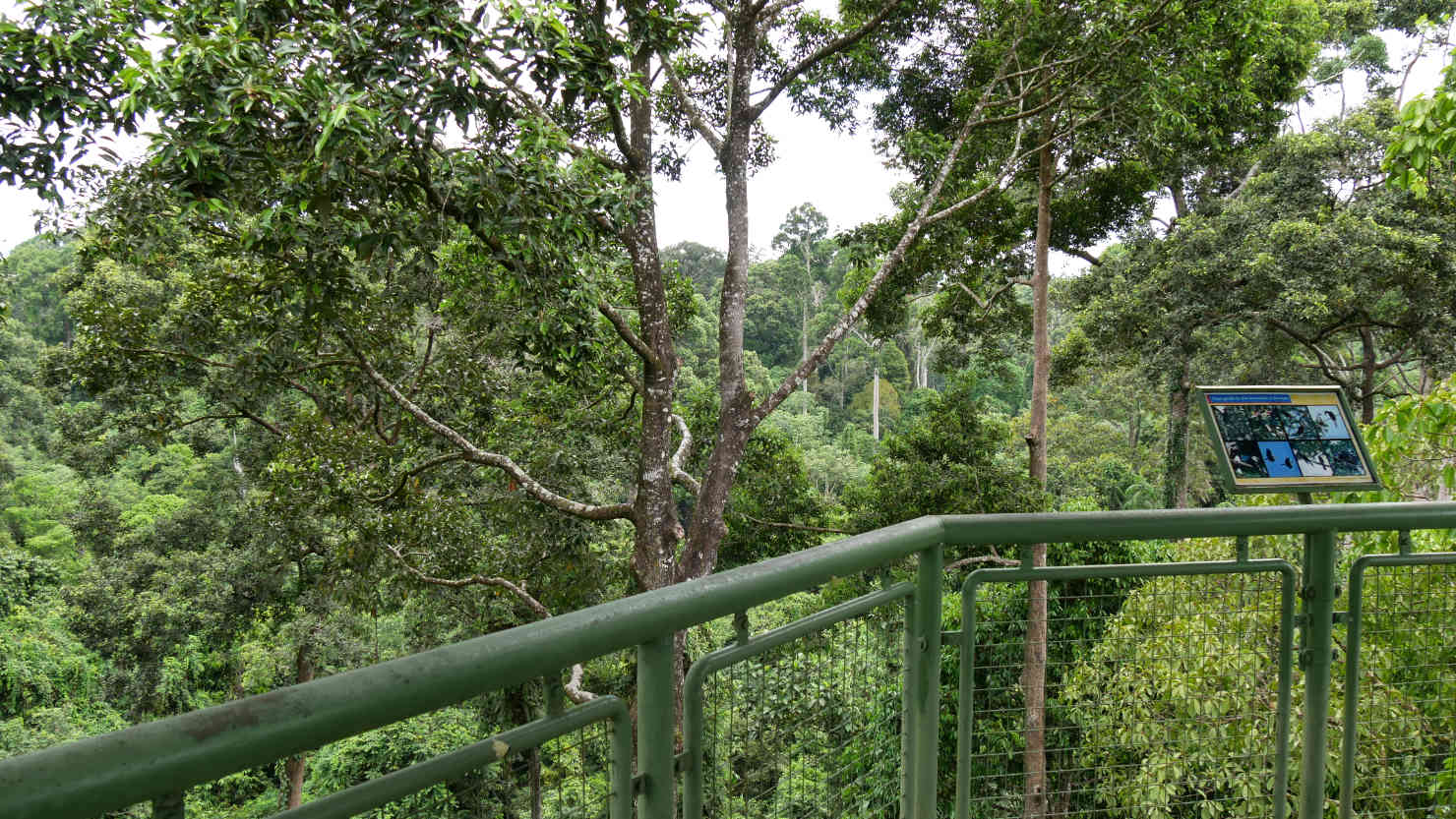
View from the top of the 8 story high viewing tower. Note how tall the trees are and how dense the jungle is below.
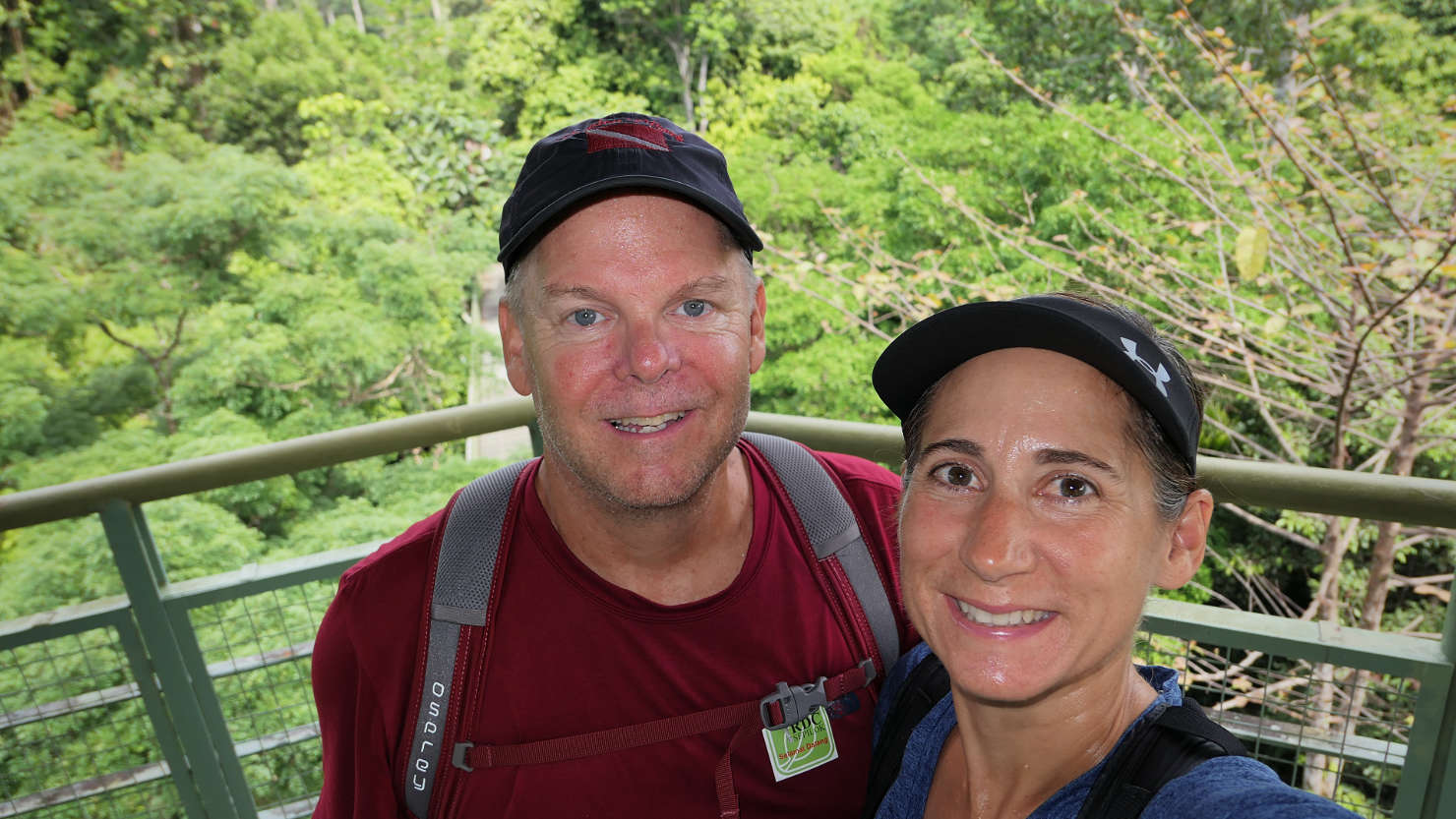
Rick and Alisa at the top of the viewing tower.
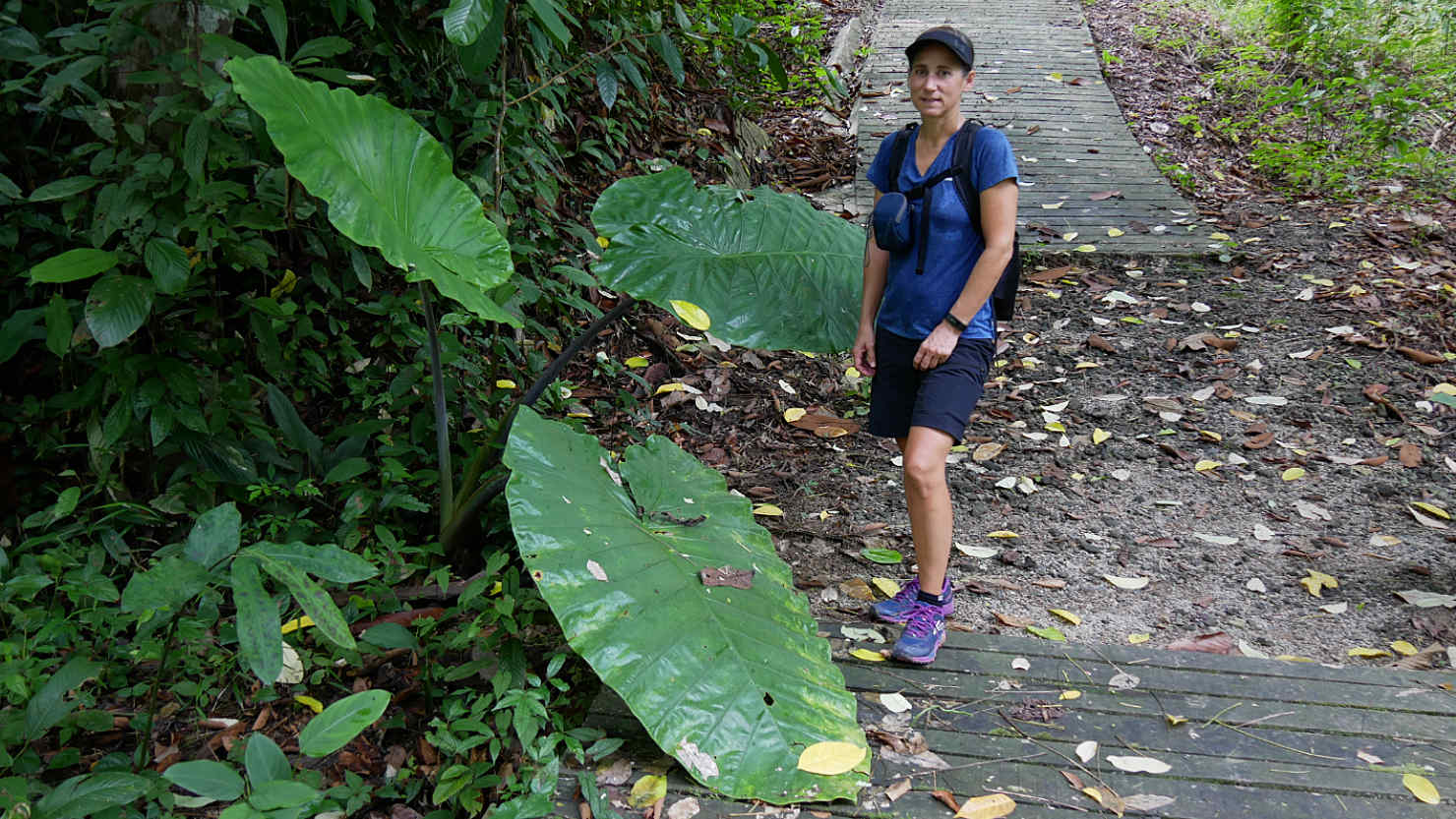
Alisa next to some giant jungle leaves. So many things in the rainforest are super-sized…it’s crazy to see.
Kinabatangan River Excursion (3 day, 2 night)
The Kinabatangan River is a river in Sabah, Malaysia. It is the second longest river in Malaysia, with a length of 560 km. The upper reaches of the river have been severely disrupted by excessive logging and clearing of land for plantations. However, the original lowland forests and mangrove swamps near the coast have largely survived and contain some of Borneo’s highest concentrations of wildlife.
Video – Kinabatangan River, Malaysia
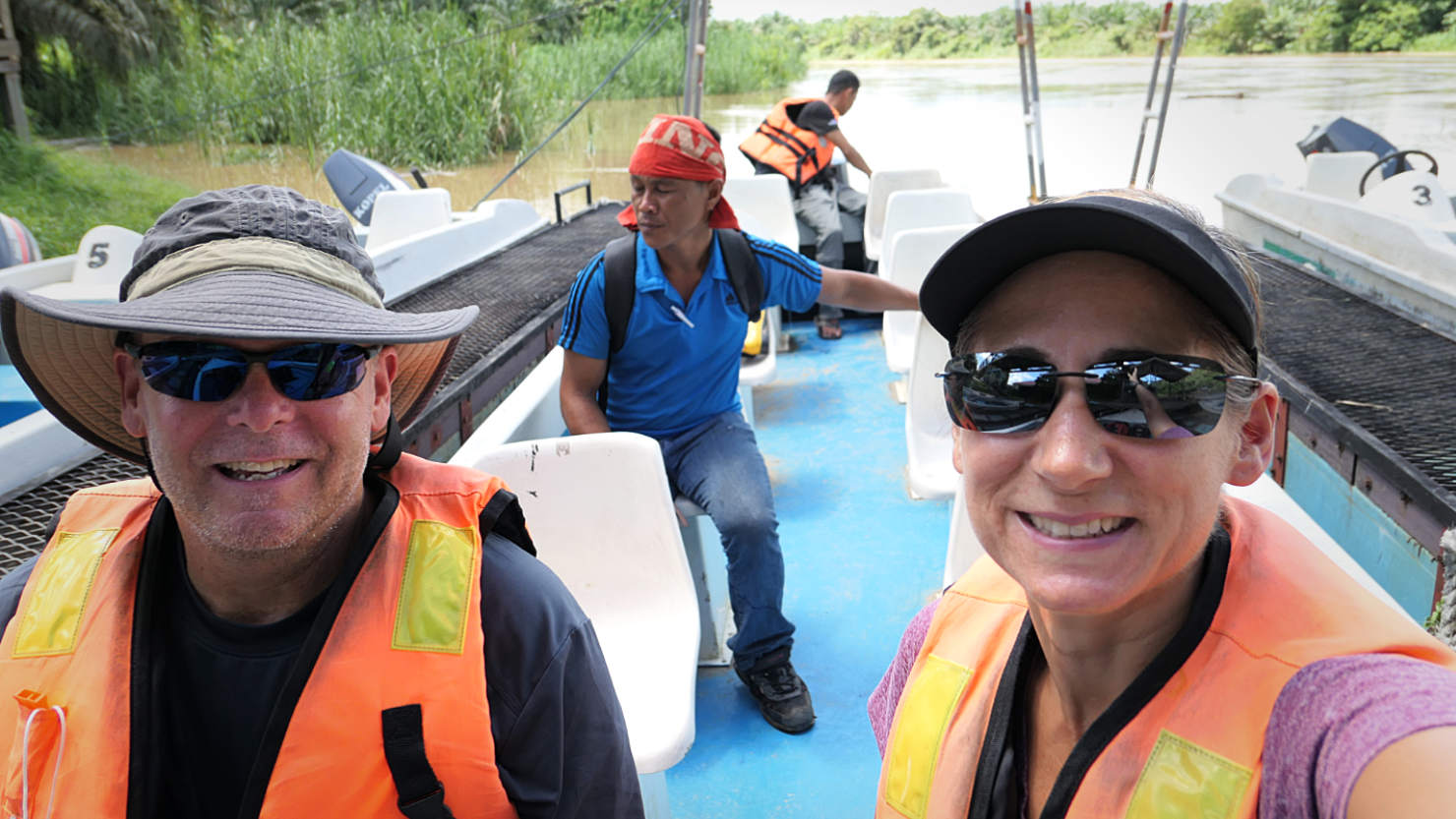
Heading out to our Eco-camp in the jungle for 3 days. Our guide, Azman, is at the motor in the back.

Our home for 3 days is through this dense jungle 300 meters up a trail.
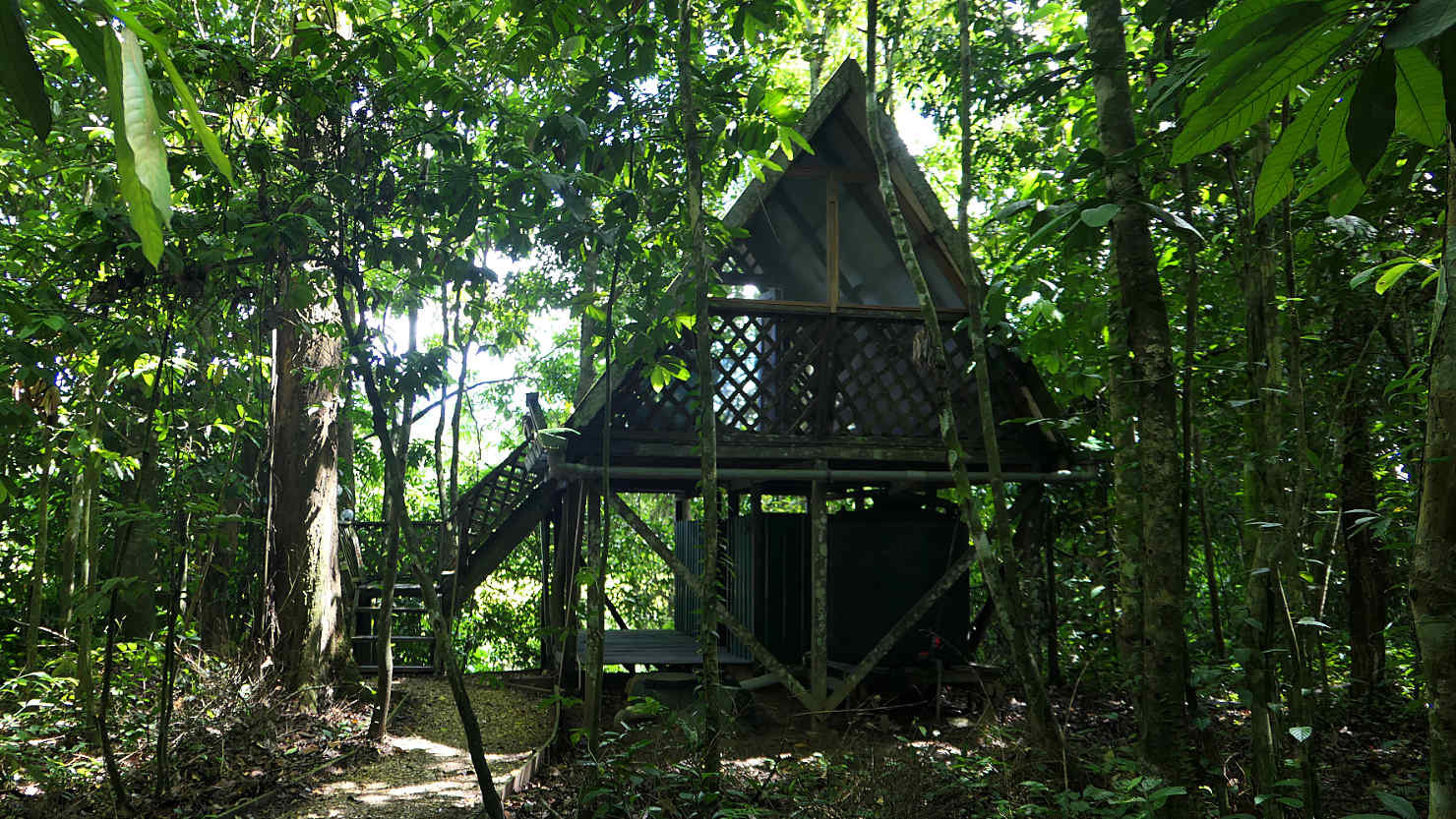
Our simple raised A-framed hut for 2 nights. The inside wasn’t much, but is actually more then we expected for staying in the middle of the jungle. It kept the wild animals from coming in, gave us cover during the torrential downpours, and sort of kept the mosquitos and other creepy crawlies out…well, kind of 😉
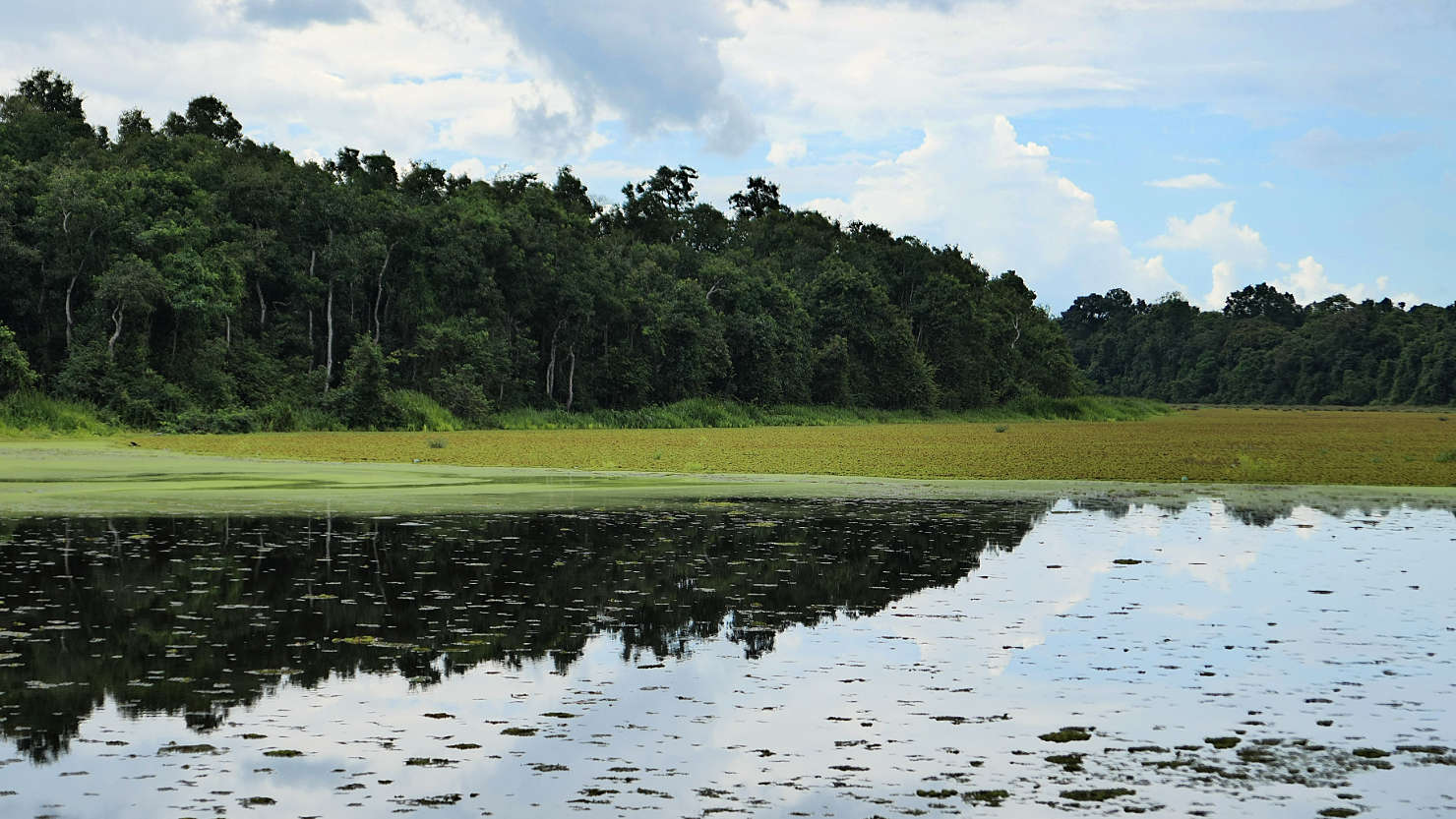
Small lake at the Eco-camp and the view from the common dining area.
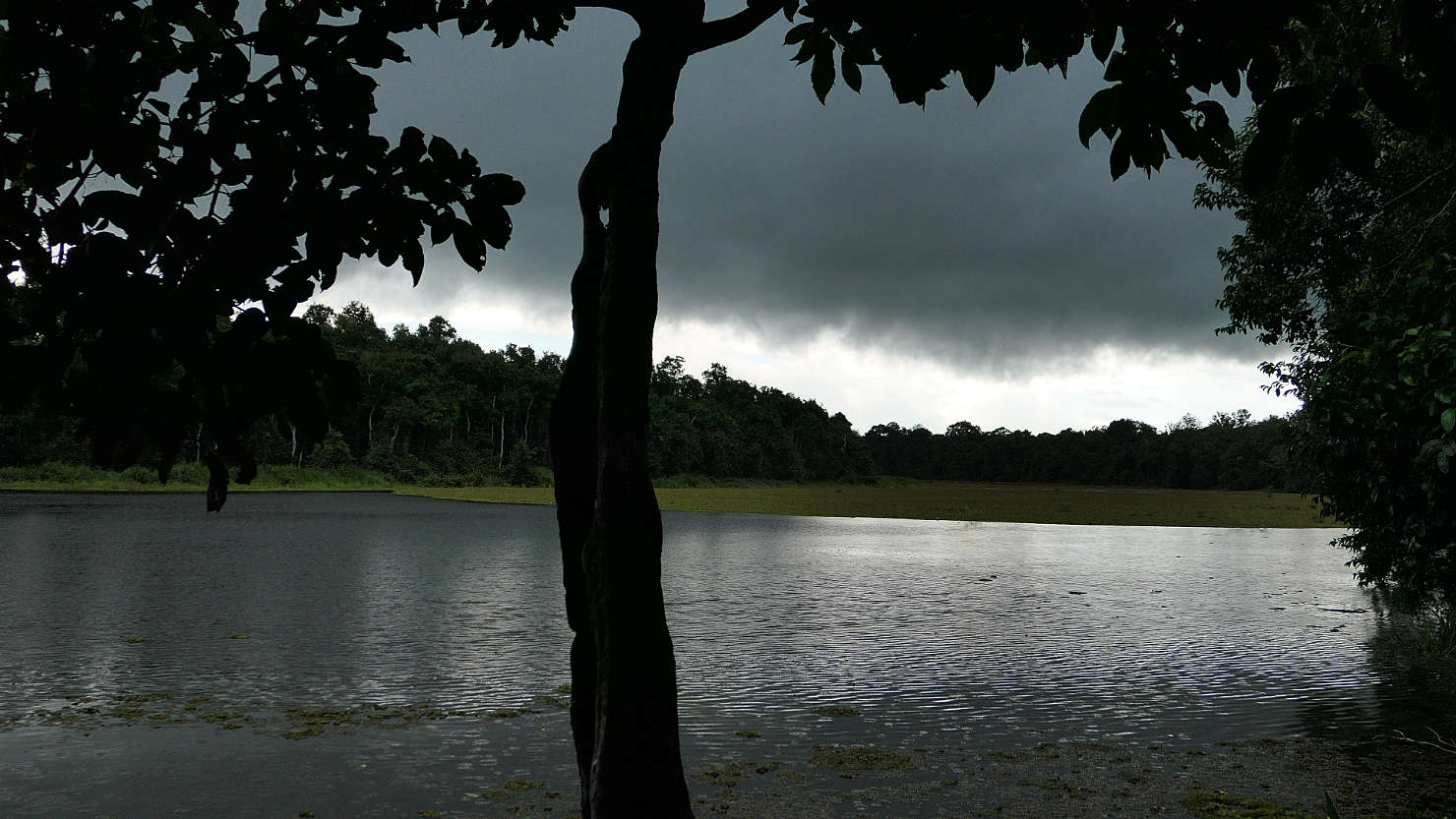
Dark clouds over the small lake right before the regular afternoon torrential downpour hit us.
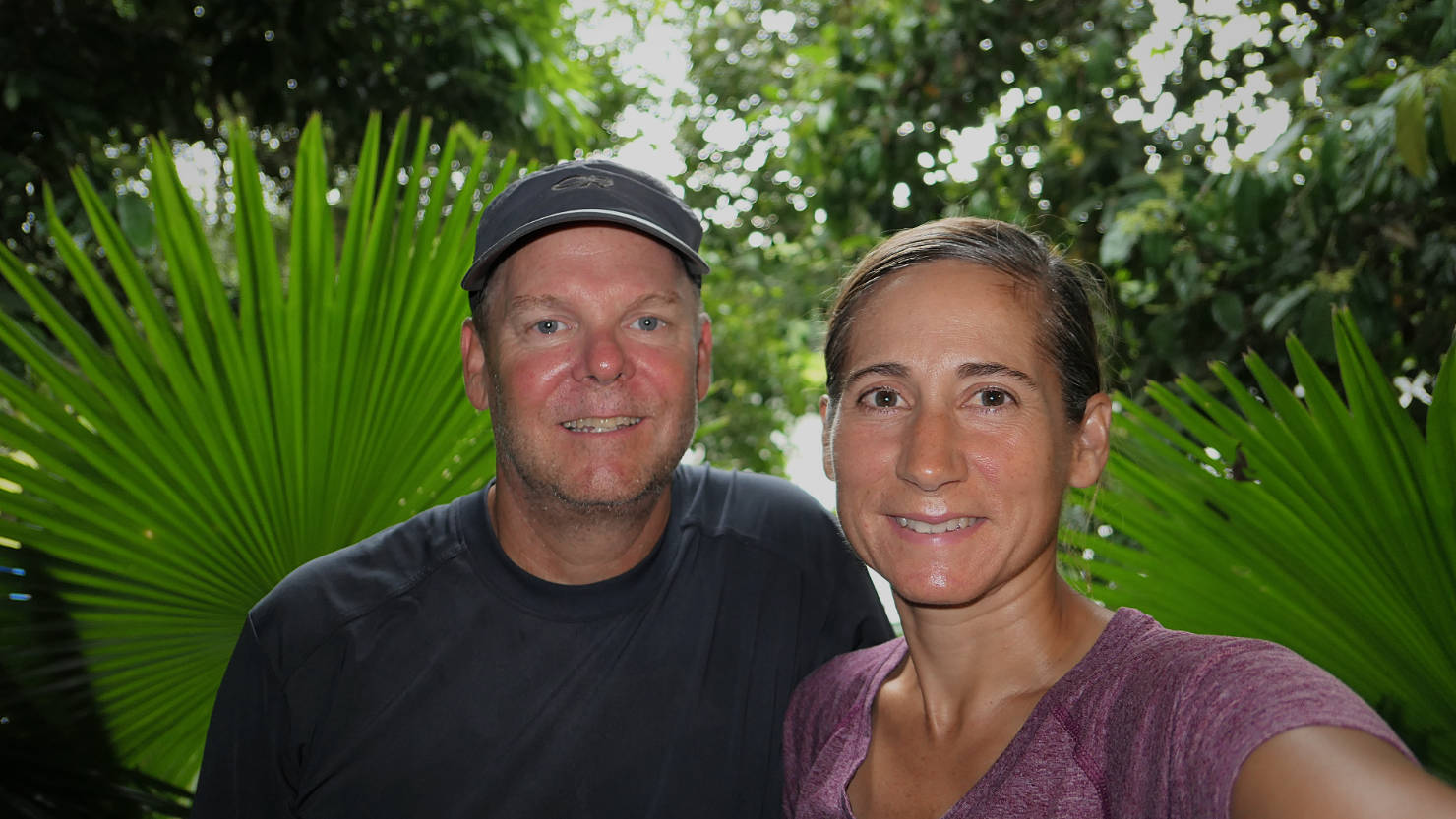
Rick and Alisa shortly after arriving at the Eco-Camp. It was very hot and humid…we were still in short sleeves and shorts, but quickly realized we needed long sleeves, pants, and socks to try and keep the mosquitos from biting us.
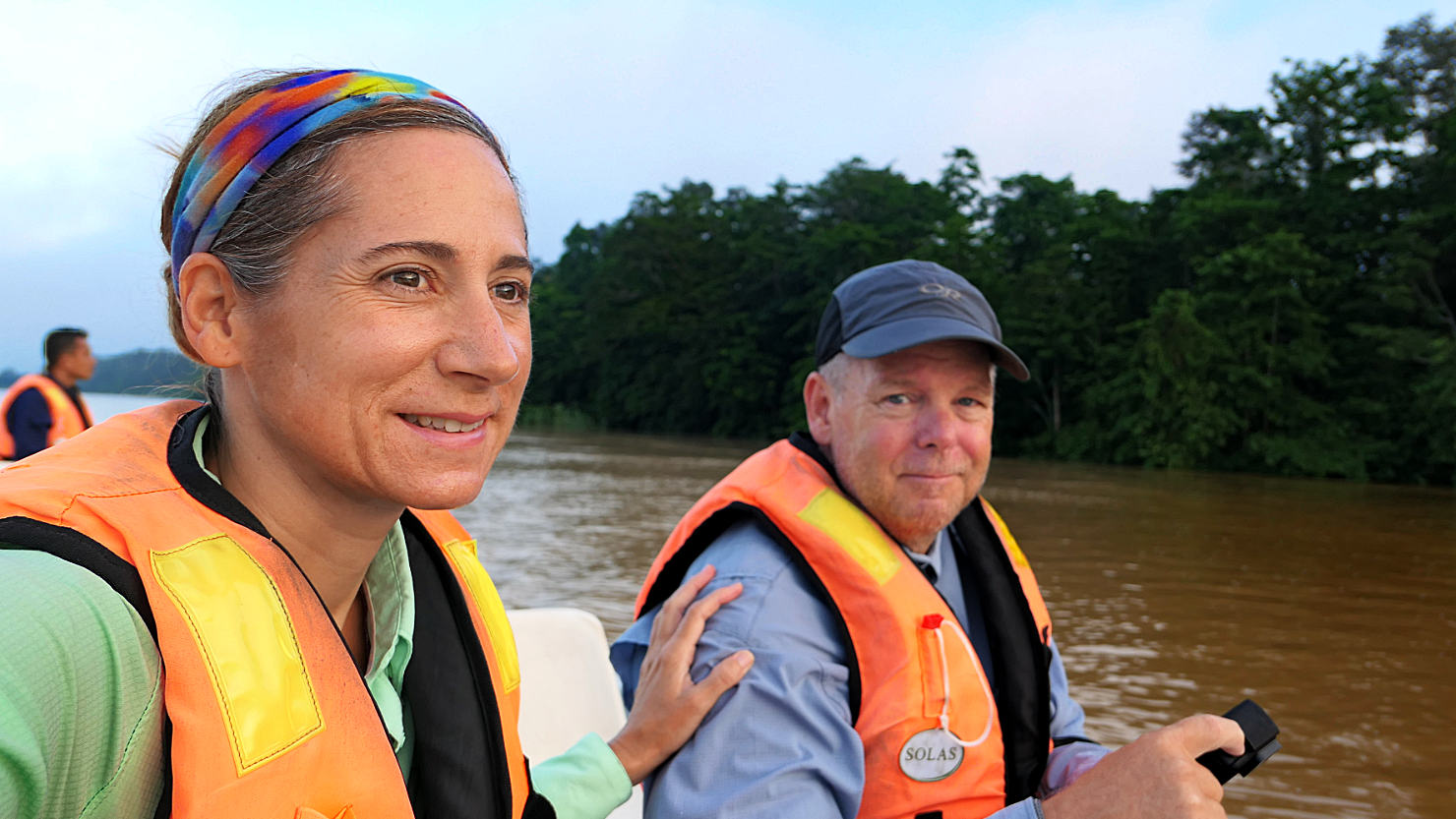
Rick and Alisa heading out on our first evening river wildlife spotting cruise. Cruising on the river was a welcome reprieve for some cool air…notice we’ve changed clothes. Our bodies are now fully covered which only slightly deterred the mosquitos while in the jungle…they were like super-mosquitos because they can bite through several layers of clothes.
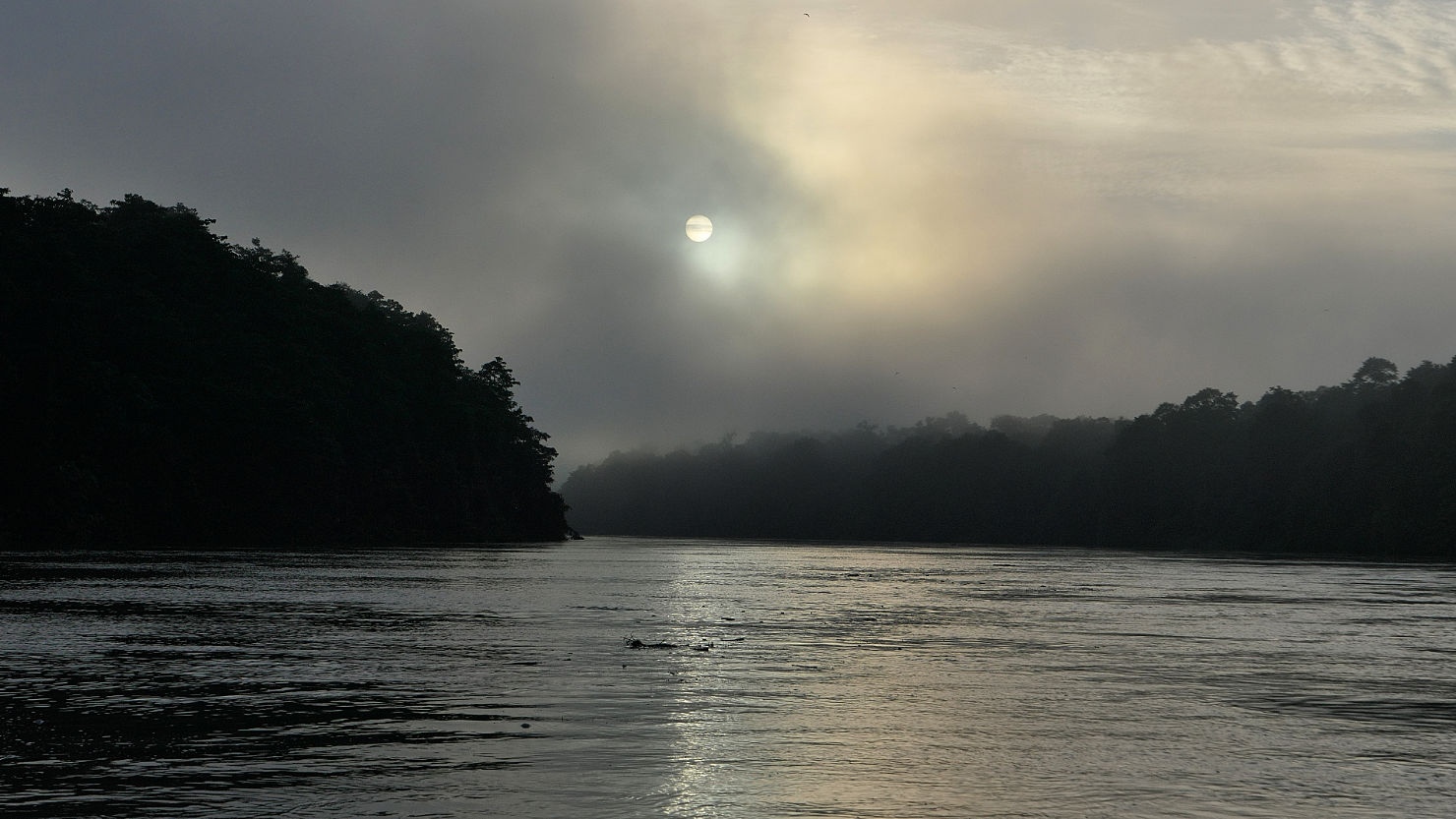
Fog on the river during our morning river cruise.
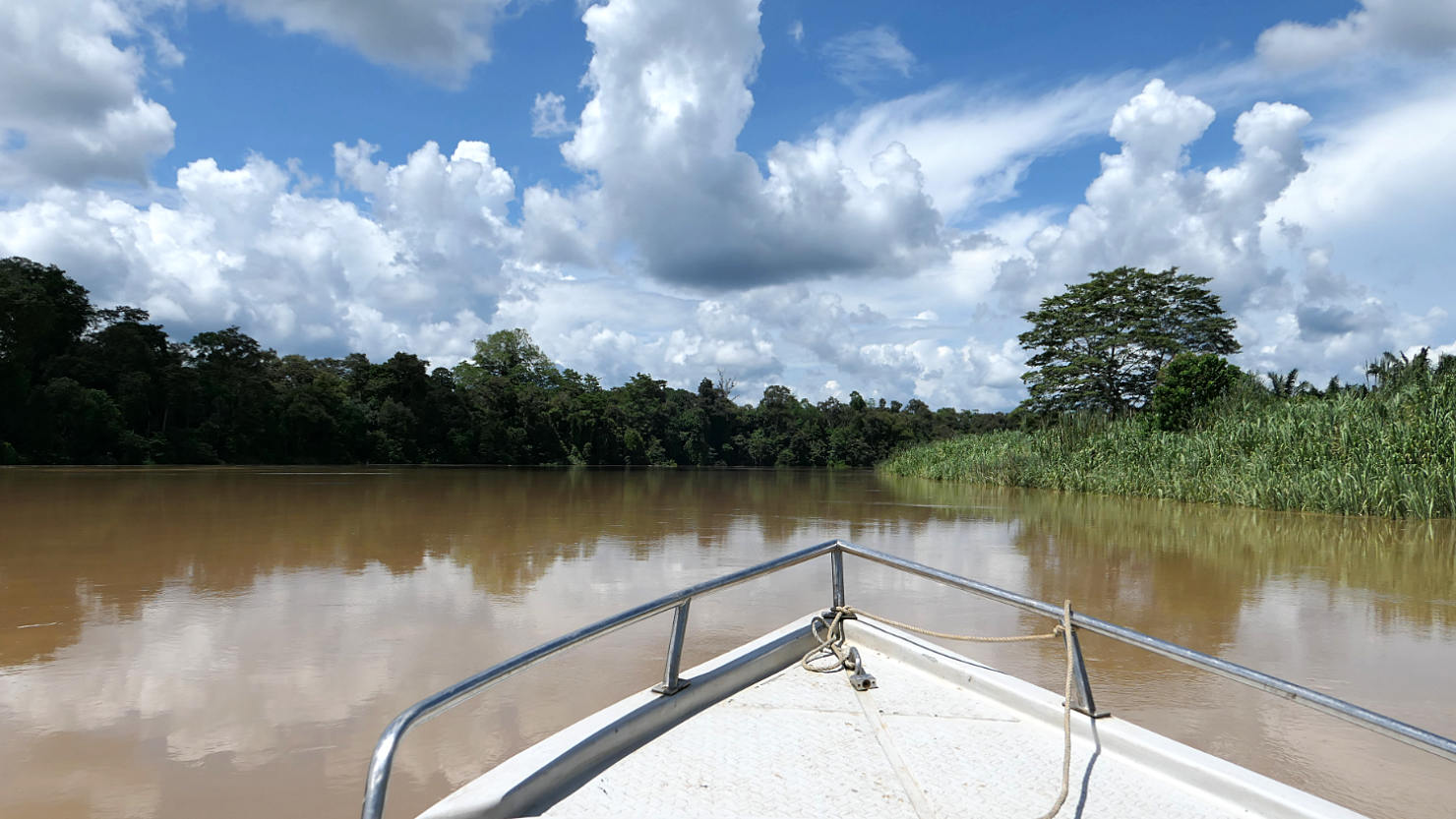
The fog cleared and the rest of the morning was beautiful.
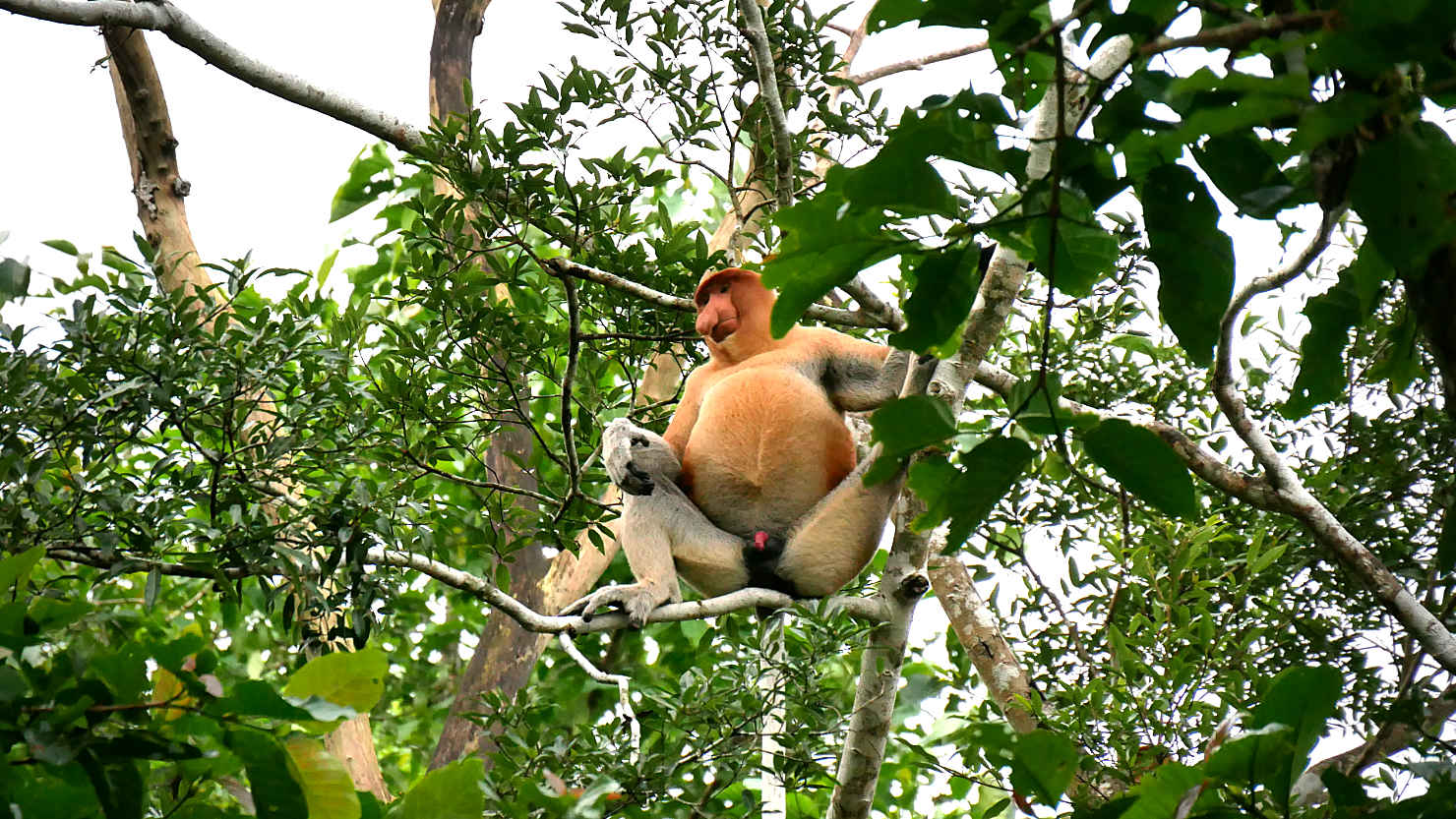
Dominant male proboscis monkey sitting high up in a tree along the river watching his surroundings.

This is a proboscis monkey jumping from one tree to another.
We did see a lot of other wildlife during our 3 days on the Kinabatangan River…Most animals were either too fast or too far away to snap a photo, most of our decent footage is on video. During a night jungle trek and a daytime jungle trek some of the wildlife we saw, most of which we were not able to capture on photo or video, were spiderhunter bird, snake, large masked spider, common palm civet, two borneo gibbons (rare to see), giant squirrels, a large wild pig (near our eco-camp), lots of long tailed macaques, proboscis monkeys, and pig-tailed macaques. A few weeks earlier wild asian pygmy elephants had come through our eco-camp, but they were too far downstream to see. Unfortunately, we did not see any orang utans on this excursion. Thankfully, we experienced several other sightings during our time in Sepilok.

Sun breaking through the clouds on our last morning river cruise prior to departing back to civilization. What a view…
Even with the small annoyances of the masses of mosquitos and the very hot and humid conditions in the jungle, this adventure was still something well worth the effort. For those who do not want to sleep in the jungle, they have accommodations back in “town” and you still get to do all the activities…But for us, part of the experience was actually staying out in the middle of the jungle the whole time. Amazing is all we can say.
Proboscis Monkey Sanctuary
In the 1990s four-hundred acres of mangrove forest had been purchased for oil palm plantation development. But, the land’s new owner soon found an interest in the resident Proboscis Monkeys which are only found on the island of Borneo in Southeast Asia. He decided to keep an area of the mangrove forest intact for the Proboscis Monkeys to continue to live in the wild. Since their habitat was more constricted due to oil palm plantation development all around, he also decided to supplement their food. Today, this area is known as the Labuk Bay Proboscis Monkey Sanctuary. There is NO guarantee the Proboscis Monkeys will show up during feeding time.
Video – Sepilok, Malaysia (Labuk Bay Proboscis Monkey Sanctuary)
Proboscis Monkeys, also known as the largest nose in Borneo.
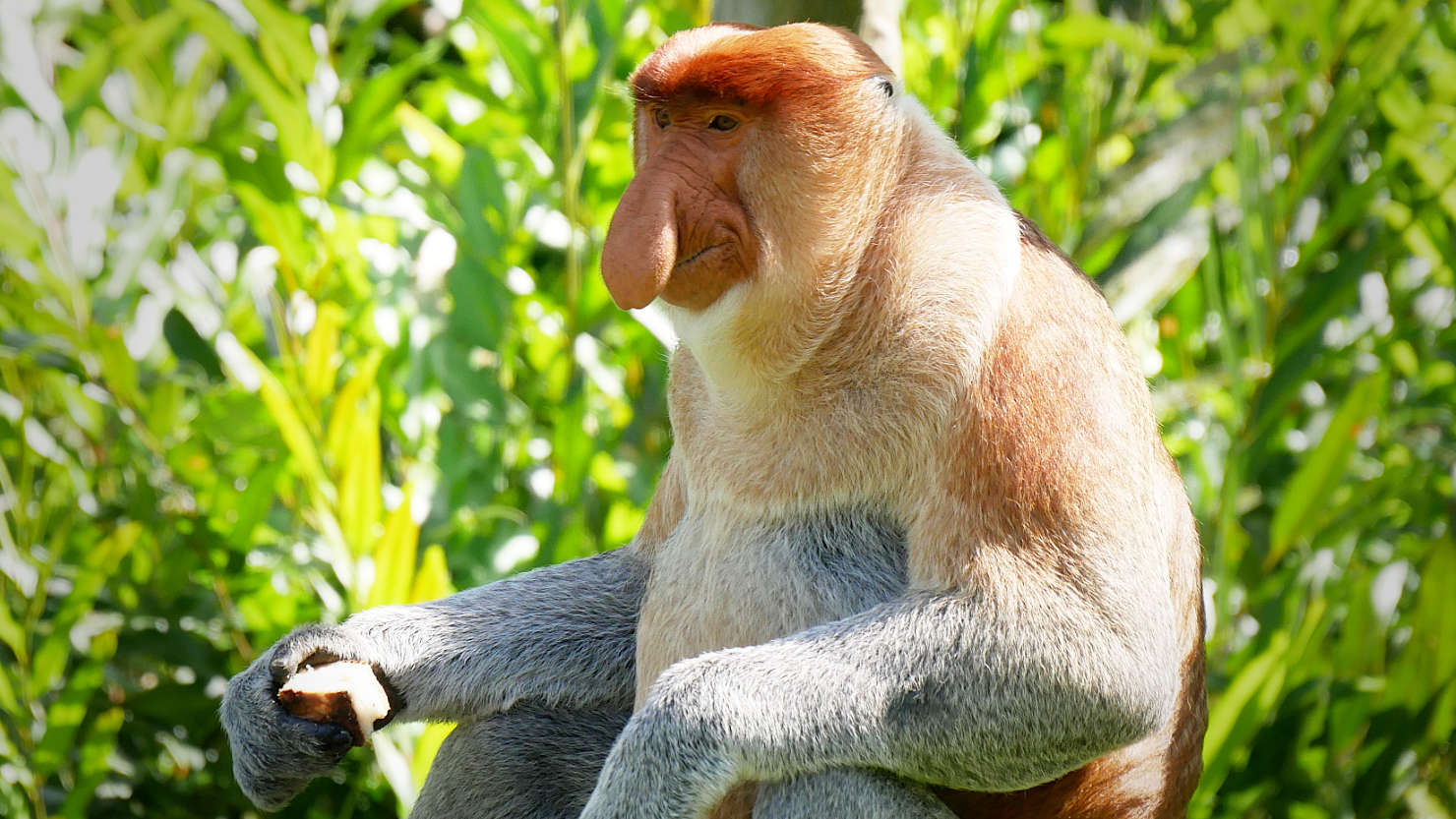
Large male Proboscis monkey having a bite of the supplemental pancake-like food the sanctuary provides for them. These monkeys were totally amazing to watch.
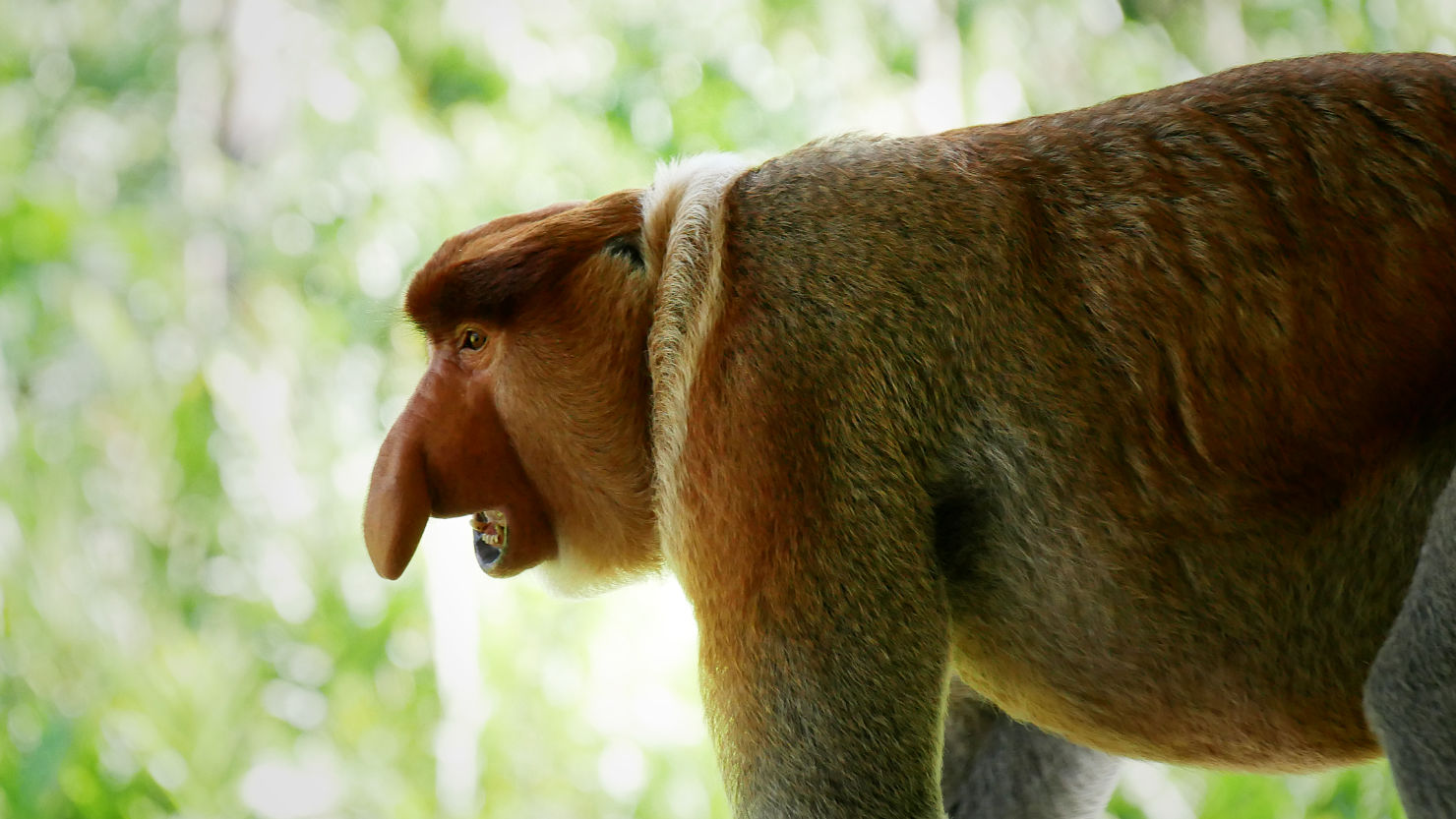
Large male Proboscis monkey.
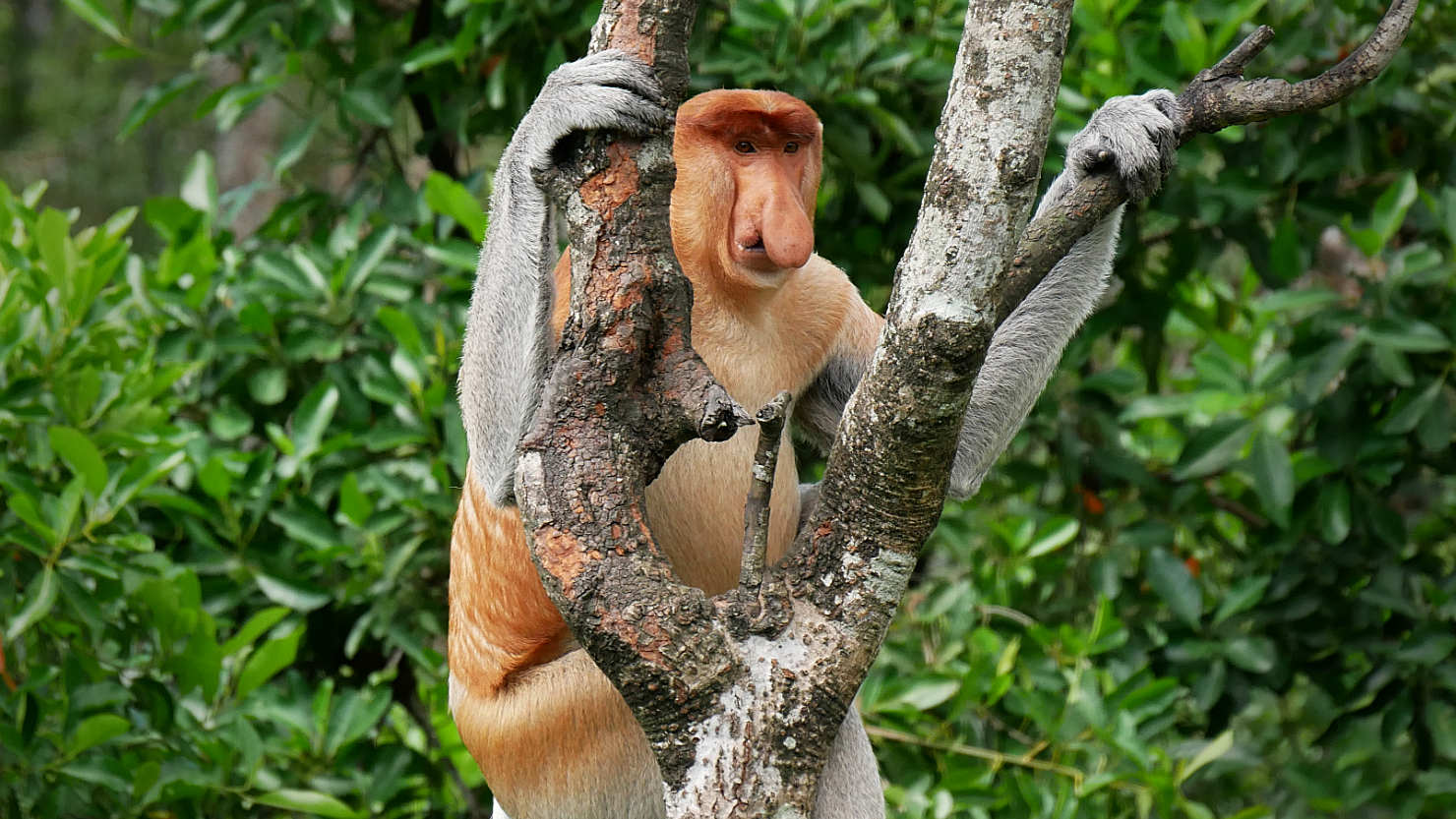
Male Proboscis monkey sitting in a tree.
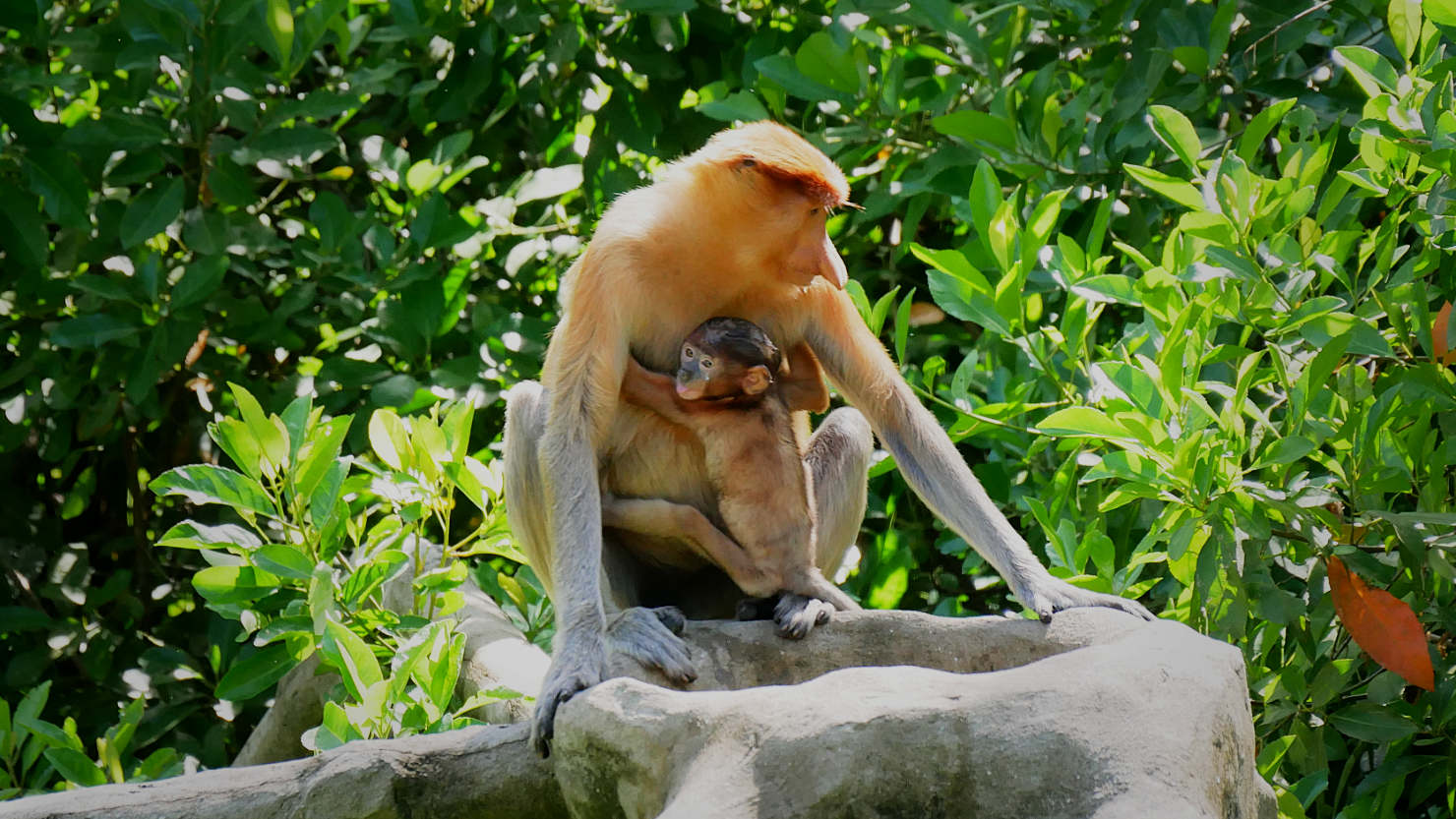
Mom and baby Proboscis monkey.

Young Proboscis monkey getting ready to take a drink out of a hollowed out log.
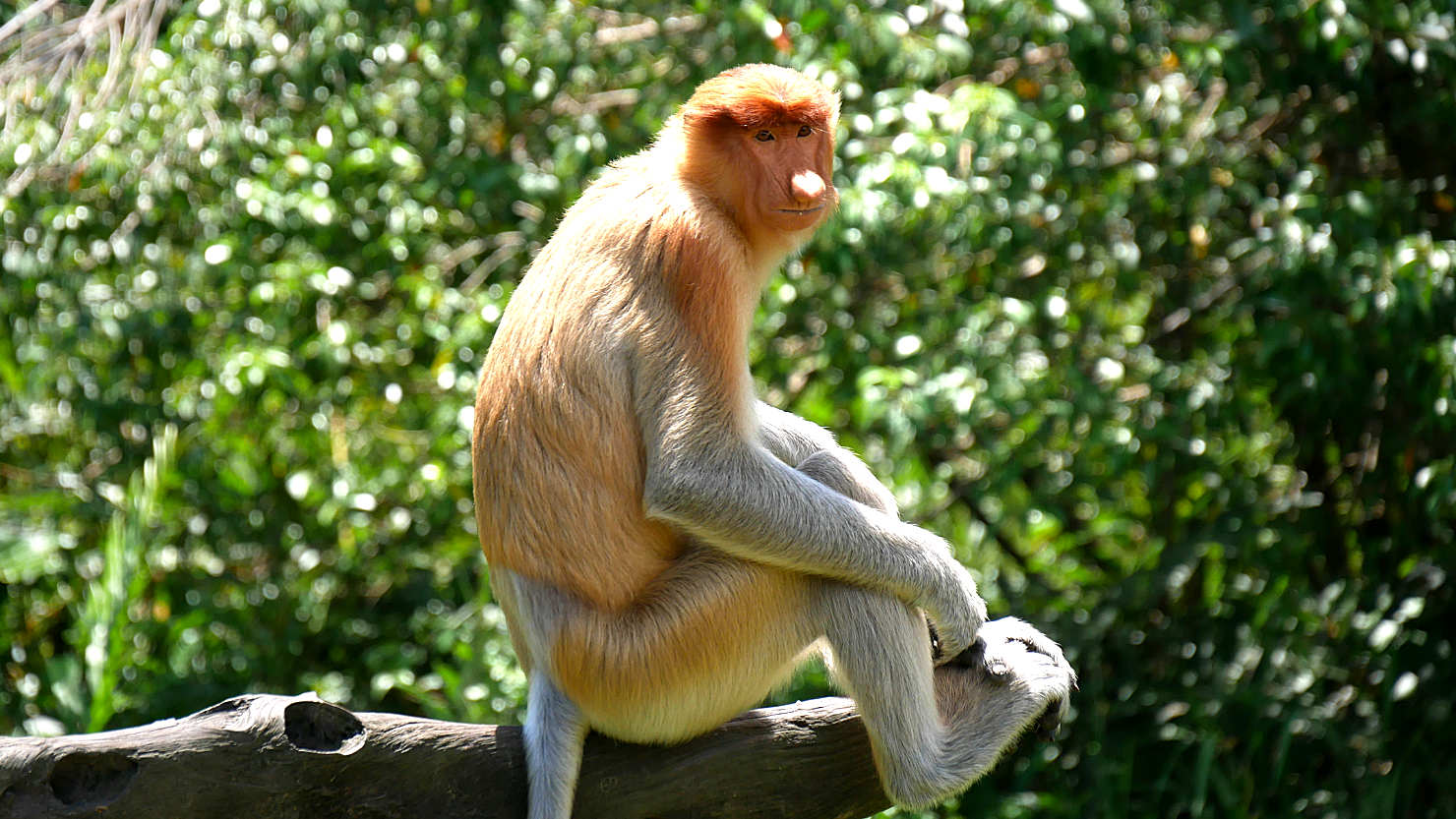
Young male Proboscis monkey sitting on a branch.
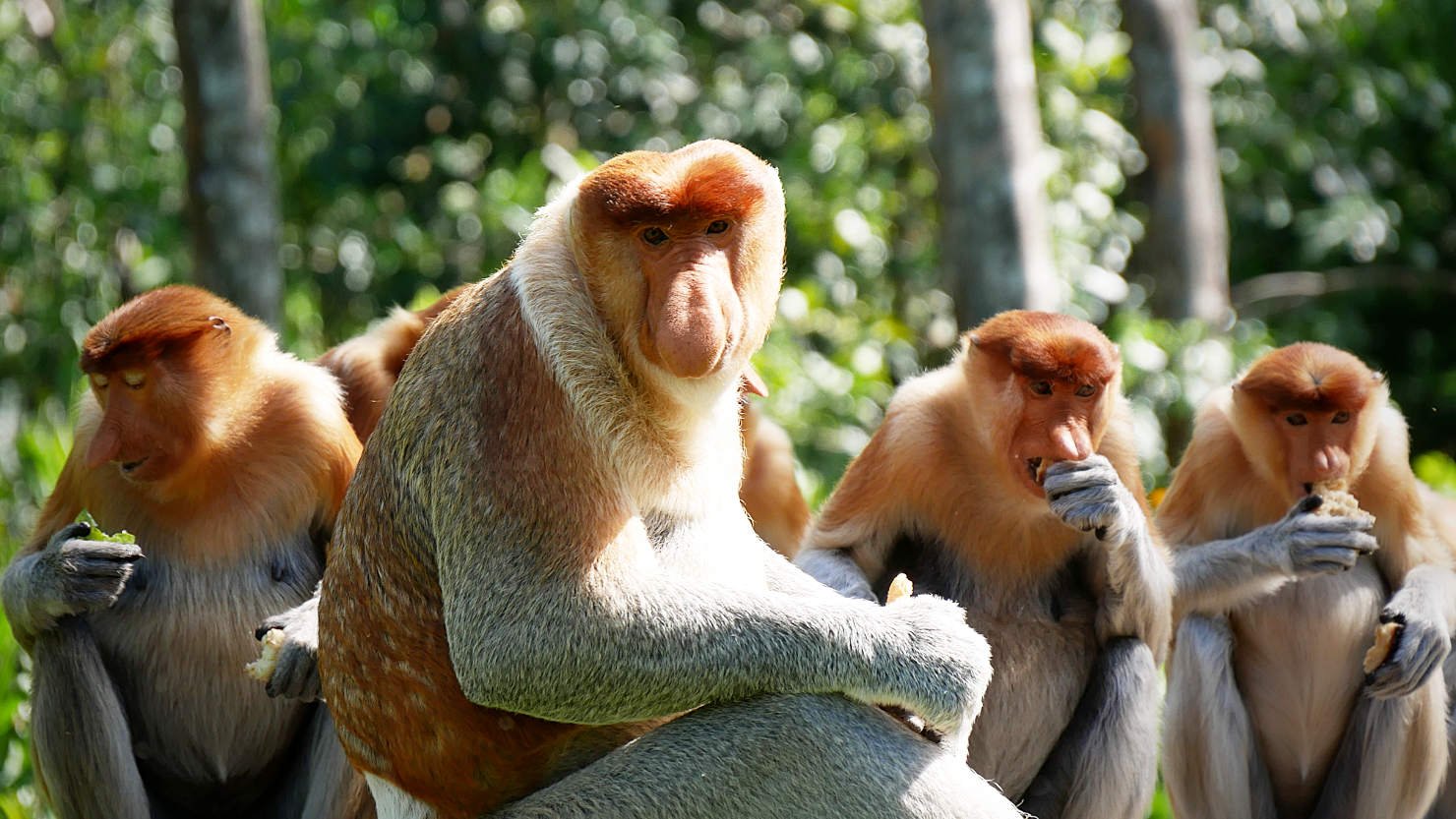
Group of male Proboscis monkeys having a bite to eat on one of the supplemental feeding platforms. They were super entertaining to watch. Prior to the morning feeding time, there were a ton of them in the jungle trees if you looked carefully. They became very active jumping from tree to tree, and groups of them eventually ran across the viewing platform in an effort to show off. Their feet made large slapping sounds as they galloped across from one end to the other. It was startling at first until we realized what was going on. They are not aggressive like some other monkeys and they travel in groups. One group is the bachelor group consisting of several young males. The other group is the harem group led by a dominant male who has many wives. You can easily differentiate between the groups. They were super cool to watch and crazy how human-like they were.

Silver Leaf Langurs, Mom and baby hanging around the sanctuary.

Baby silver leaf langur hanging out at the sanctuary.
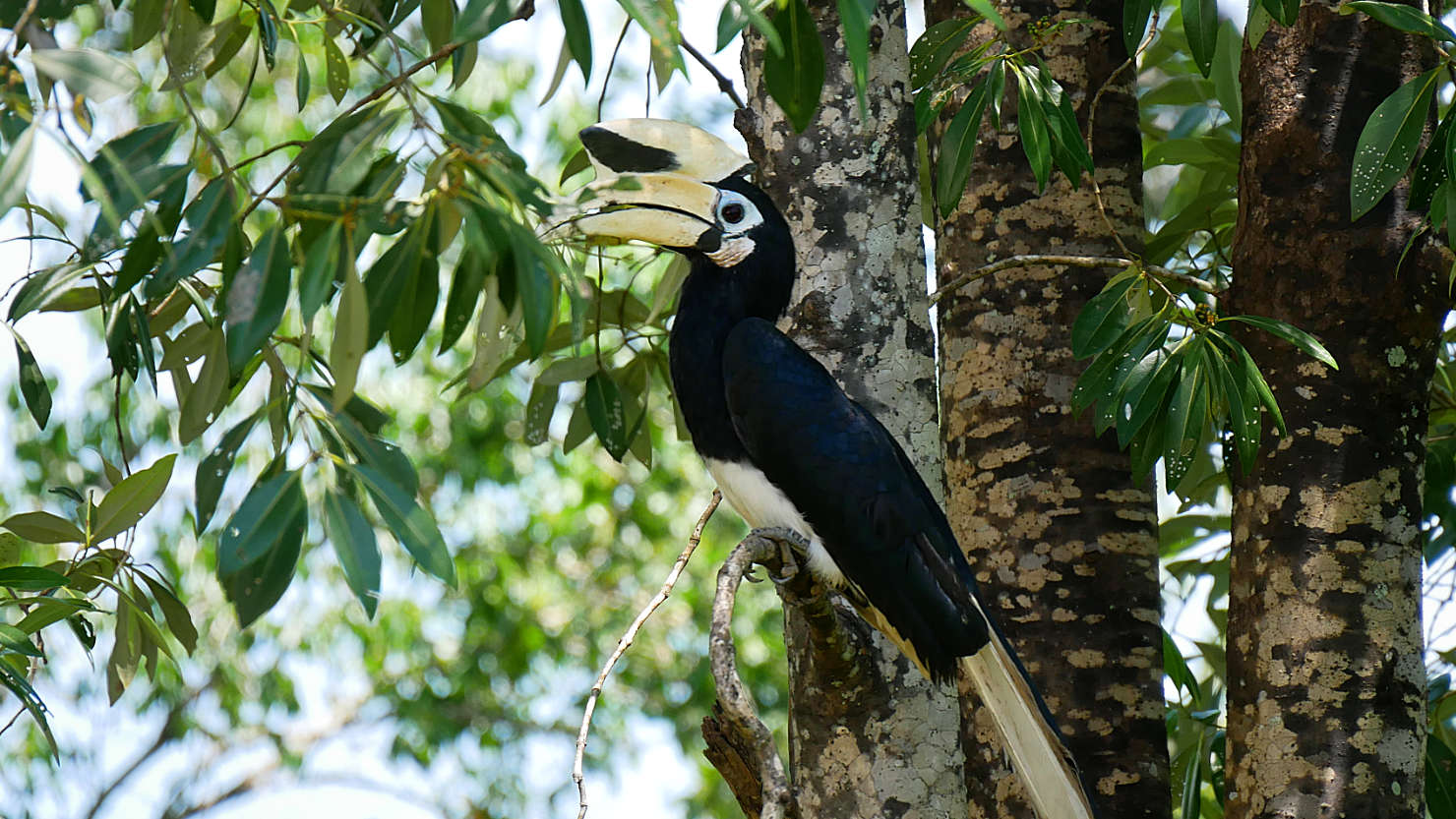
A Pied Hornbill spotted at the sanctuary.
Bornean Sun Bear Conservation Centre
The Bornean Sun Bear Conservation Centre is the only one in the world. It was founded in Sabah, Malaysia in 2008 to provide care and rehabilitation to rescued sun bears. The sun bear is the smallest in the world and the second rarest bear species, after the giant panda.
Video – Sepilok, Malaysia (Bornean Sun Bear Conservation Centre)
The Bornean Sun Bear Conservation Centre was a very interesting and educational place to visit. We were fortunate to see a few sun bears roaming around and a couple actually climb trees. While they have 44 total sun bears at the centre only a few are in areas where visitors have a chance to see them. Many of the other sun bears are being weaned off human interaction with the ultimate goal of returning them to the wild. The sun bears are very small and very cute, and were new to both of us. Definitely worth a visit to see and learn about them.
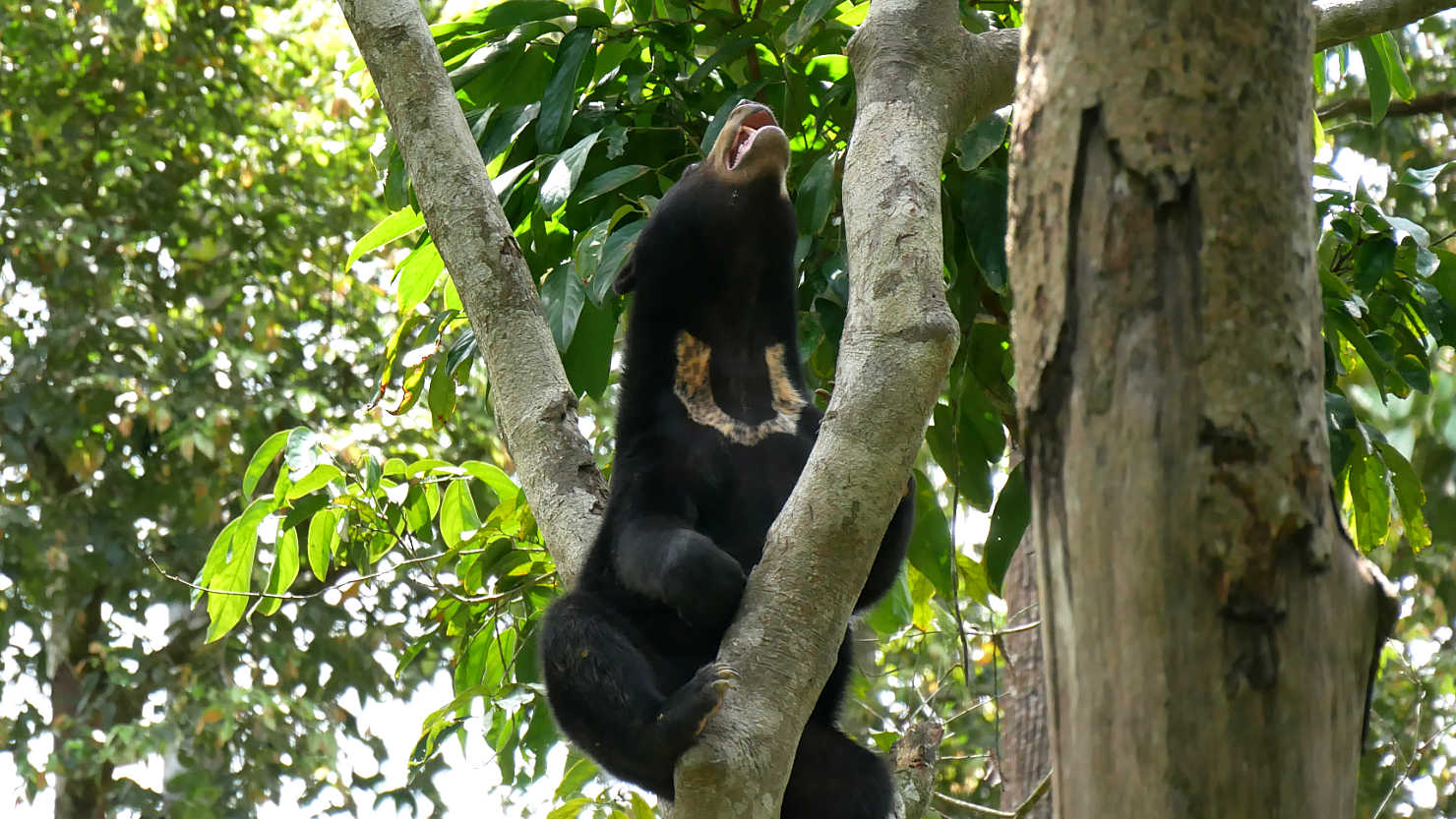
The sun bear’s name comes from the pale horseshoe shape on their chests, which is said to resemble the setting or rising sun. No two markings are the same.
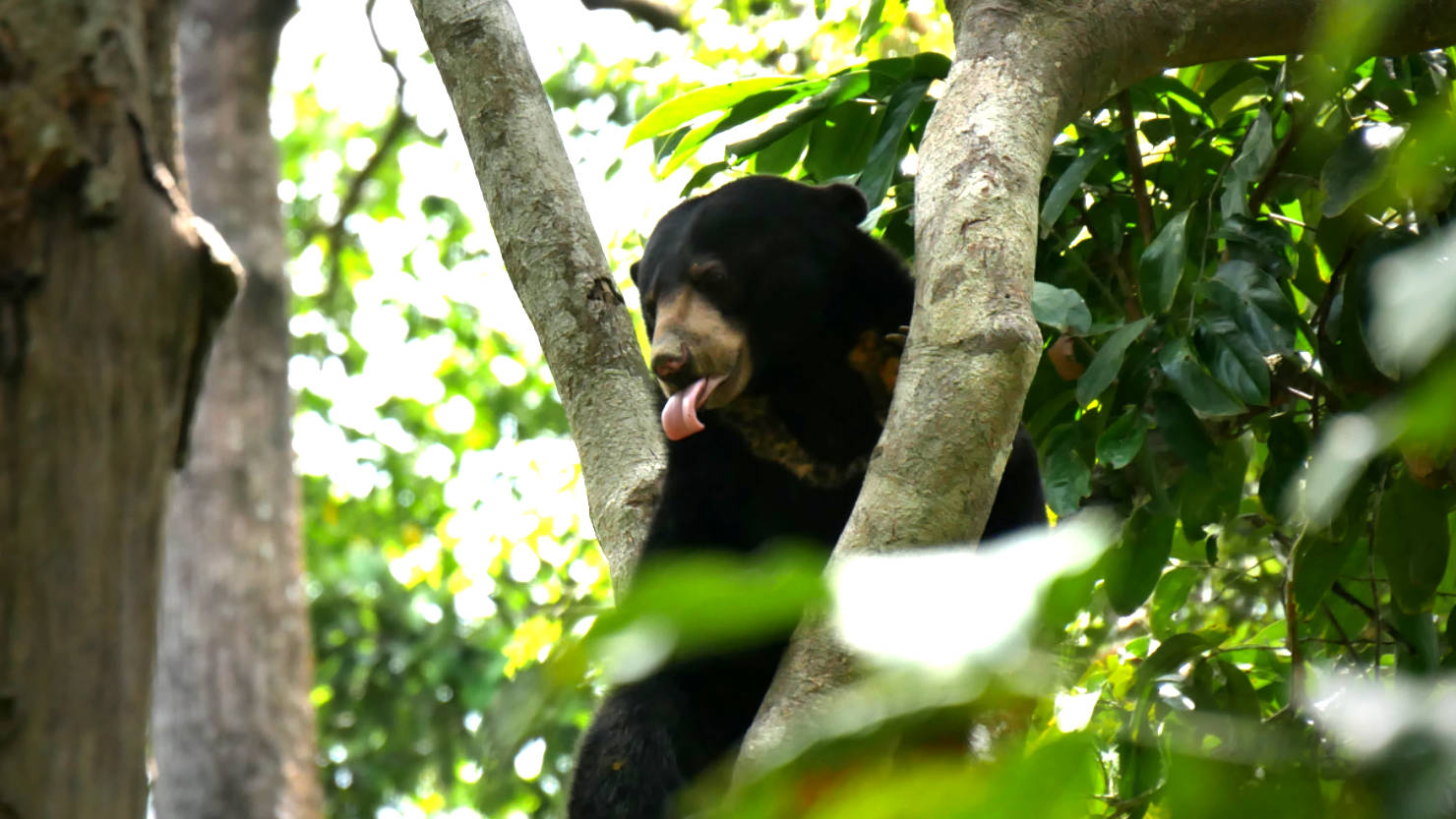
Sun bears have very long tongues which helps them extract honey from bee hives, earning them the alternative name ‘honey bear’.
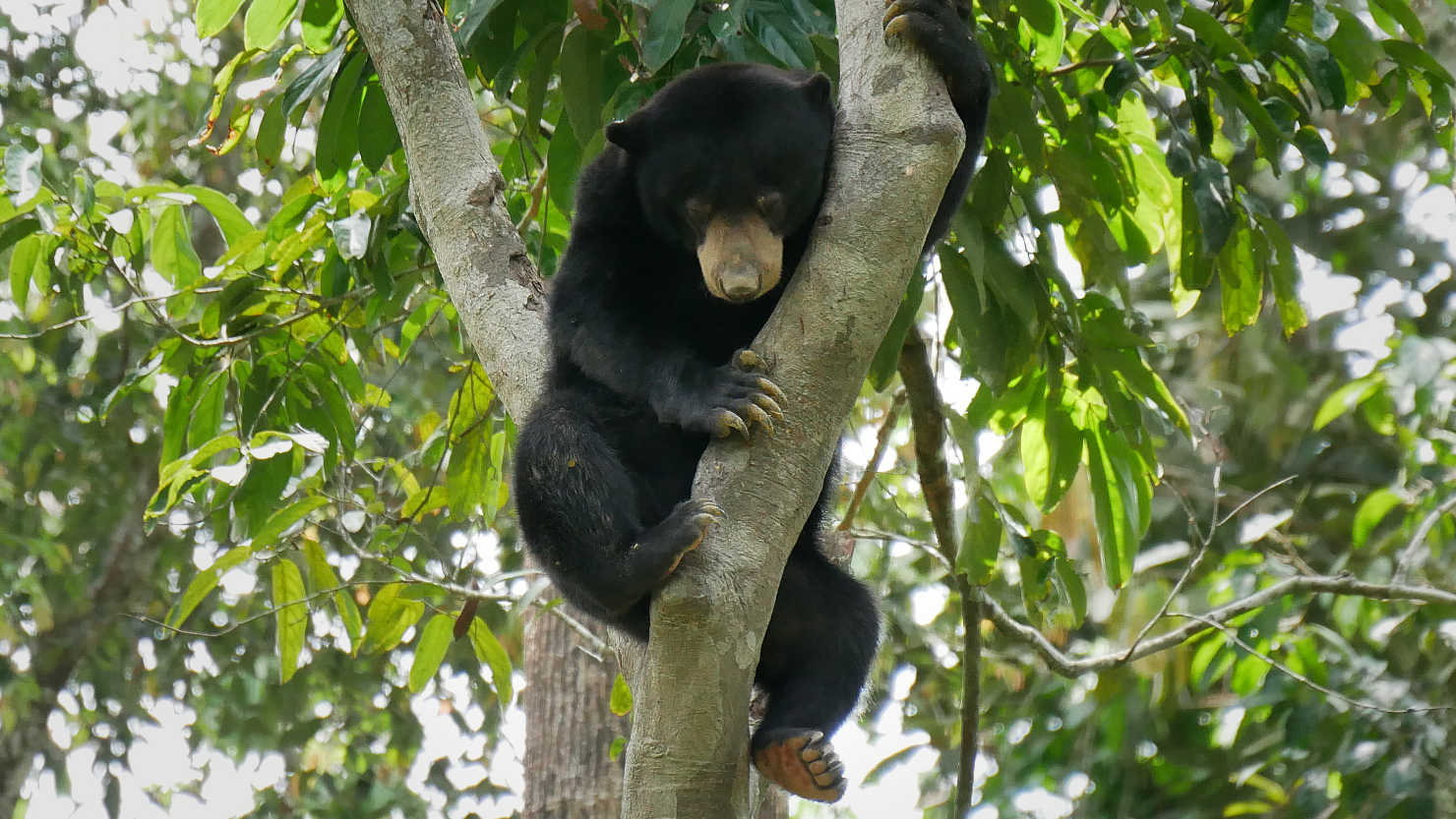
Sun bears live in tropical lowland forests and are the only bear in SE Asia. They are mainly diurnal and do not hibernate but build nests in trees to sleep in. Note: this sun bear is snoozing comfortably high in the tree.
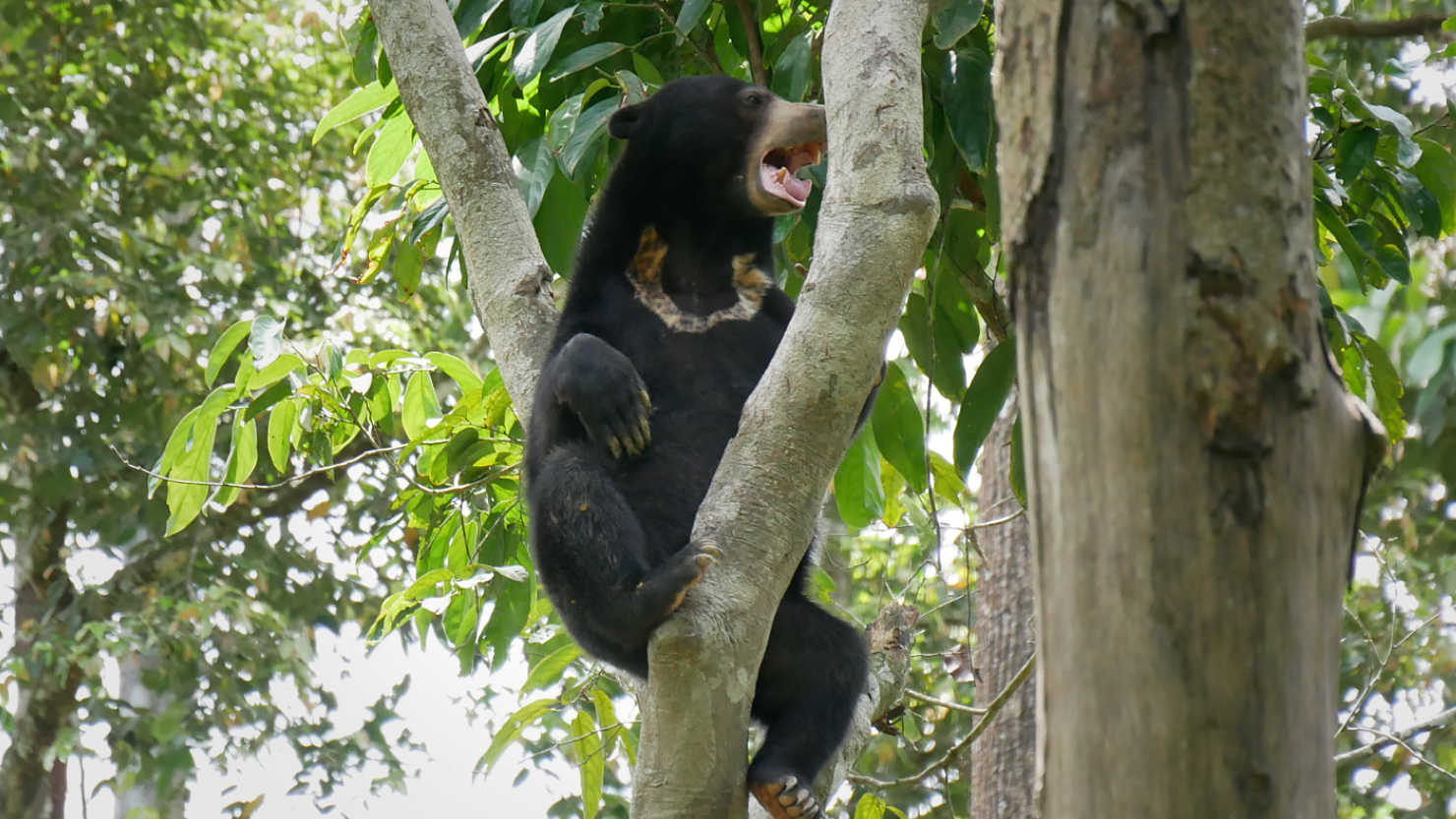
Sun bears primarily eat insects (invertebrates), fruit and honey. They dig for invertebrates in the soil, and create nesting sites for animals such as hornbills and flying squirrels, by tearing open tree trunks to reach the honey inside. Note: the size of this sun bears feet and claws.
End of our Borneo Jungle Adventure
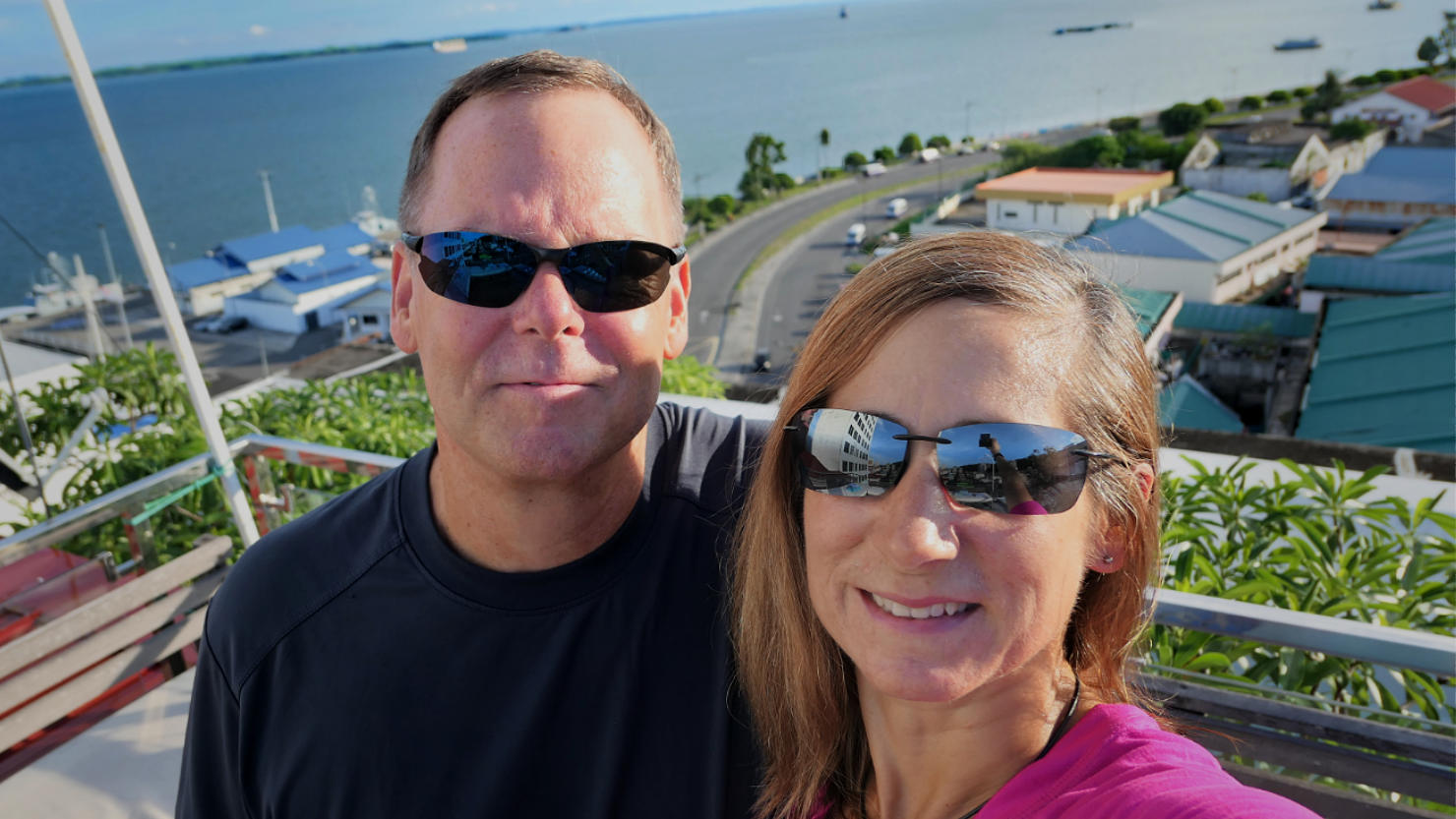
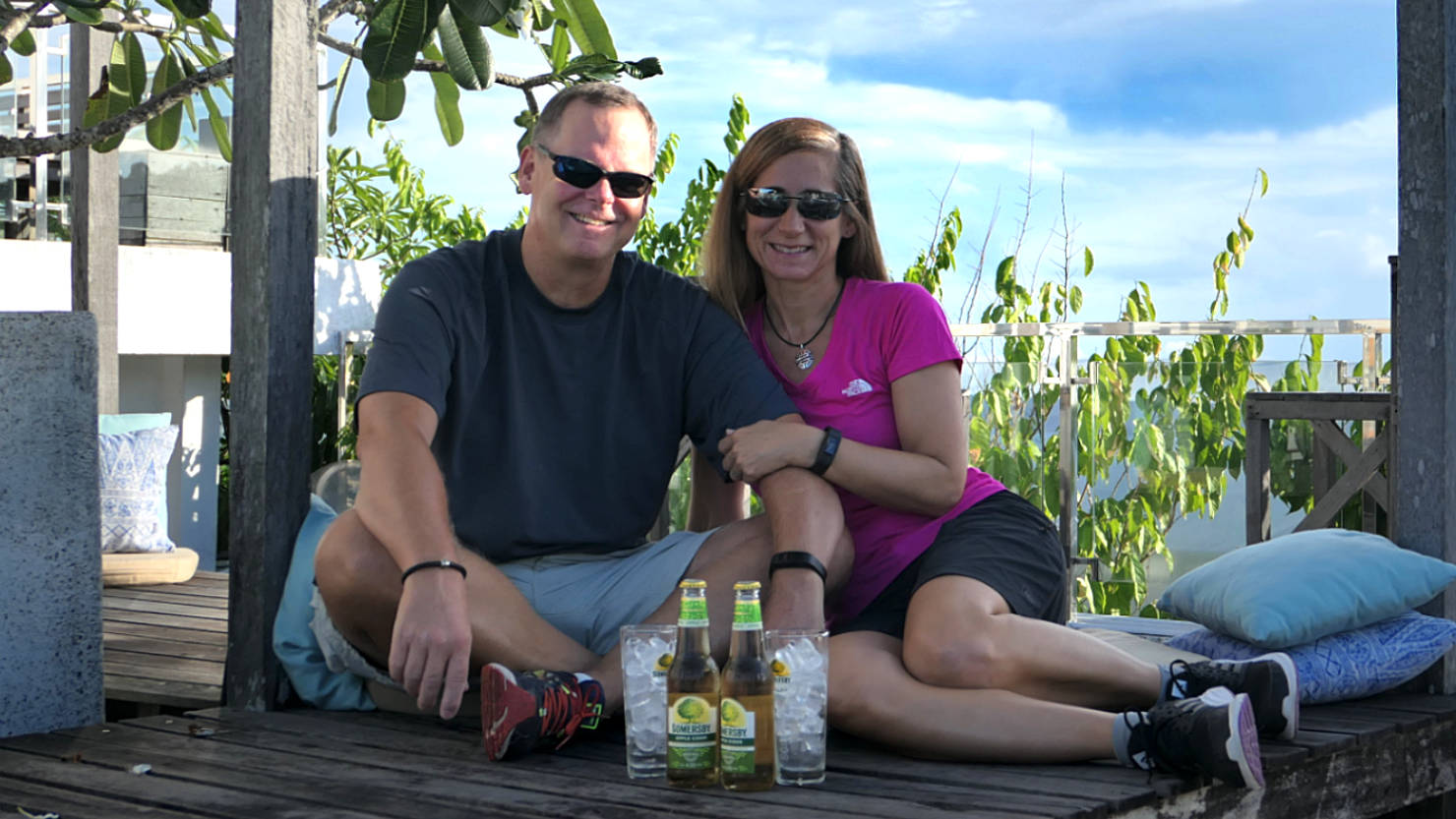
We ended our Borneo Jungle Adventure at a roof-top restaurant in Sandakan overlooking the ocean.