
Kathmandu Valley, Nepal – Oct 2017
After spending the last 9 months in Southeast Asia, it was time to head to Nepal for the remaining months of 2017.
We arrived into Kathmandu, Nepal on October 2nd at the beginning of one of their busiest times of the year. We usually don’t like to visit destinations during their peak seasons, but in Nepal the months of October and November typically bring clear skies and warm days. Since, it’s always been a dream of ours to visit Nepal and see the biggest mountains in the world (our next post), we felt our chances of having good weather was more important than visiting during an off peak time of year.
See video and photos below highlighting our first 9 days spent in the Kathmandu Area in Nepal. To see all images of this location click the link at the bottom of this post or go to our gallery.
Our apologies for the extended delay in our Nepal postings. Our first month in Nepal has had us extremely busy with site-seeing and trekking with very little free time in between. We’re working to catch up on our videos and photos of our adventures over the next several weeks.
Video – Kathmandu, Nepal
Pashupatinath Temple – Kathmandu, Nepal
Pashupatinath Temple is the oldest Hindu temple dating back several centuries. This very sacred temple is located along the waters of the Bagmati River where they also perform open-air cremations. As non-hindus, we were not allowed inside the actual temple, but the temple’s surrounding areas were extremely spiritual and worth a visit to experience local culture and traditions.
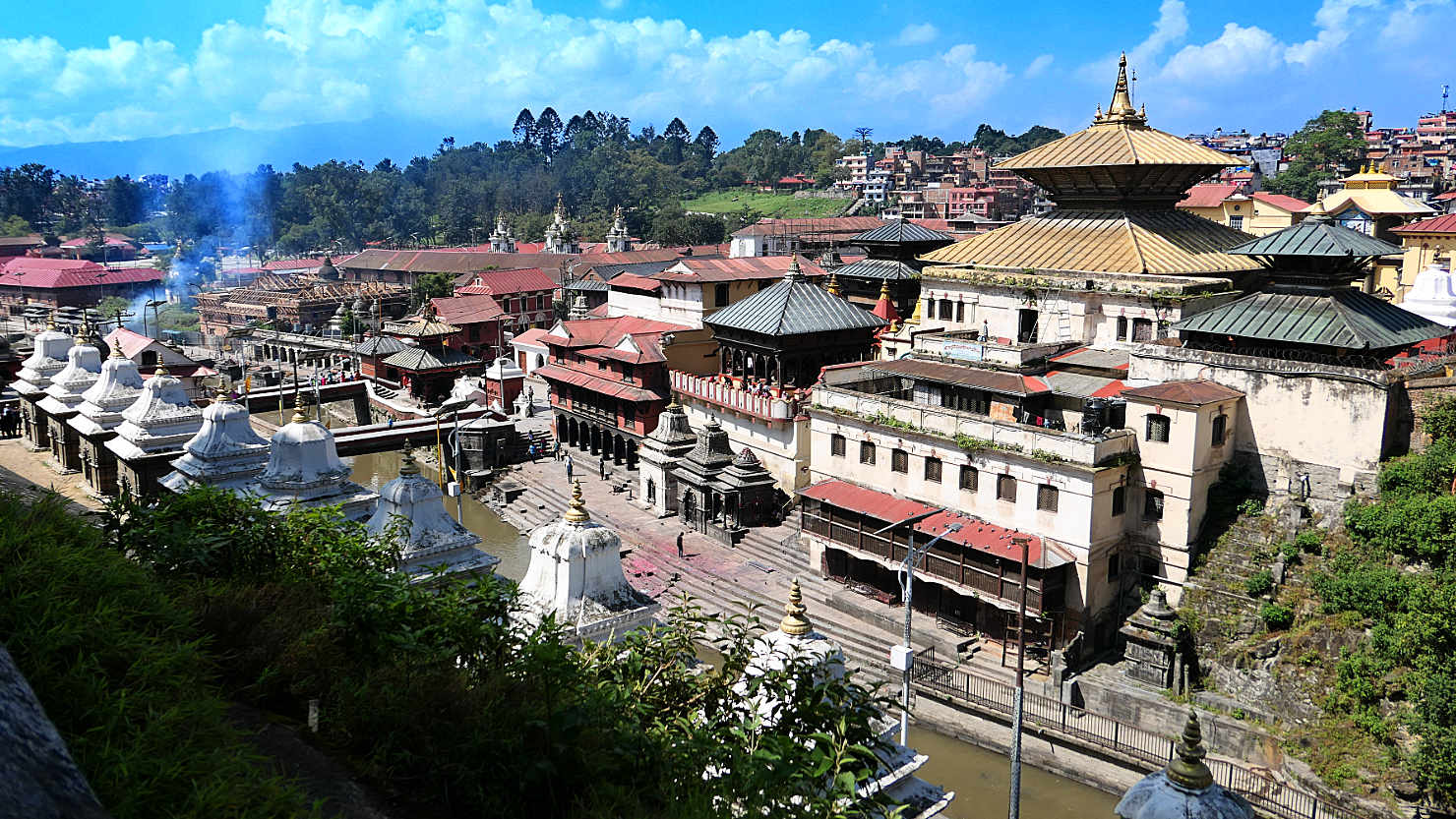
View of the Pashupatinath Temple and Bagmati river, the holiest of rivers. During our visit, we hired a guide to walk around with us and explain the local customs and traditions, one of which is to perform open-air cremations on the raised platforms along the river (the rising smoke you can see in the distance). Our tour of this area was very fascinating and was definitely worth having a knowledgable guide.
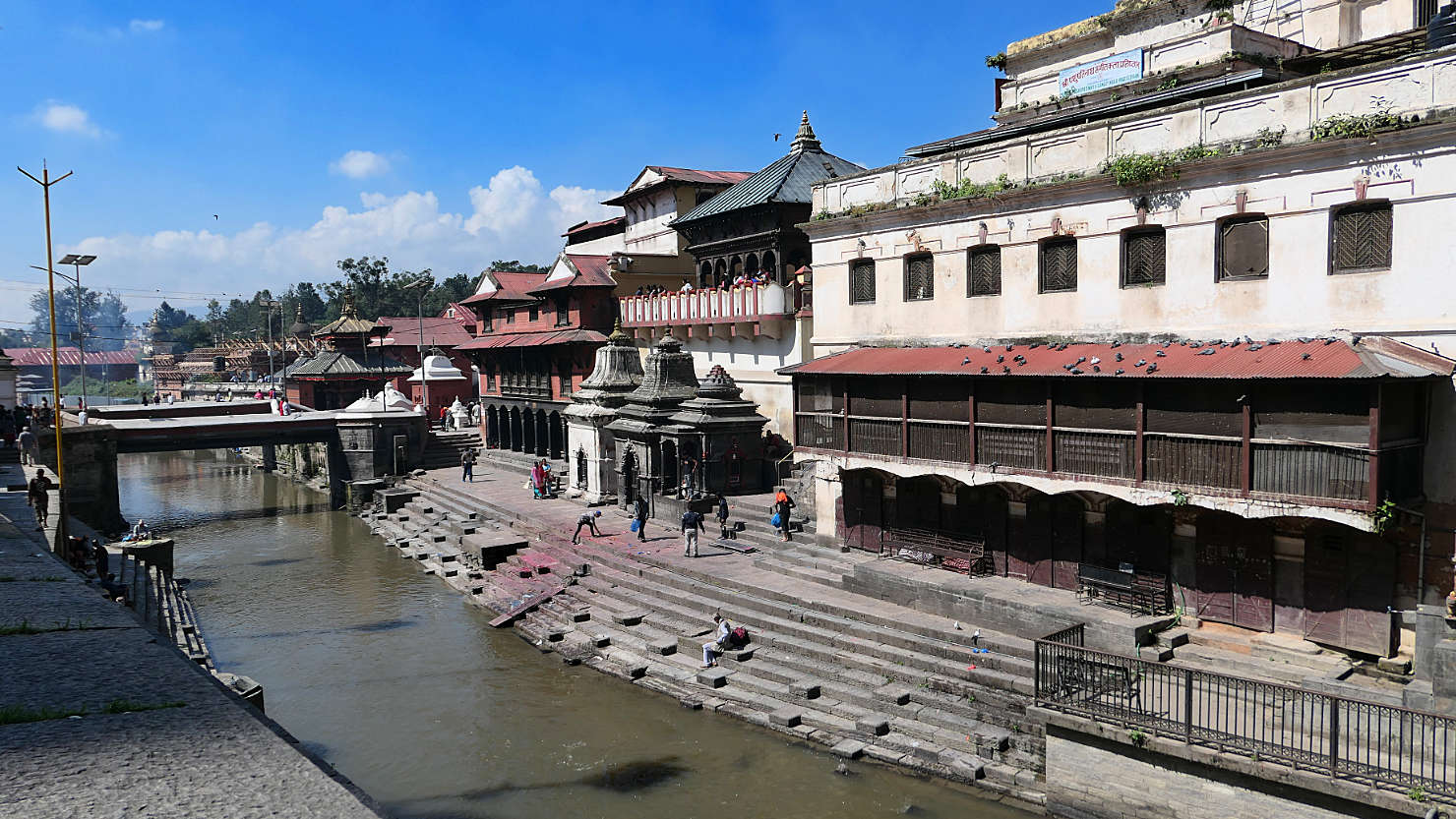
Area along the Bagmati River where they prepare the bodies of recently passed loved ones. The locals (mostly hindus) believe if their bodies are prepped in the holy river and then cremated within hours of their passing, they will go to nirvana (a state of perfect happiness).
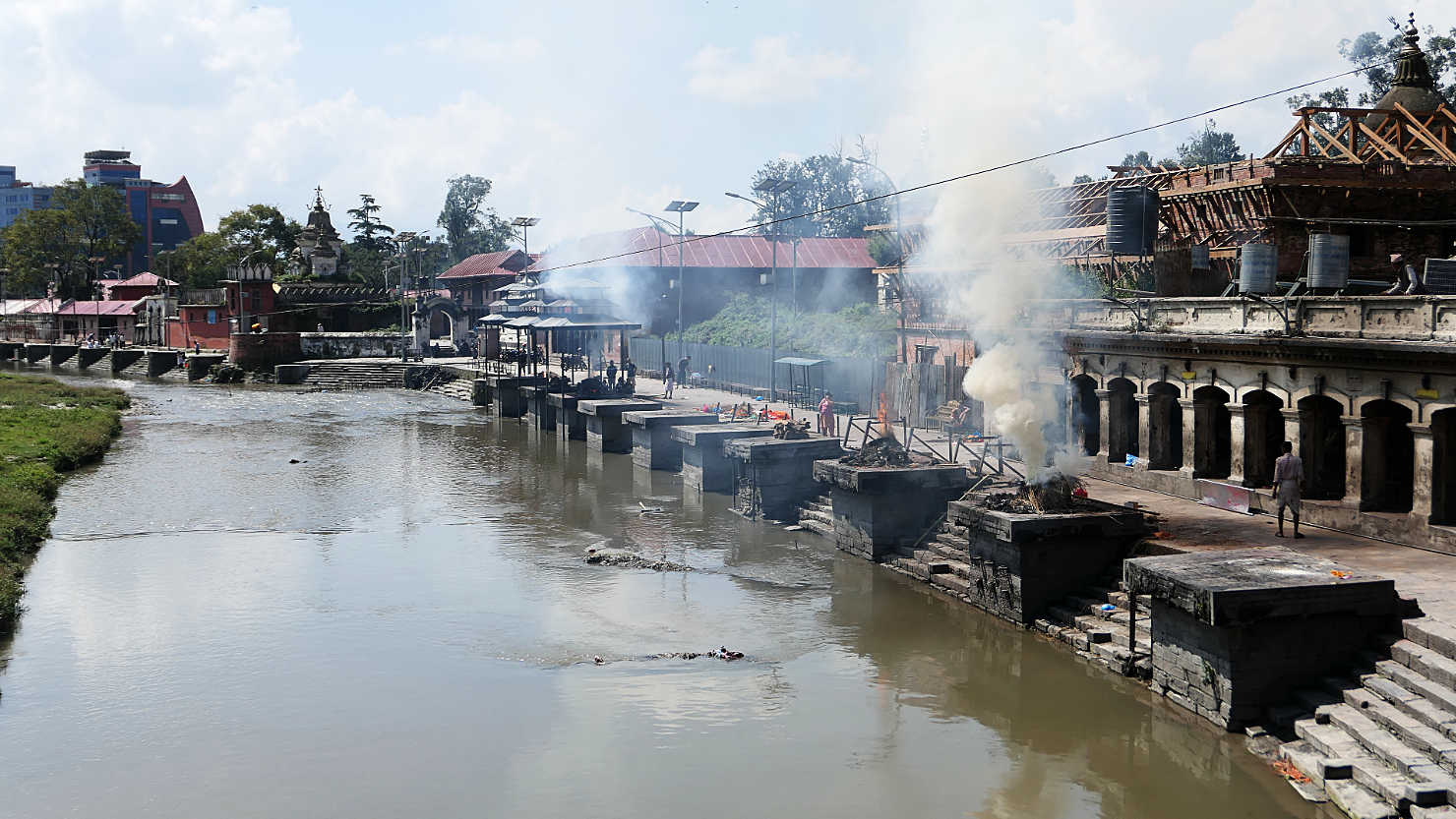
Raised platforms along the Bagmati river where they were performing open-air cremations. Local staff tend the platforms during the 3 to 4 hours it takes for the cremation process to complete while the family sits in the covered area directly behind.
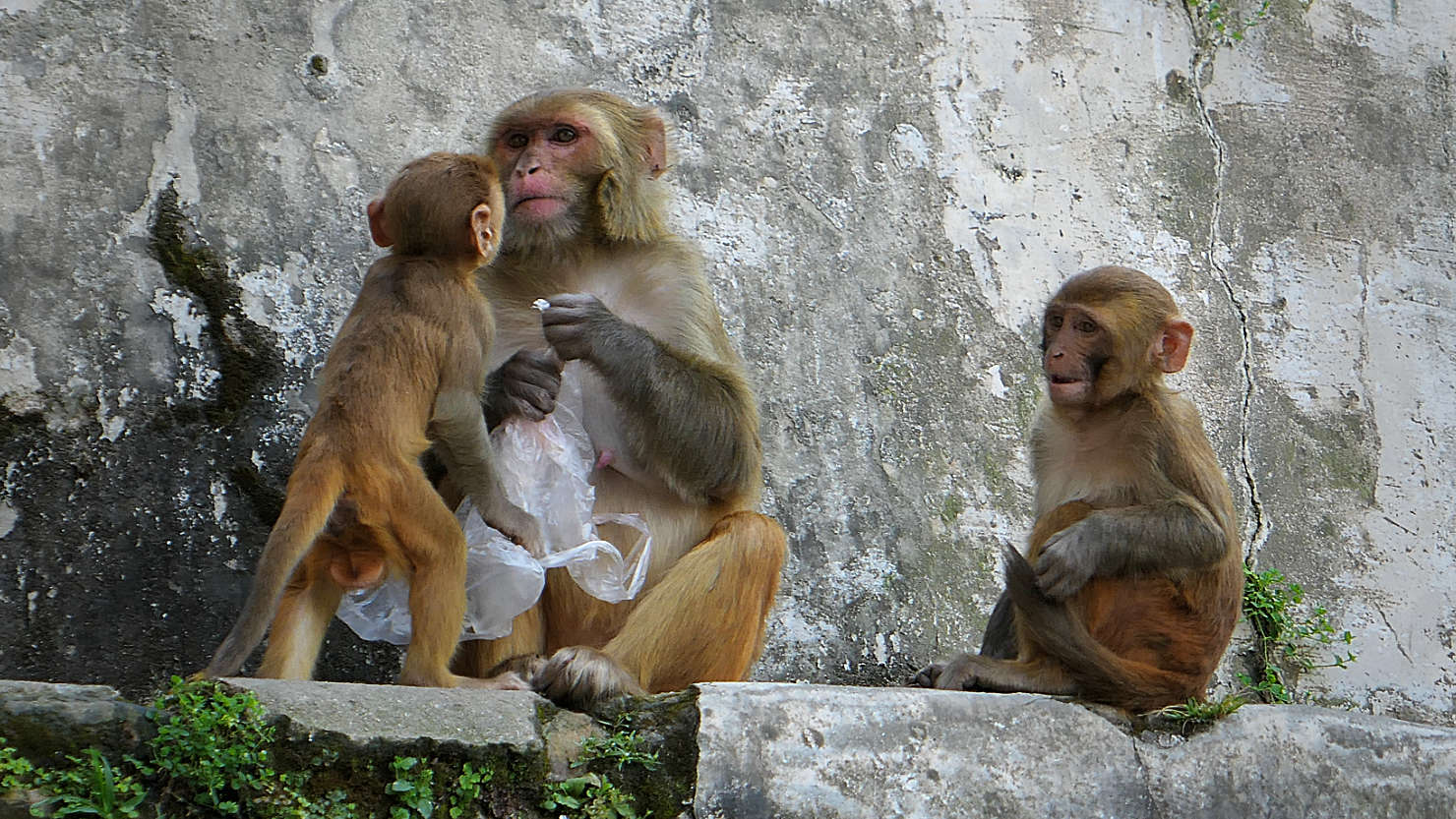
One of the many monkey families who live at the Pashpatinath Temple.
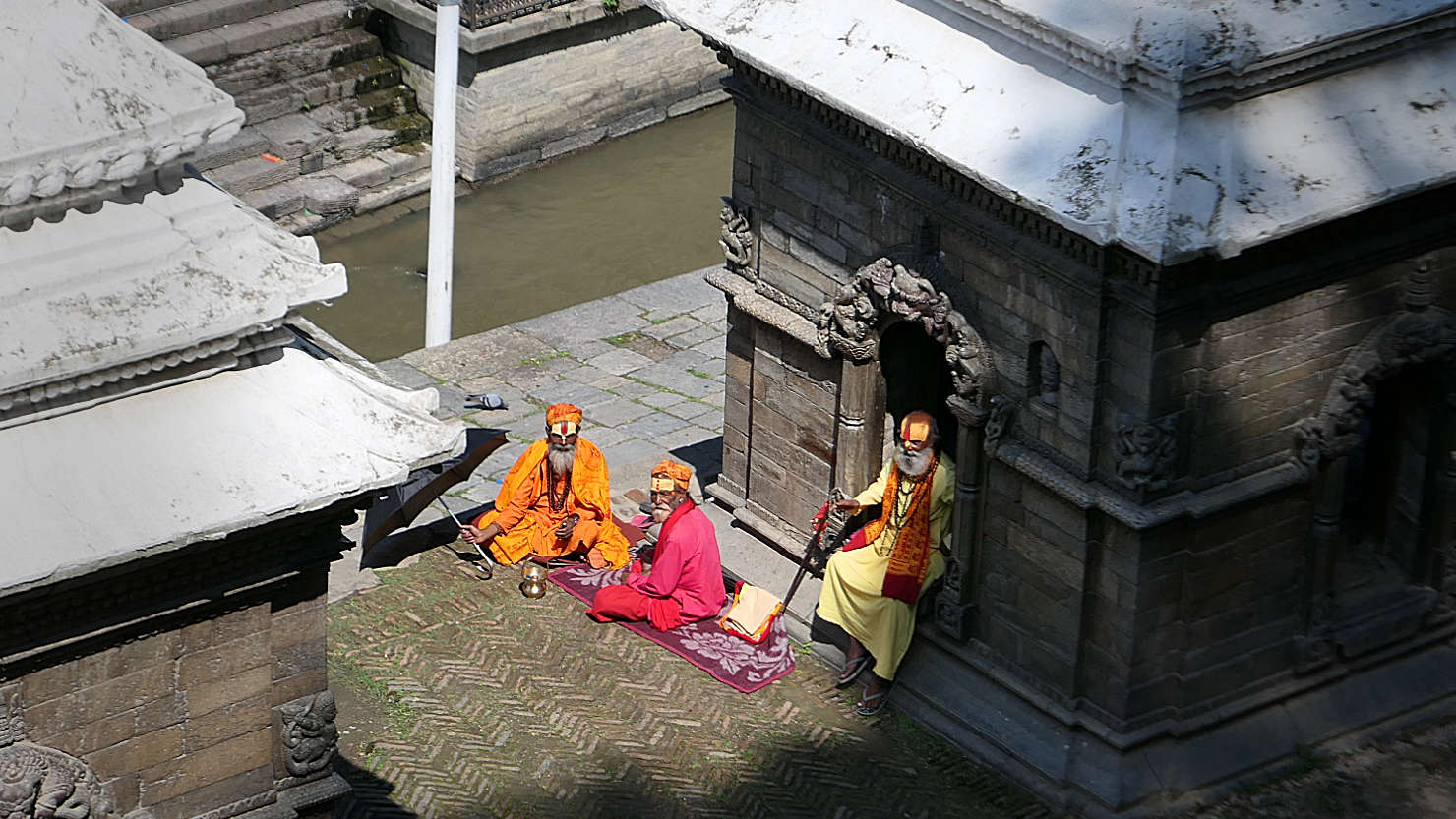
A few of Nepal’s reclusive holy men, also called Sadhus, who live at or near the Pashpatinath Temple. They have left all materialistic and sexual pleasures behind to live a life devoted to God representing the fundamental values and meanings of Hinduism.
Boudhanath Stupa – Kathmandu, Nepal
Boudhanath Stupa is located on the outskirts of Kathmandu. It’s the largest spherical stupa in Nepal and is the second largest in the world. Boudhanath Stupa is surrounded by a small village full of restaurants, shops, and a monastery.

View of the Boudhanath Stupa from the rooftop of the village monastery.

This is one of the many prayer wheels. Anyone can spin them, but they are always spun in a clockwise fashion.
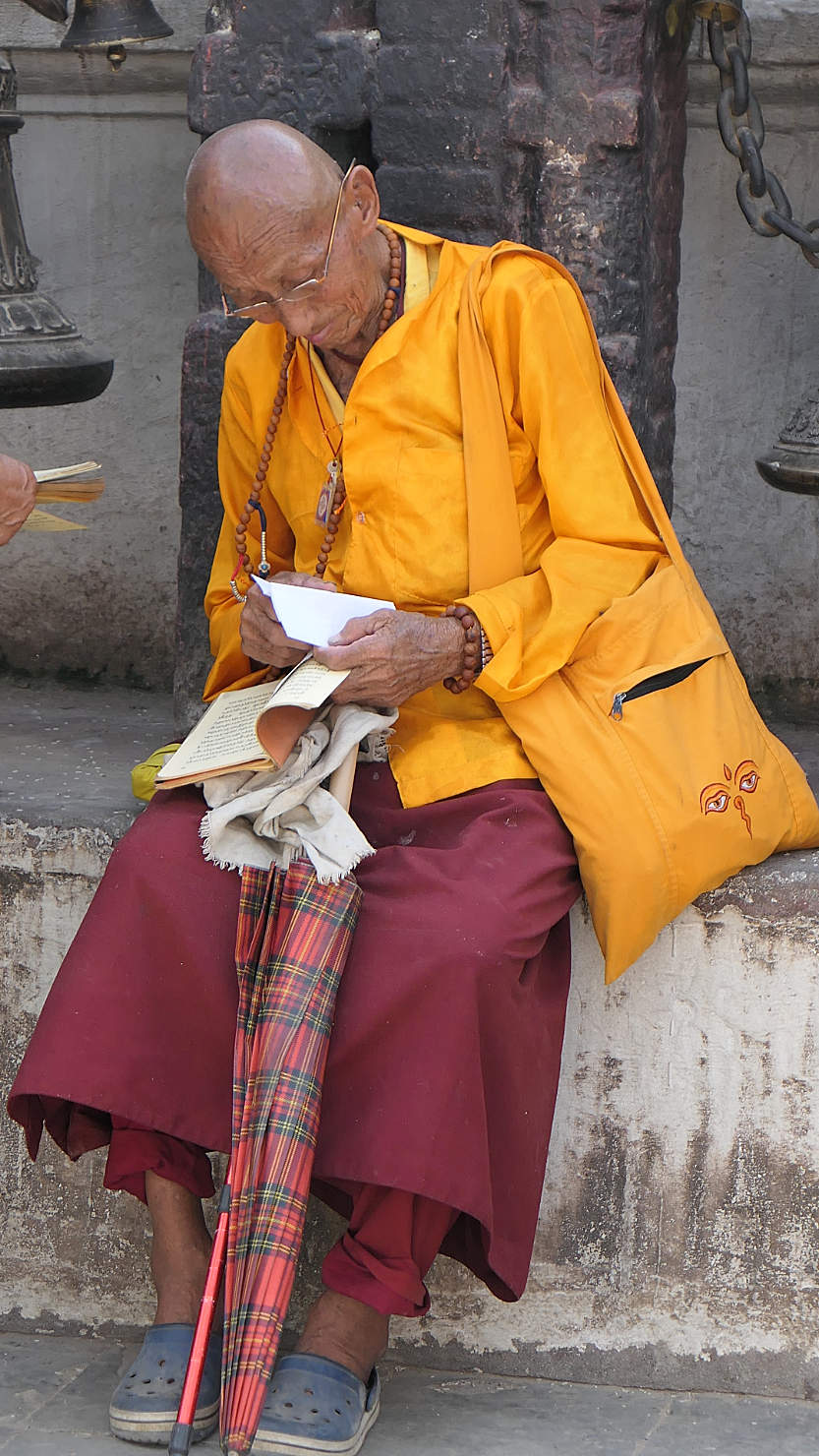
Monk from the village monastery sitting at the base of the Boudanath Stupa.
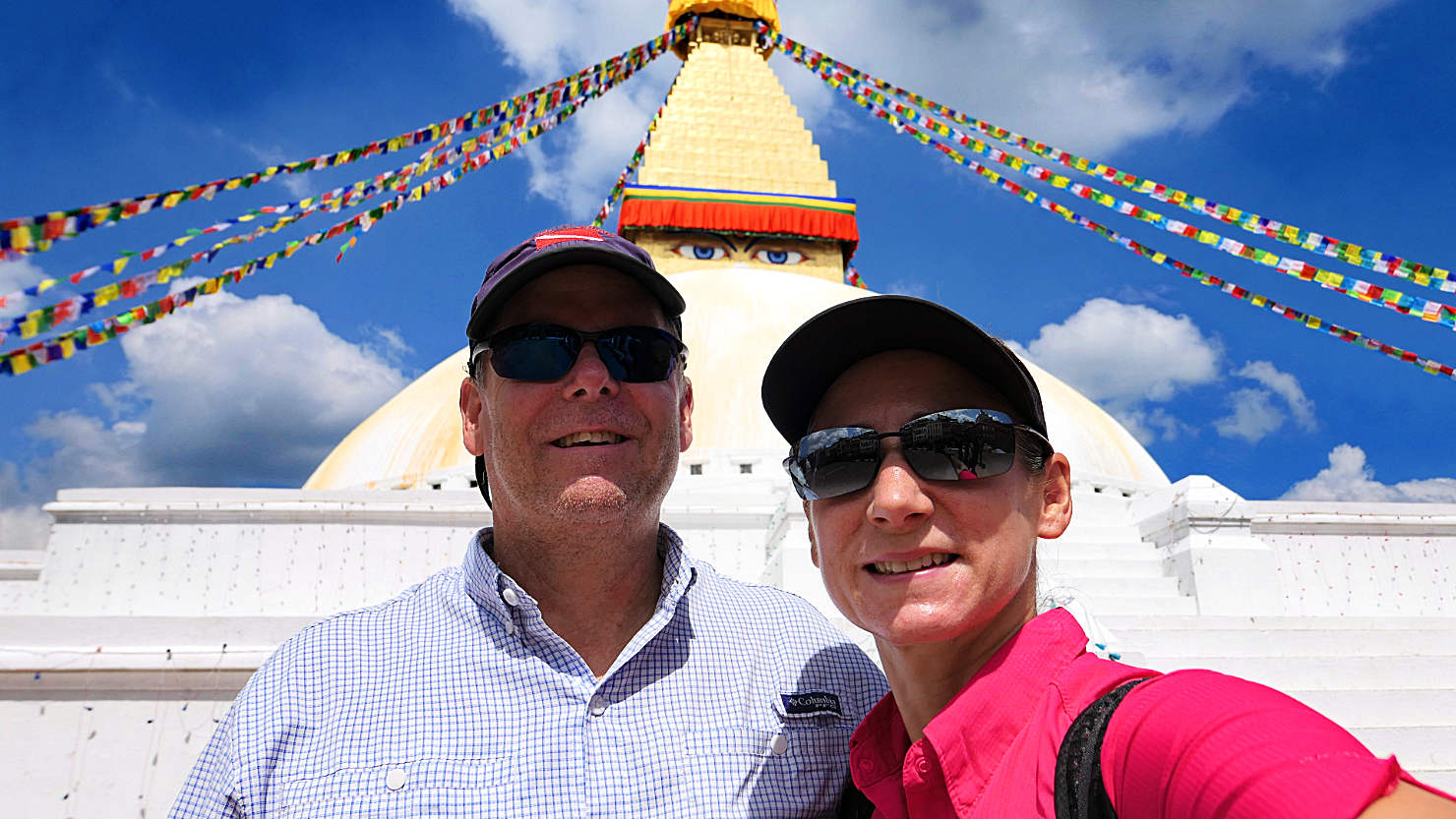
Rick and Alisa at the base of the Boudanath Stupa.
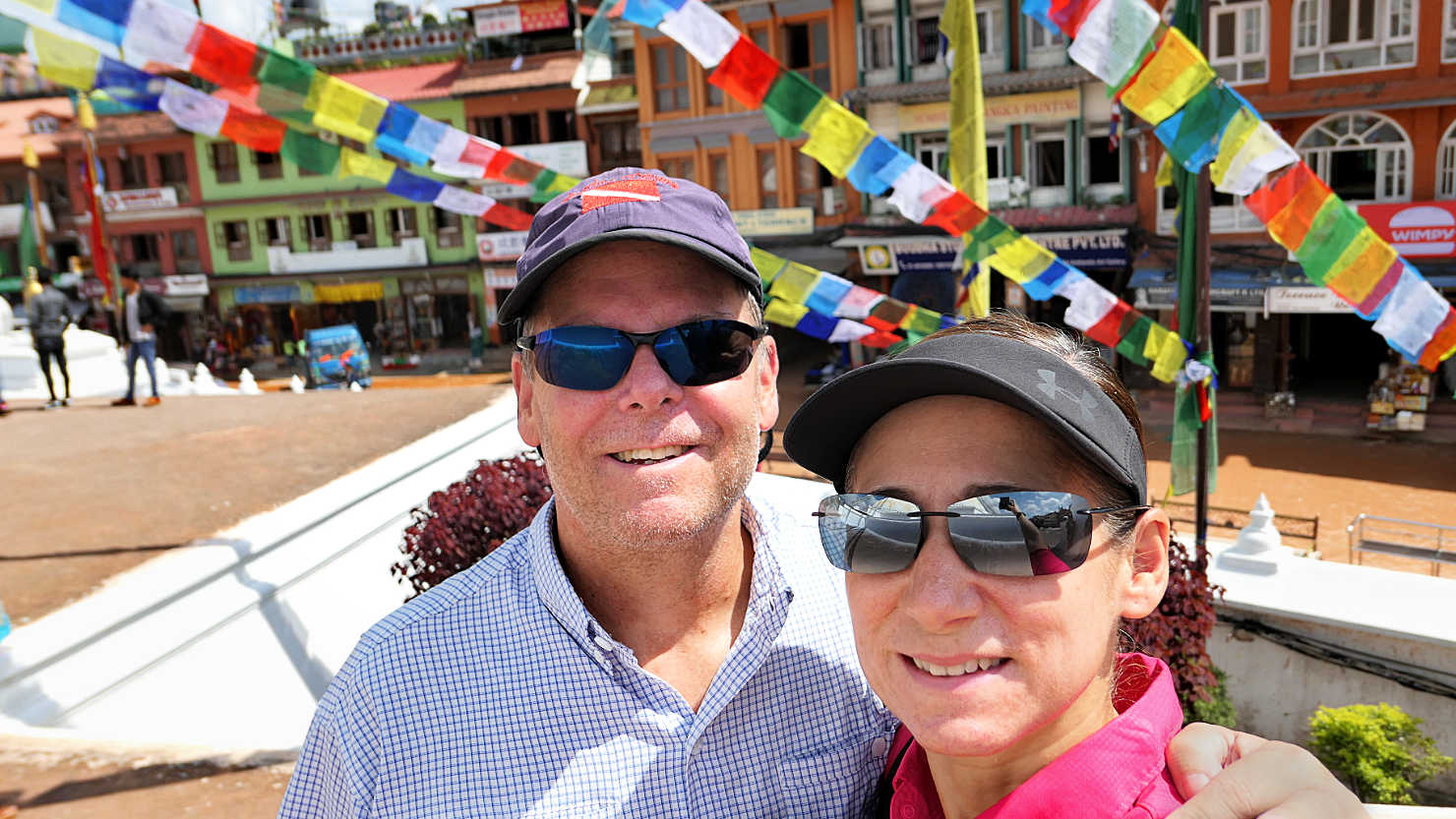
Rick and Alisa walking around on the actual stupa. You can see some of the local village shops and buildings in the background.

A flock of pigeons in the village square. They were very eager to mill around eating the bird feed locals threw out for them.
Swayambhunath Temple – Kathmandu, Nepal
Swayambhunath is among the oldest religious sites in Nepal dating back to the 5th century. Swayambhunath is more commonly referred to by tourists as the “Monkey Temple” due to the large number of monkeys living there. It’s located on a hill with 365 stone steps leading to the main stupa complex. Good views overlooking Kathmandu can be seen from the top steps.
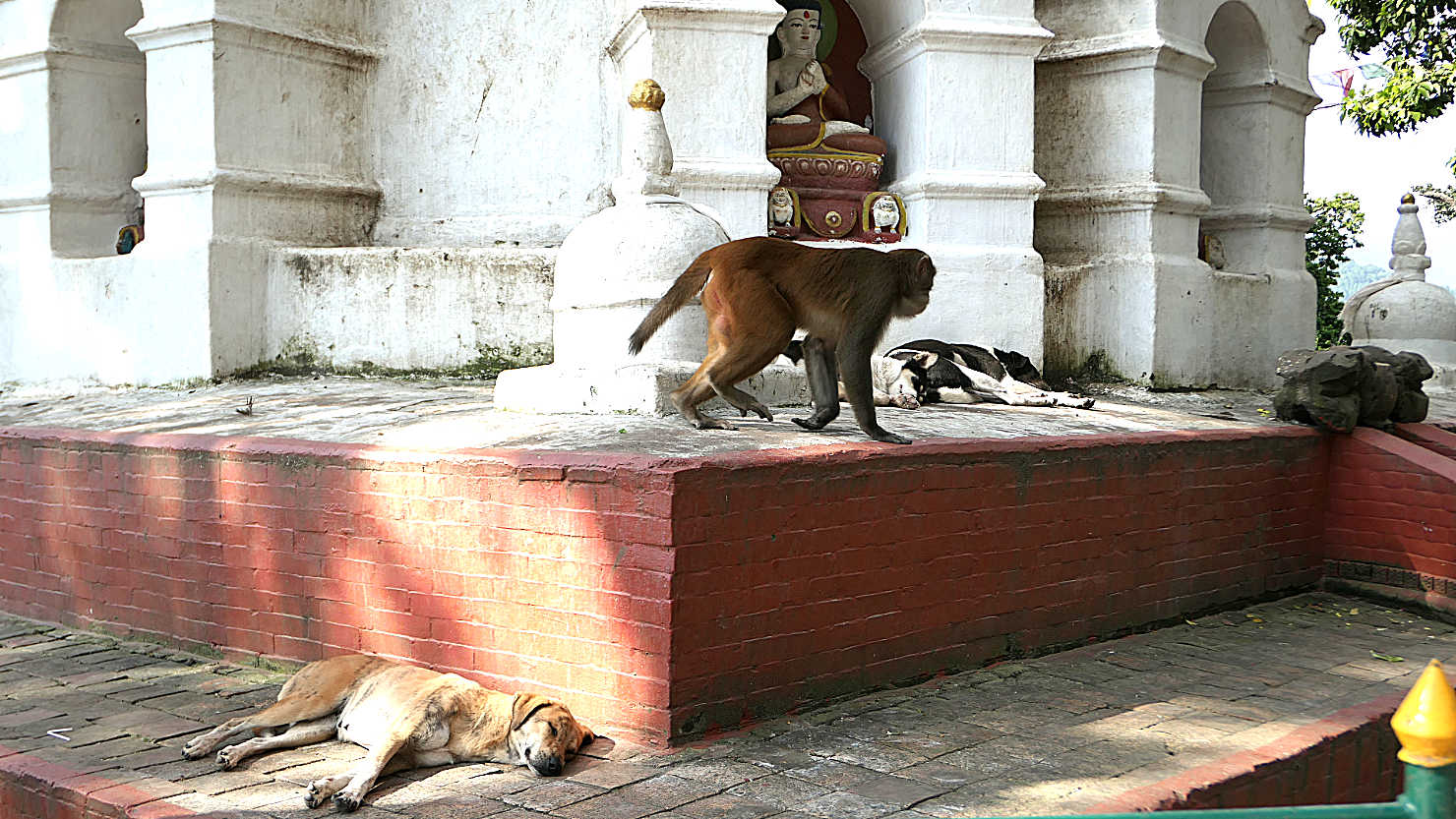
Sleeping dogs and one of the curious resident monkeys at the base of the hill leading up to the Swayambhunath Temple.

Very old carved stone tablets along the 365 stairs leading to the top of the Swayambhunath Temple.

View of Kathmandu Valley from top of the hill at the Swayambhunath Temple.
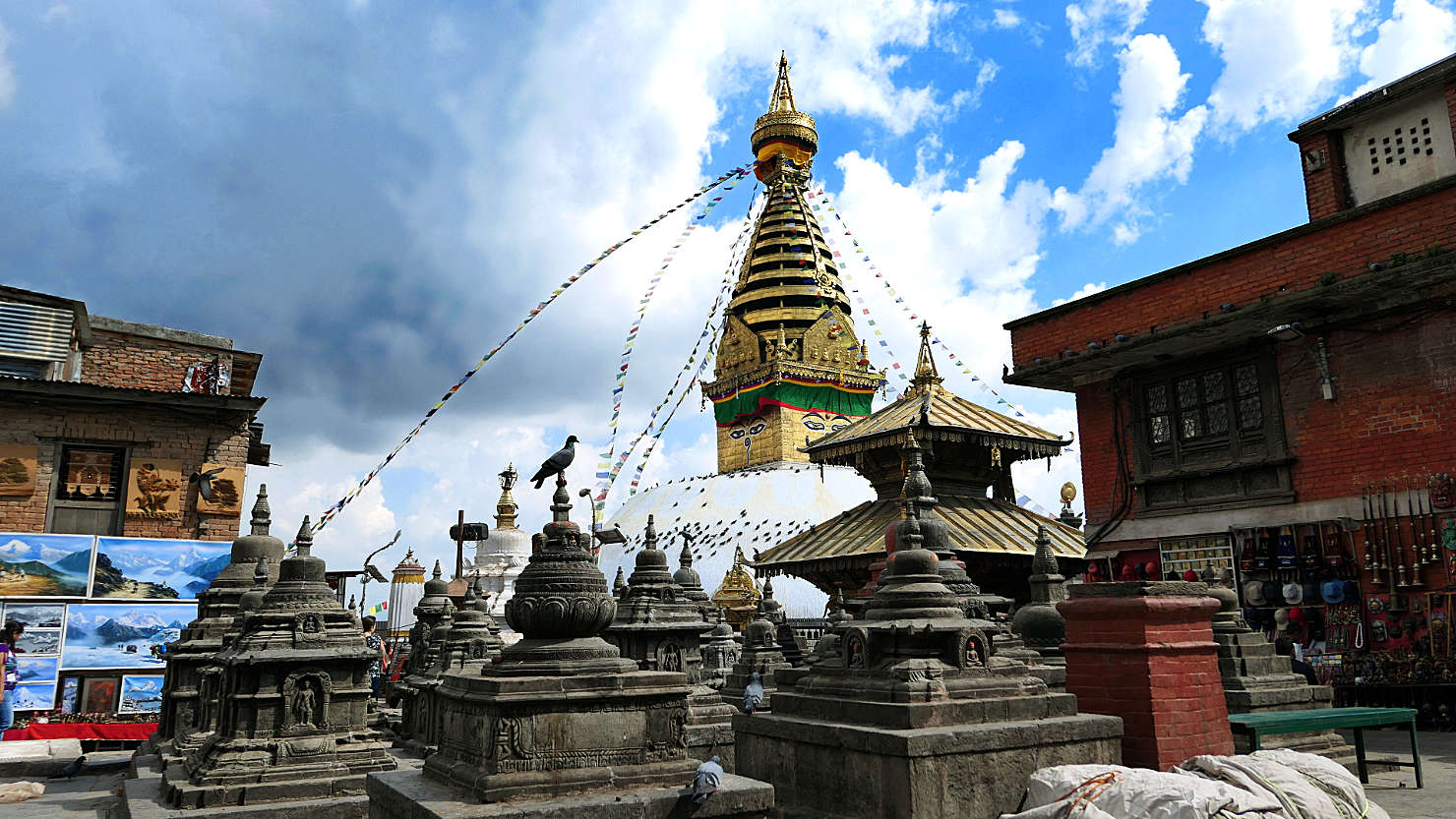
Swayambhunath pagodas, stupa, and village.

Hilltop village at Swayambhunath Temple where locals sell their handicraft.
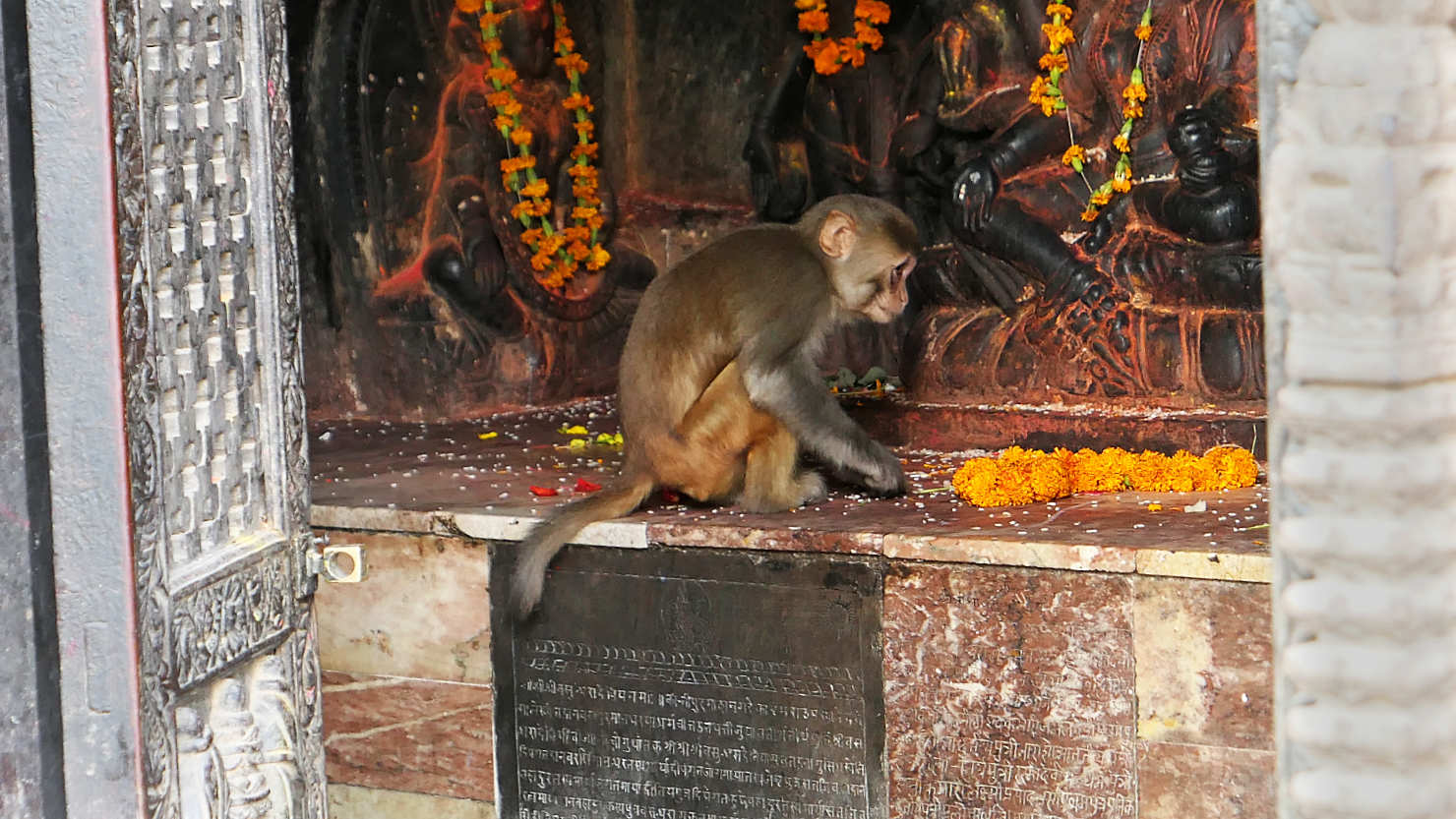
Resident monkey frantically eating flowers left inside one of the shrines.

Resident monkey having a snack behind some of the butter candle platforms.
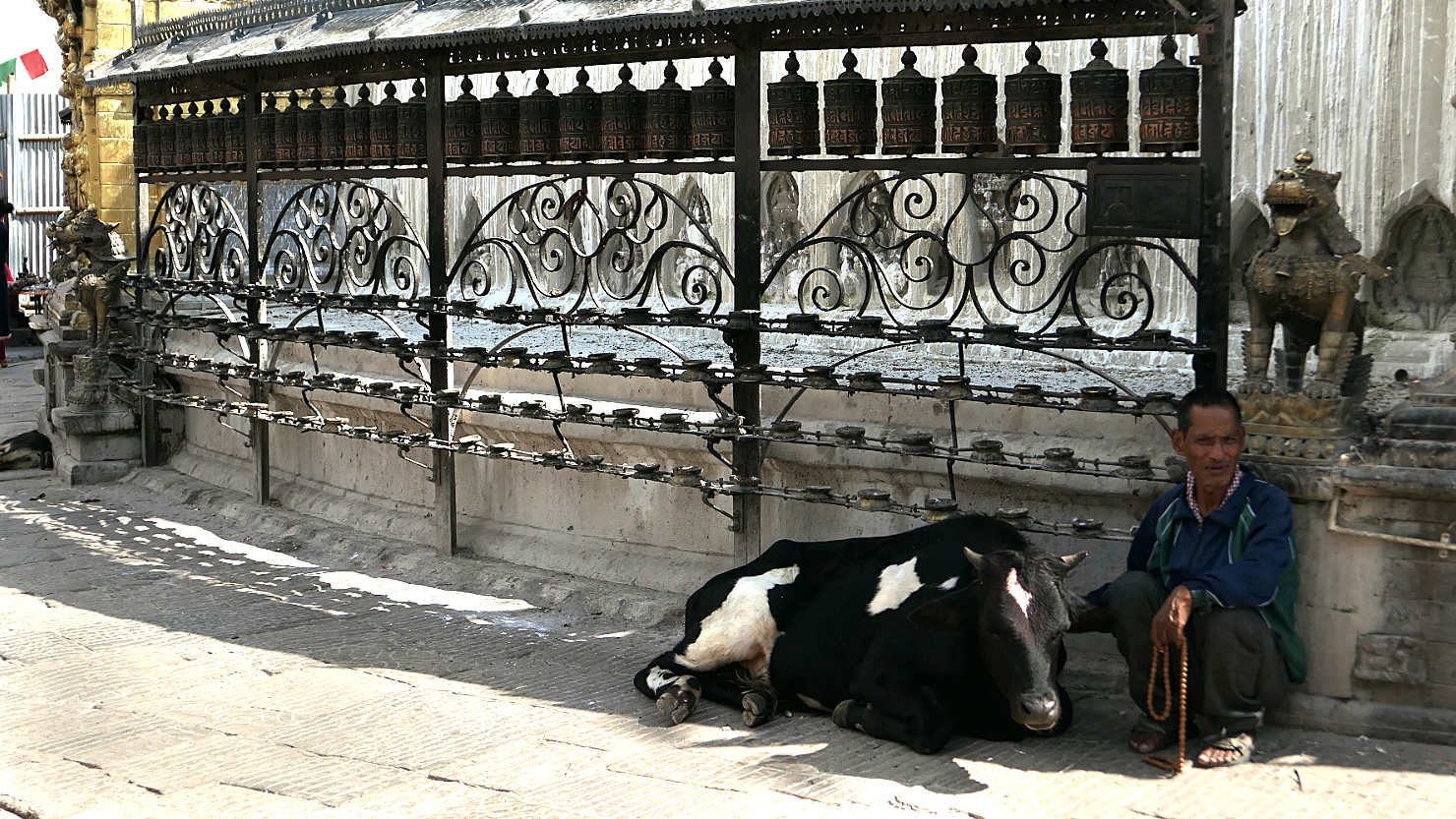
Local man sitting with one of the “holy” cows at the Swayambhunath Temple.
Bhaktapur, Nepal
Bhaktapur is located 20 km east of Kathmandu and until the 15th century was the capital of Nepal. Bhaktapur is filled with ancient Hindu and Buddhist sites dating back several centuries consisting of pagodas, religious shrines, monuments, palaces, and temples with elaborate wood carvings, gilded roofs, and open courtyards. One can easily spend several days walking around the ancient city absorbing the beautiful architecture, local handicraft, traditions and culture.
Video – Bhaktapur, Nepal
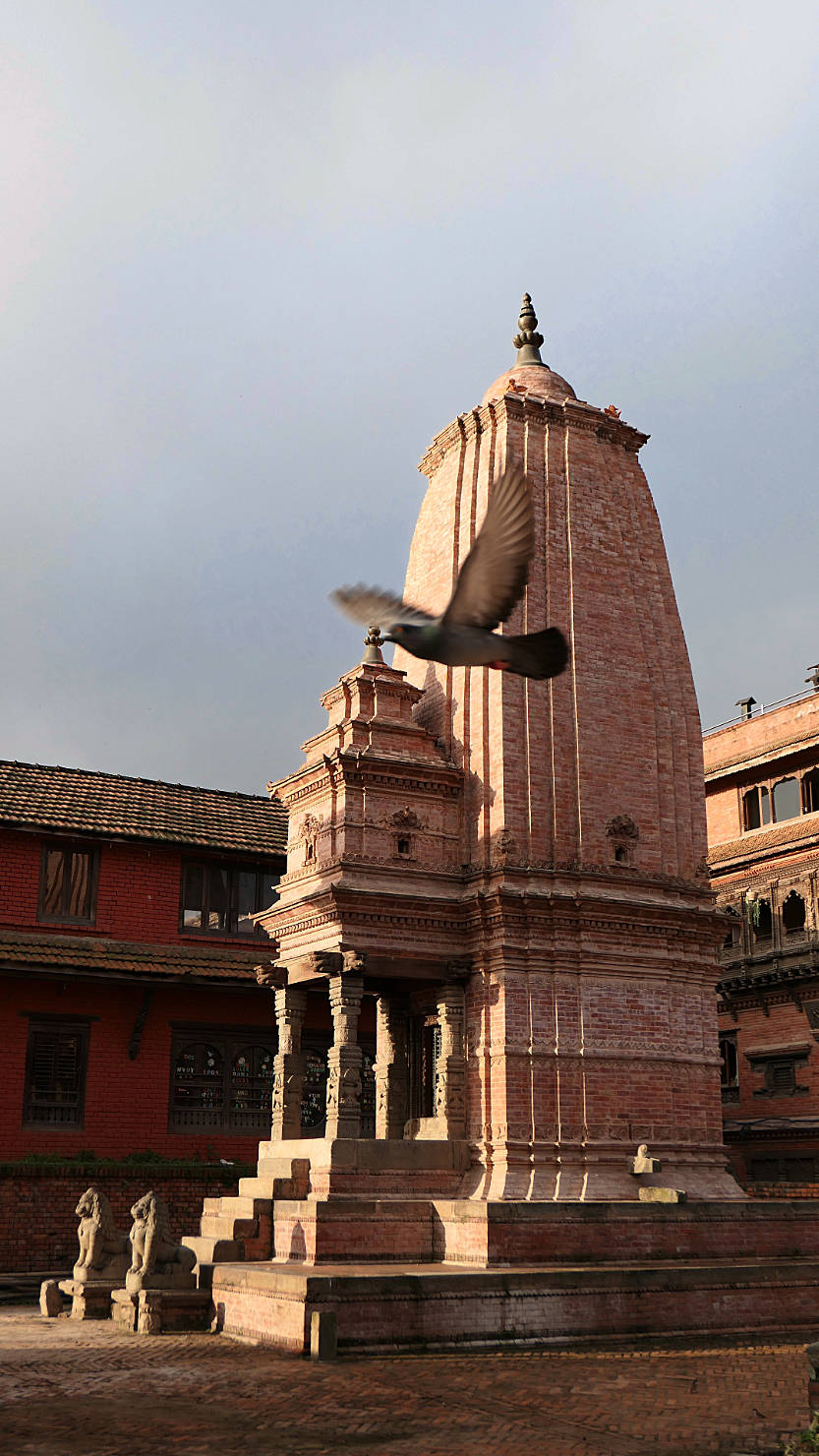
Early morning bird in flight at the Shiva Temple in Durbar Square.
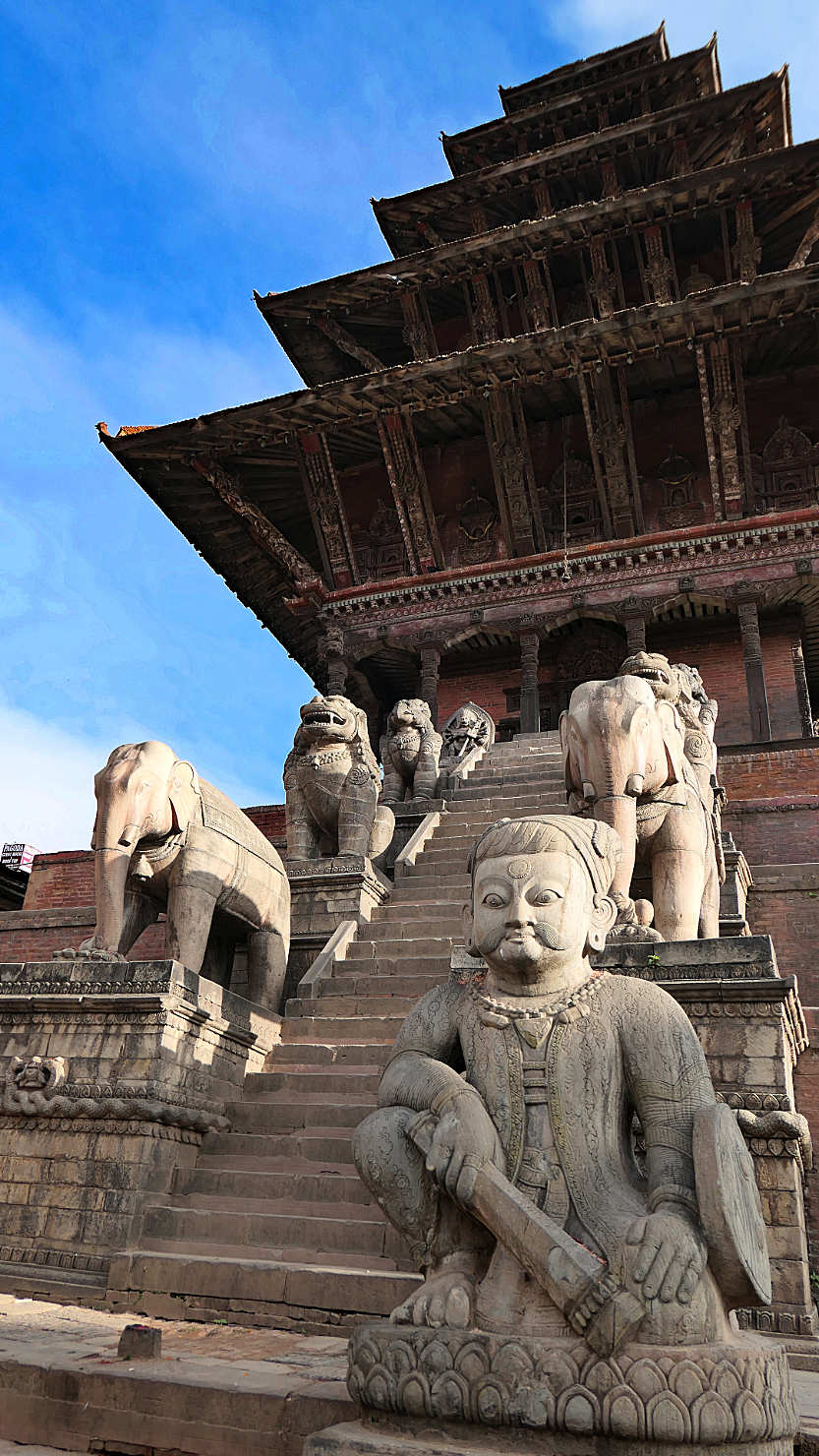
Early morning at the five story high Nyatapola Temple in Taumadhi Square, Nepal’s tallest pagoda temple built in 1702.
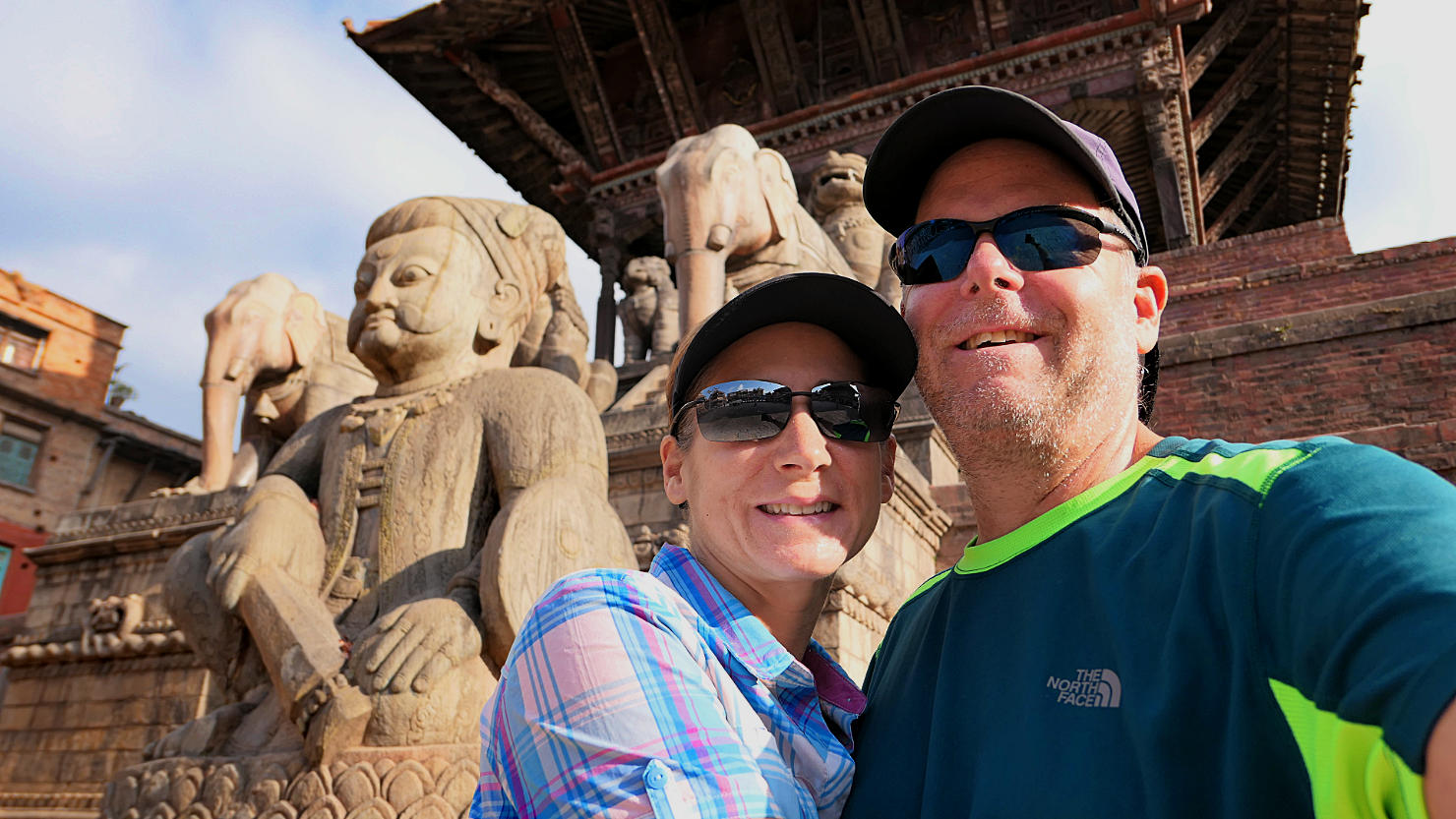
Rick and Alisa at the base of Nyatapola Temple in Taumadhi Square.

View of Taumadhi Square from the top of the Nyatapola Temple, Nepal’s tallest pagoda temple.

Damage from the 2015 earthquake. Many of the buildings were hit hard in Bhaktapur, but they are working hard to rebuild them.

More damage from the 2015 earthquake. Note the blue chest of drawers wedged in the middle of the wall.
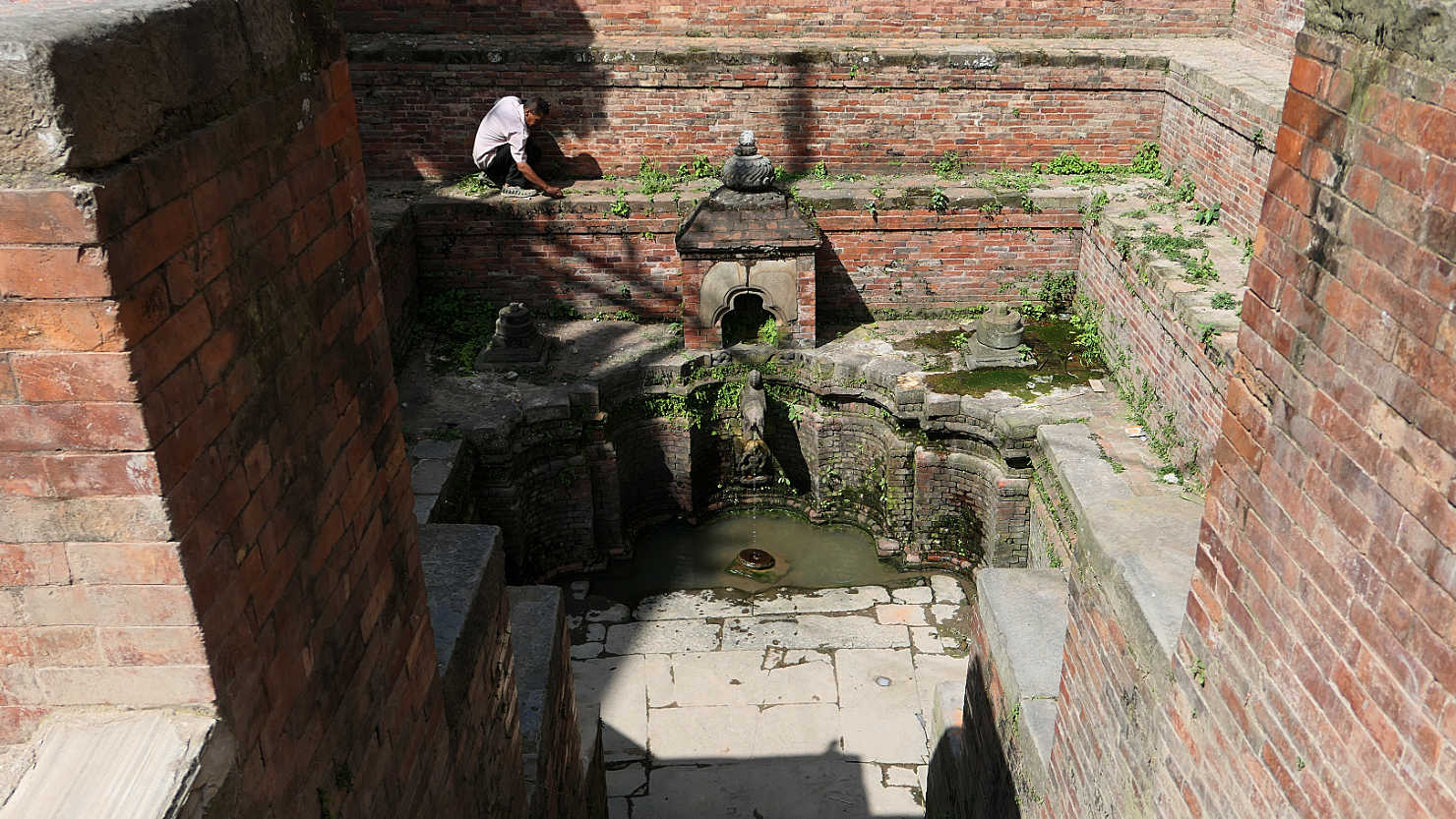
One of the public water sources called a “hiti”. These can be found all over town.
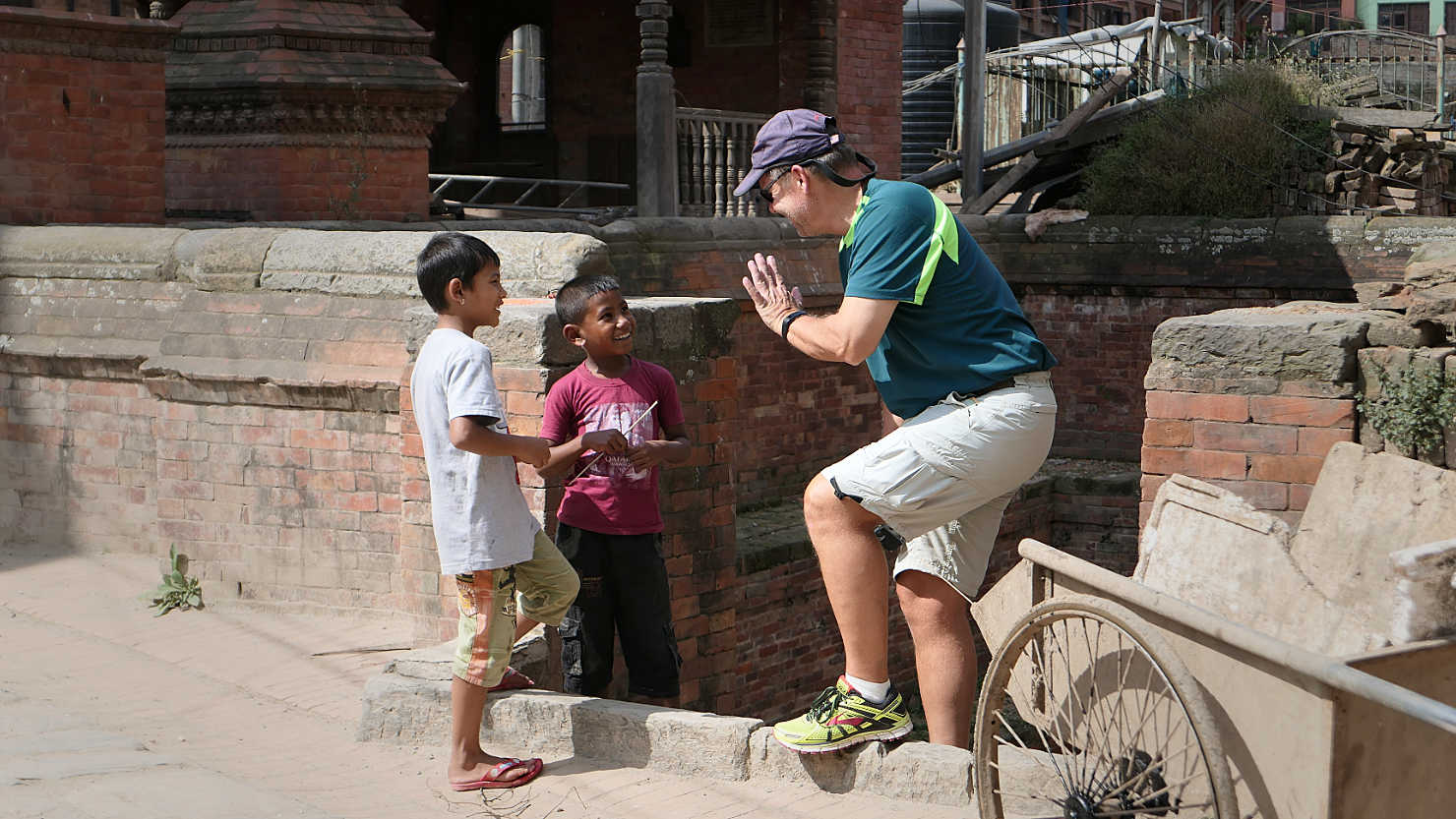
Local kids saying “Namaste” (hello) to Rick as he walks up from a local “hiti”.

Rick at the former King’s Royal Palace bath.
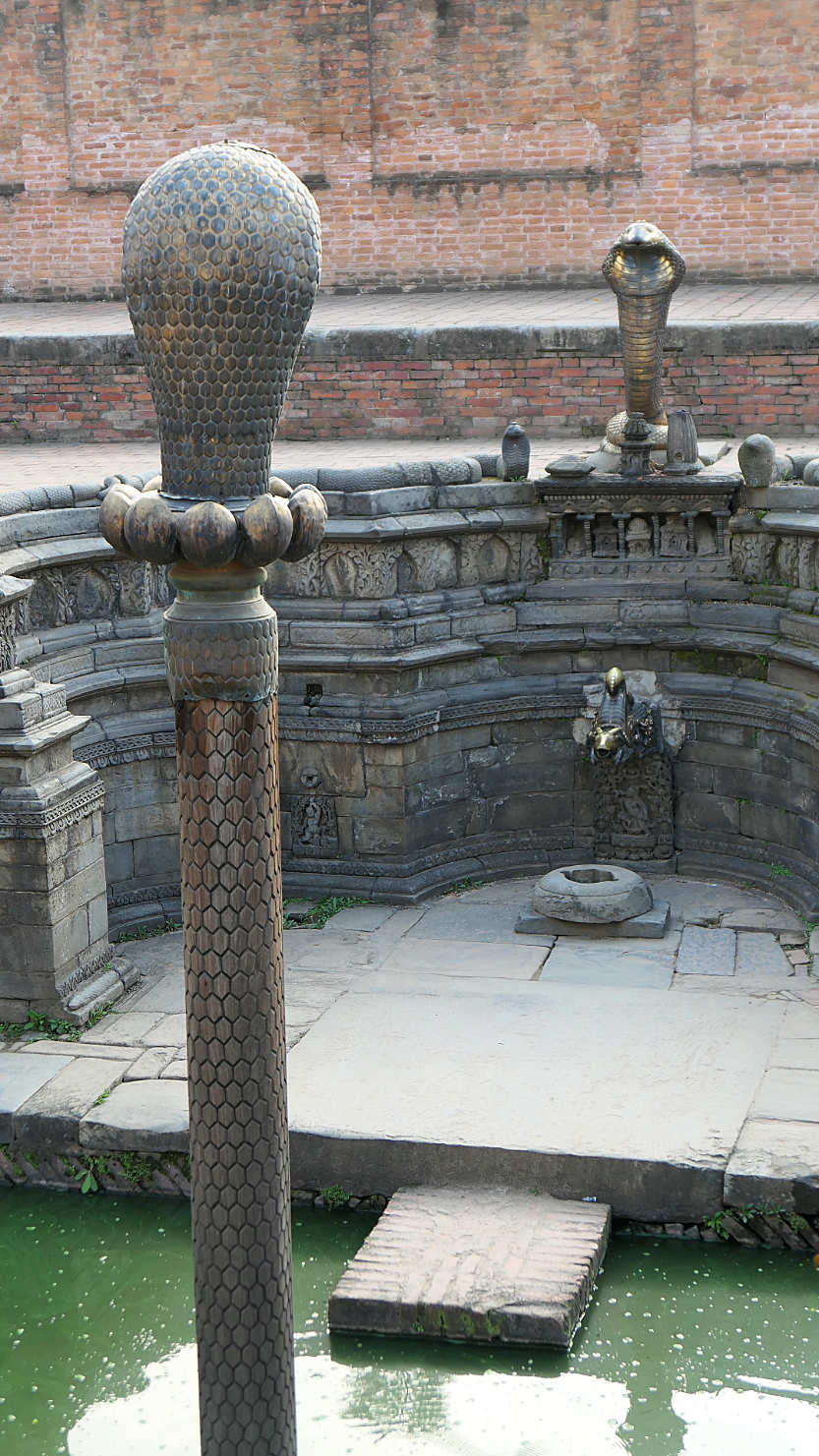
Guardian serpents at the former King’s Royal Palace bath.
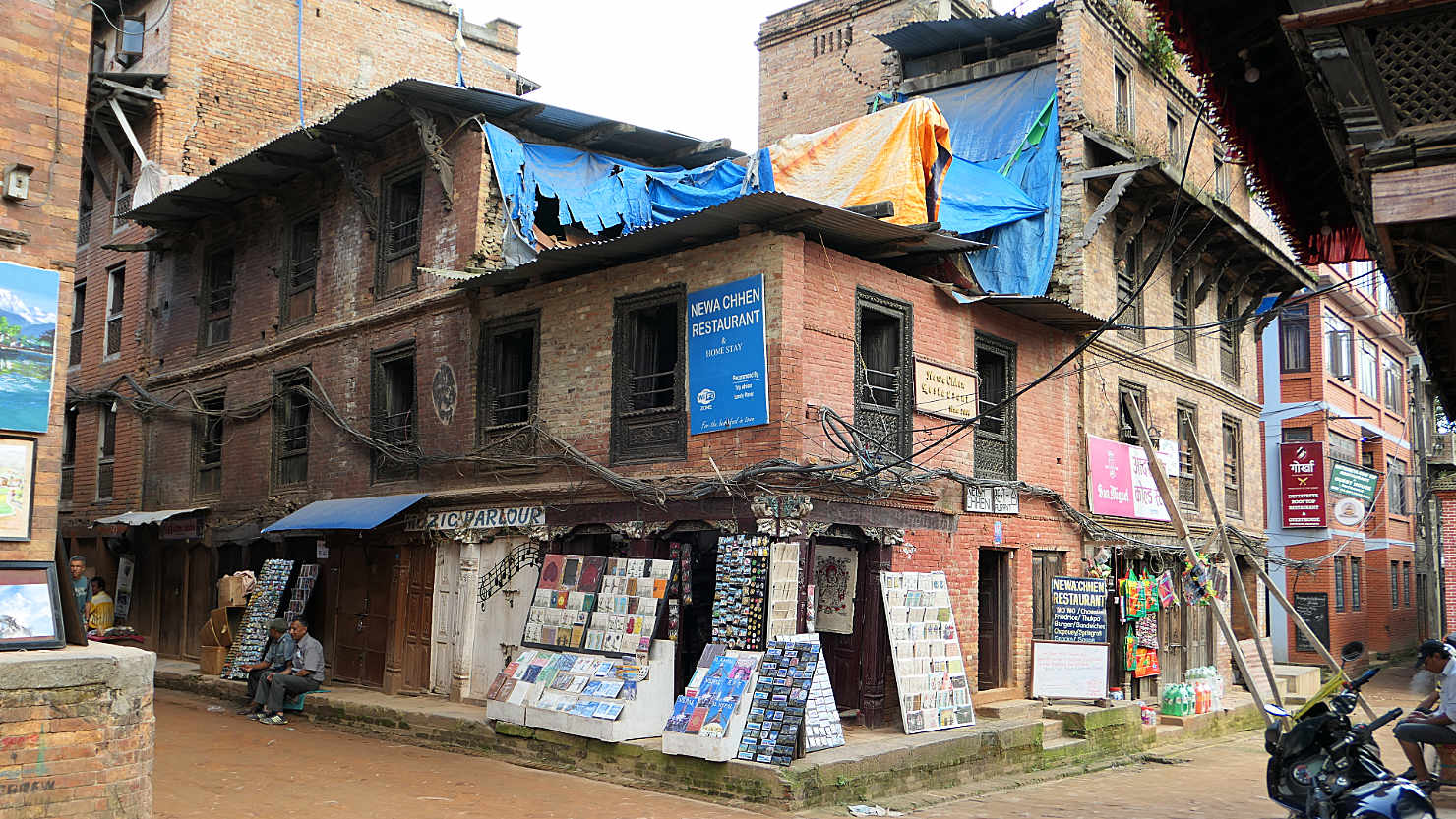
Street corner in Dattrataya Square in the oldest part of the city. We ate a local Newari meal at the funky upstairs restaurant shown here…We had to climb a steep ladder inside the doorway to get up there.
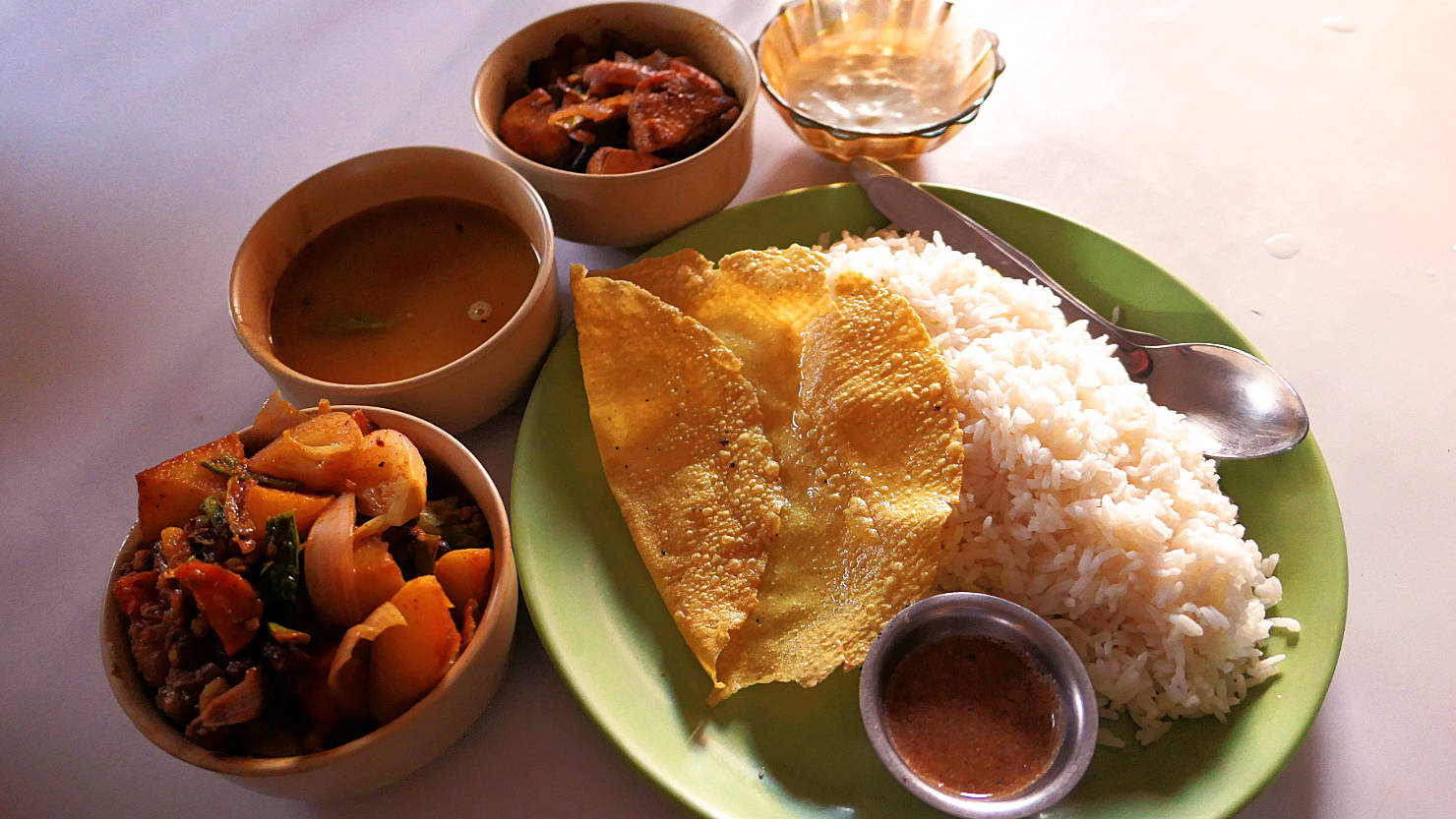
We had this typical Nepali dish, Dahl Baht (lentil soup, vegetable curry, chicken curry, rice, papadam (similar to a large tortilla chip), and sauces) at the funky upstairs restaurant in Dattrataya Square. It’s a nice hearty dish wherever you order it.

Local woman looking over Dattrataya Square from her upstairs wood carved window.
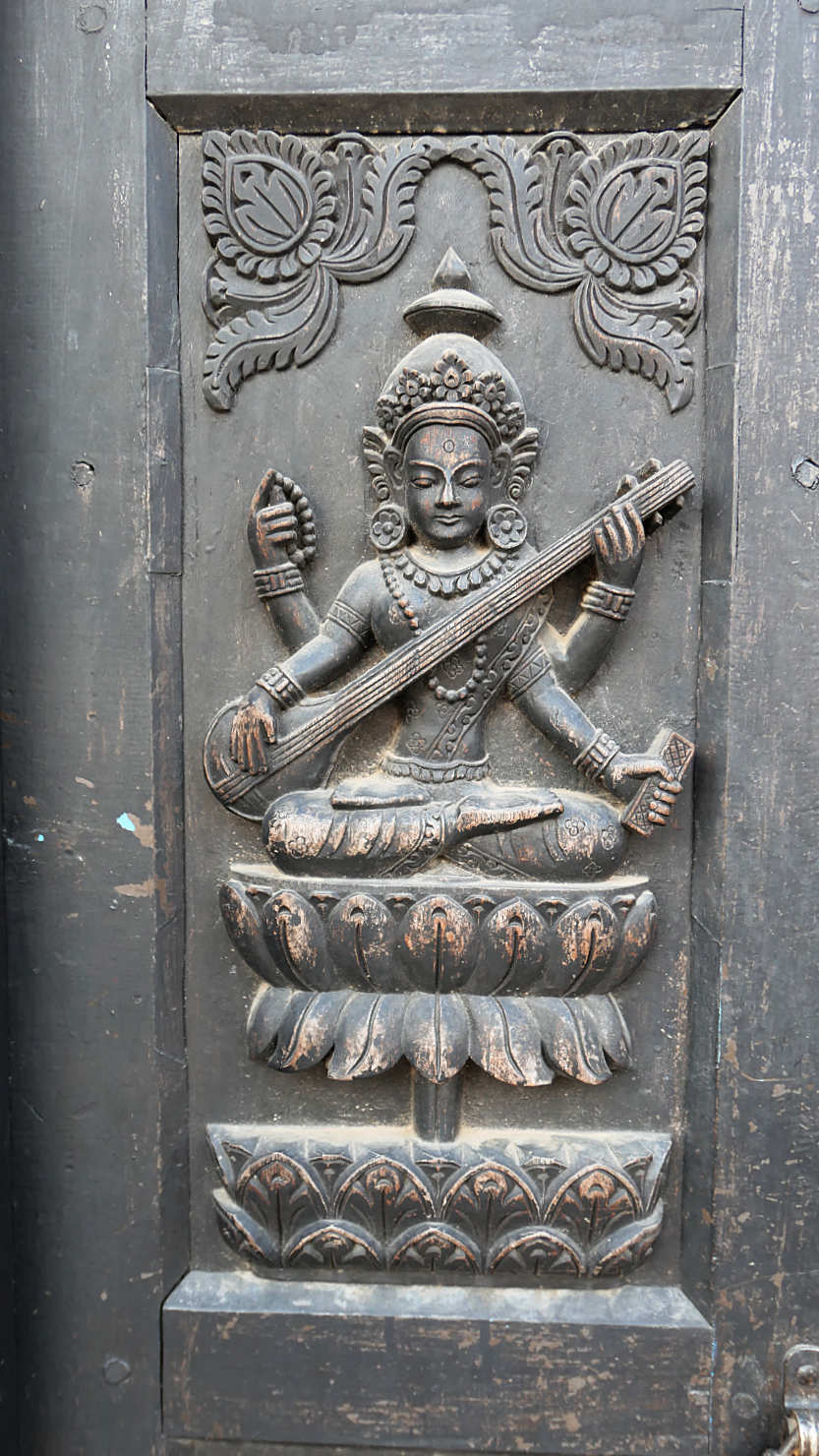
Close-up of one of the original wood carved doors.
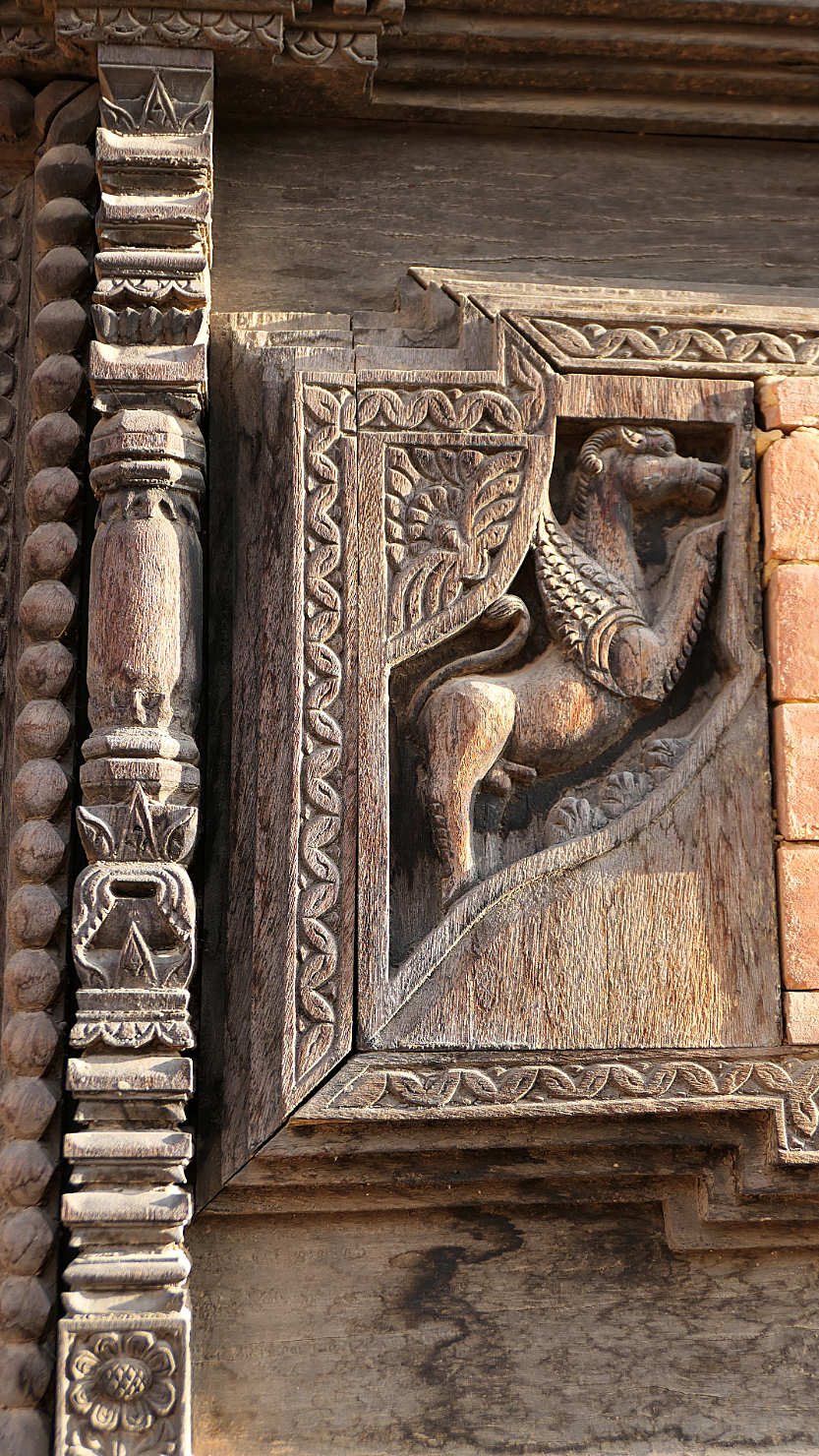
Detail of some of the original wood carvings seen on many of the buildings.
