Flores (Overland), Indonesia – Aug 2017
After spending 17 days on the island of Sumbawa in Indonesia, we headed further east to the island of Flores. Early morning on Aug 1st, we took an hour long taxi ride to the ferry terminal on the East side of Sumbawa to Sape to catch the morning “slow” ferry boat to Flores (pretty much the only transportation option from here other than hiring a very expensive private charter). We arrived at 7:30am and hopped out of the taxi only to find out there was no morning boat, the only boat would arrive at 4pm. Apparently, the usual morning boat hasn’t been online for over a month, but no one seemed to pass the word around to the surrounding towns. There were many people stuck waiting all day for the ferry to arrive. Luckily, we found a clean, cheap hotel room within walking distance and hung out there instead of the dirty terminal area. The ferry boat arrived a little past 4pm and immediately started to unload. We bought our tickets and were allowed to board at 5pm. We made our way to the outside upper deck and watched them load the boat. We continued to watch, and watch, and watch… for over 3 hours! It was unbelievable – it took them 4-1/2 hours to unload and reload the ferry. The boat was finally ready at 8:20pm and we set sail for a 6-1/2 hour ride to Flores. We arrived into Labuan Bajo, Flores at 3am in the morning. Once docked, we walked off the ferry and caught our taxi to our hotel. We finally made it to bed at 4am. What a long day!!!

Our very late ferry boat from Sumbawa to Labuan Bajo on Flores.
Labuan Bajo, Flores
Labuan Bajo is a waterfront town with a cool vibe on the West side of Flores. It’s very touristy, but is still a fun place to hang out and chill for a few days. Labuan Bajo is great starting point for visiting other overland destinations and also the very famous Komodo National Park (our next post following our 7 day overland trip).

Panorama of the Labuan Bajo Harbor.
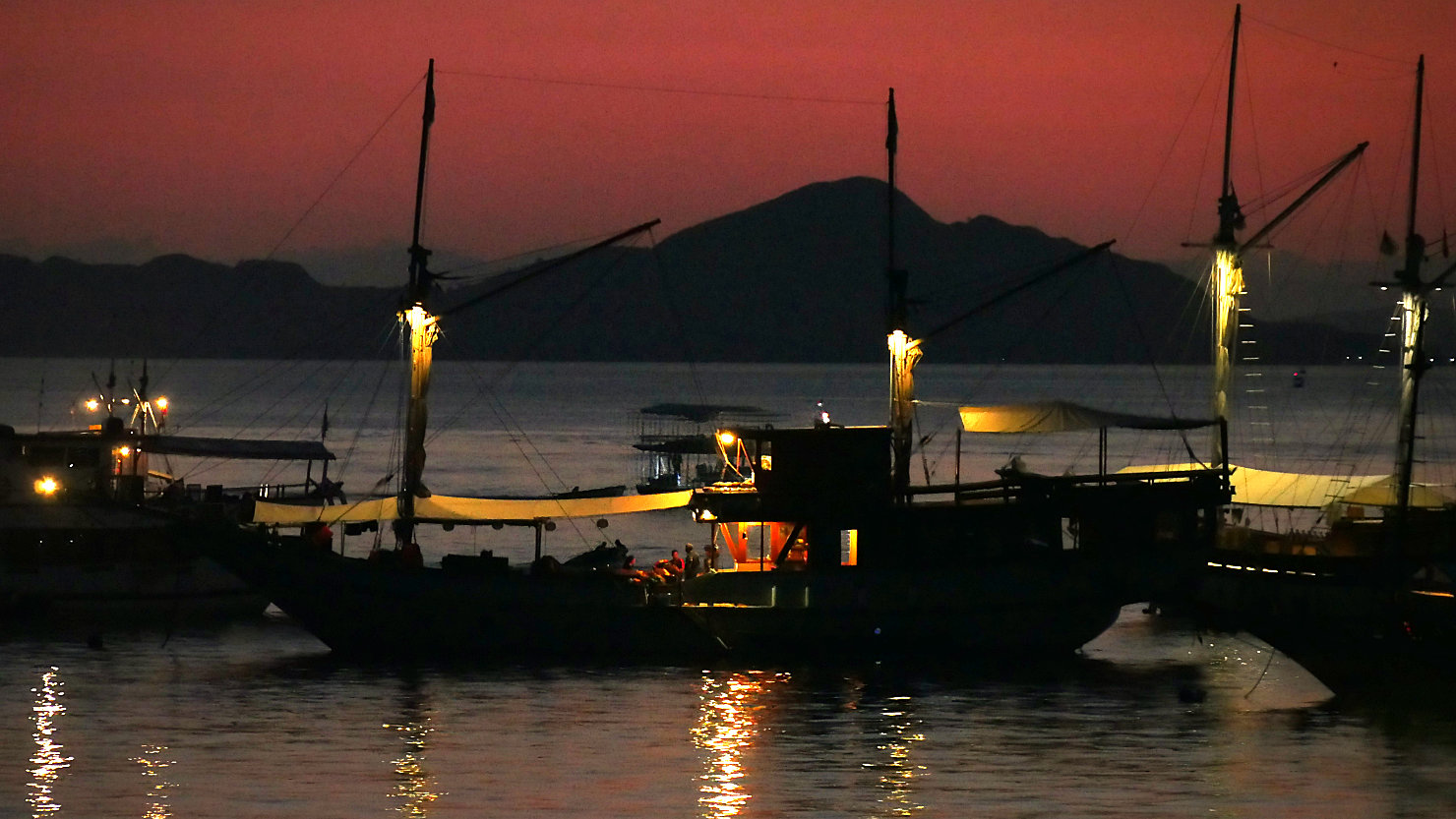
Labuan Bajo Harbor boats at night.
7 Day Overland Road Trip, Flores
Our first decision for seeing other areas of Flores was by land with a hired guide/driver. This is a very common and great way to see more of Flores. We spent 7 days with our guide starting from Labuan Bajo all the way to Mt Kelimutu and back to Labuan Bajo with several stops along the way. We could have easily done more than 7 days as we spent a ton of time driving and only made it halfway across the island due to the winding roads. We had to be back in Labuan Bajo by Aug 13th for two different planned boat trips to Komodo National Park (our next post). Even though a lot of time is spent driving in a car, this is a very nice way to see the beautiful island of Flores at your own pace and is one we’d both recommend. And, also one we’ll be doing again to see the eastern half of Flores which we didn’t have time to see.
We spent time at several destinations during our 7 days traveling overland across Flores. See our below post for details about each area visited.
See video and photos below highlighting our first 12 days on the island of Flores, Indonesia. To see all images of this location click the link at the bottom of this post or go to our gallery.

Our 6-1/2 hour ride into our first destination, Wae Rebo Village.
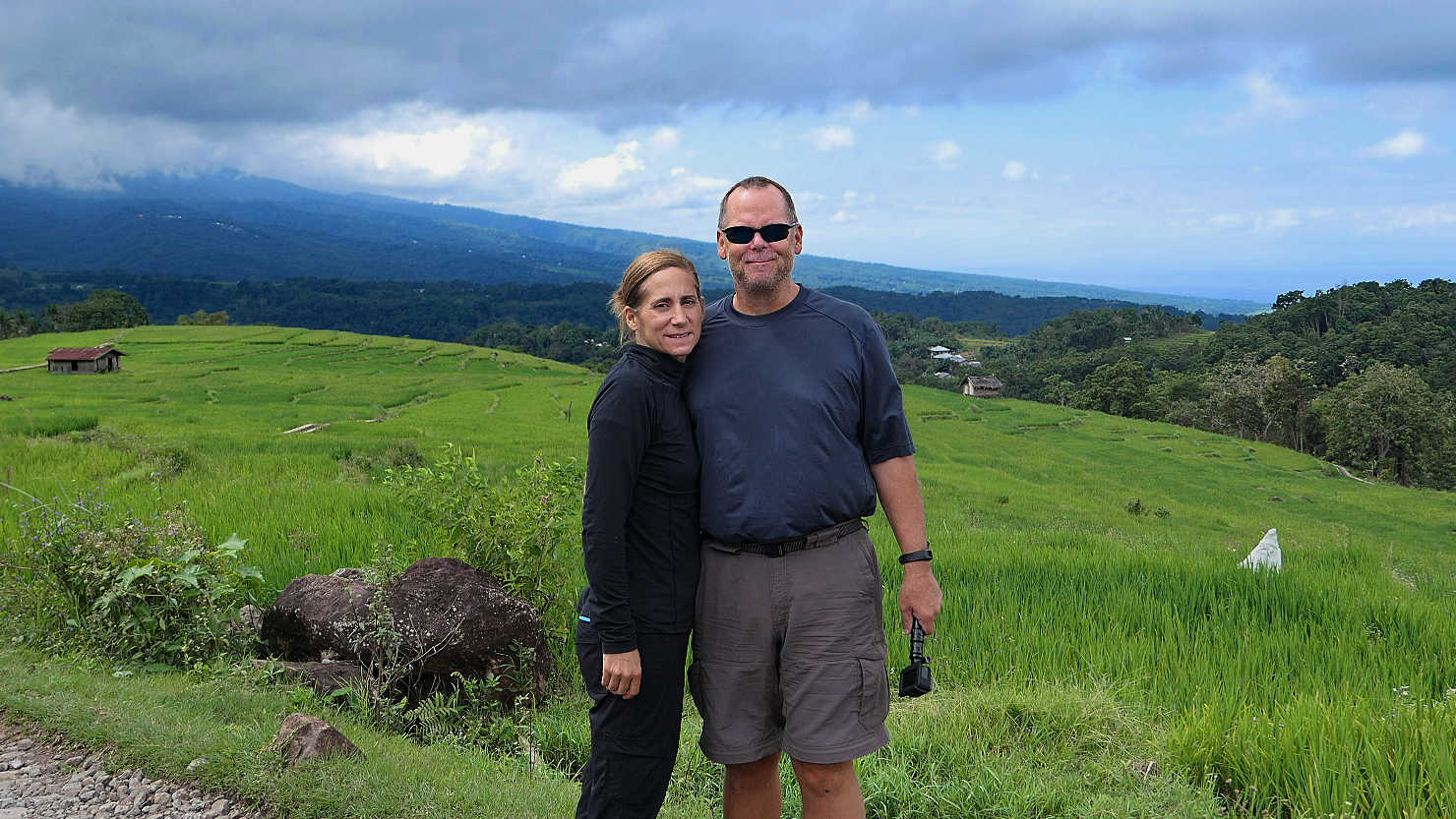
Rick and Alisa along the way to our first stop, Wae Rebo Village.
Wae Rebo Village, Flores
Wae Rebo is a traditional Manggarai Village located at roughly 4,000 ft above sea level. Wae Rebo is famous for it’s cone shaped house known as Mbaru Niang. It’s also a pretty popular place for day or overnight trips by tourists. Wae Rebo was our day one and also our first night of our overland trip. We left Labuan Bajo at 6am and drove a rough 6-1/2 hours to Denge, the closest town to the village. The main roads on Flores are decent, but very windy through many mountains. But, the roads to the village were another story…they were very rough and required a slow crawl over obstacles at times. We arrived into Denge at 12:30pm. We had lunch, hired a guide to take us to the village, and set off at 1:15pm up the 9km long trail. The first 1-1/2 km of the trail is paved, but the rest of the trail is dirt (or mud for us since it had been raining). We arrived to the village perimeter at 3:45pm where we announced ourselves to the chief using a bamboo-type bell. You ring it to let the chief know there are visitors approaching. He then prepares a welcome ceremony upon your arrival into the heart of the village. Following the ceremony, we were escorted to the cone shaped communal house which is shared by all other visitors. We were given pillows and blankets and assigned one of the mattresses which lined the inside perimeter of the house. It was kind of strange sleeping next to someone you don’t know, but all in all the night was very quiet and way better than both of us expected. The village was definitely worth the trip to see the houses, meet the people who live and work there, and experience a little of what village life is like.
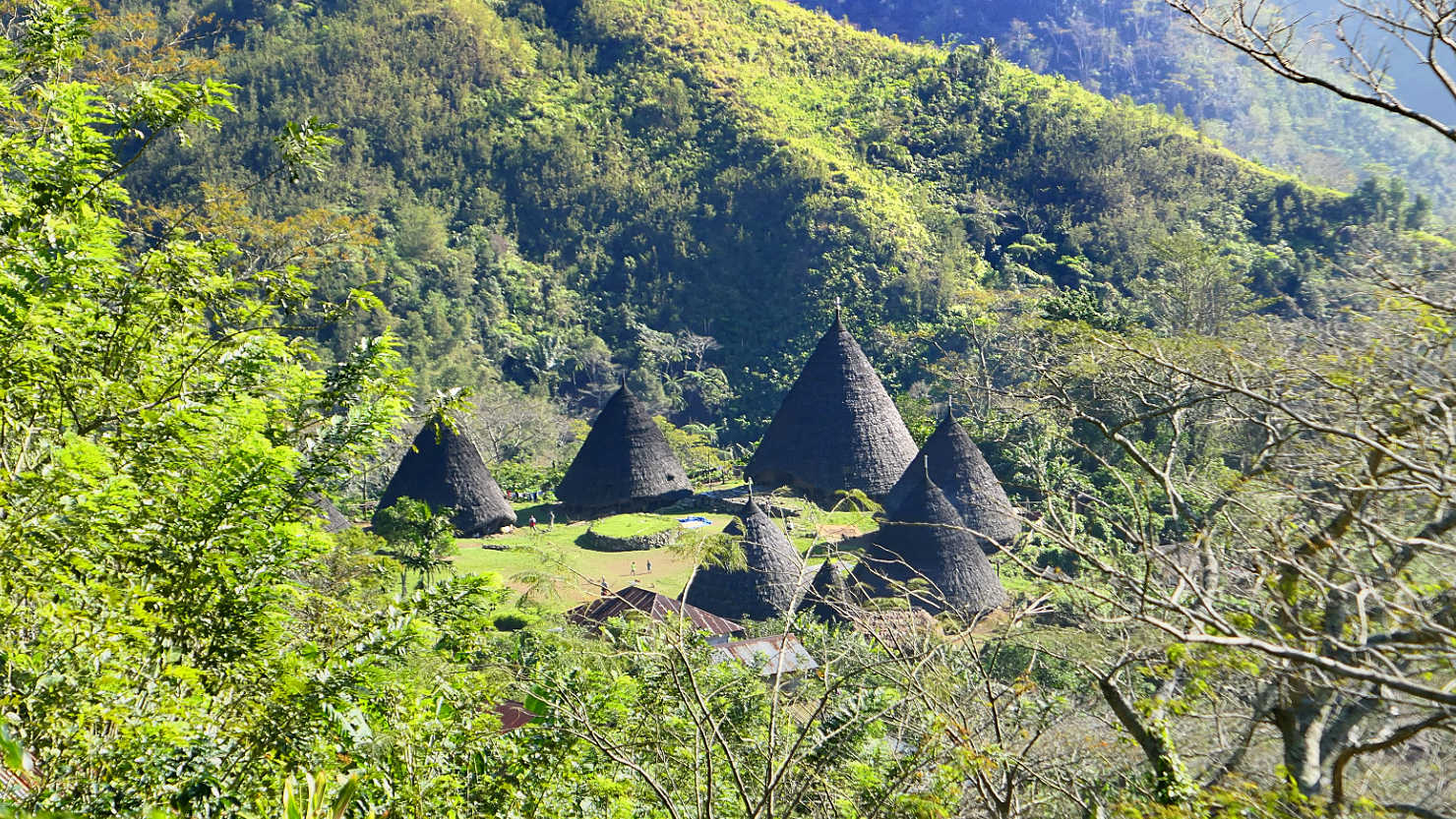
Our first glimpse of the Wae Rebo Village and also where we rang the bamboo-type bell to announce our arrival to the village chief.

Alisa, the Village Chief, and Rick following our welcoming ceremony.

Two traditional houses and their ceremonial altar in the fog.
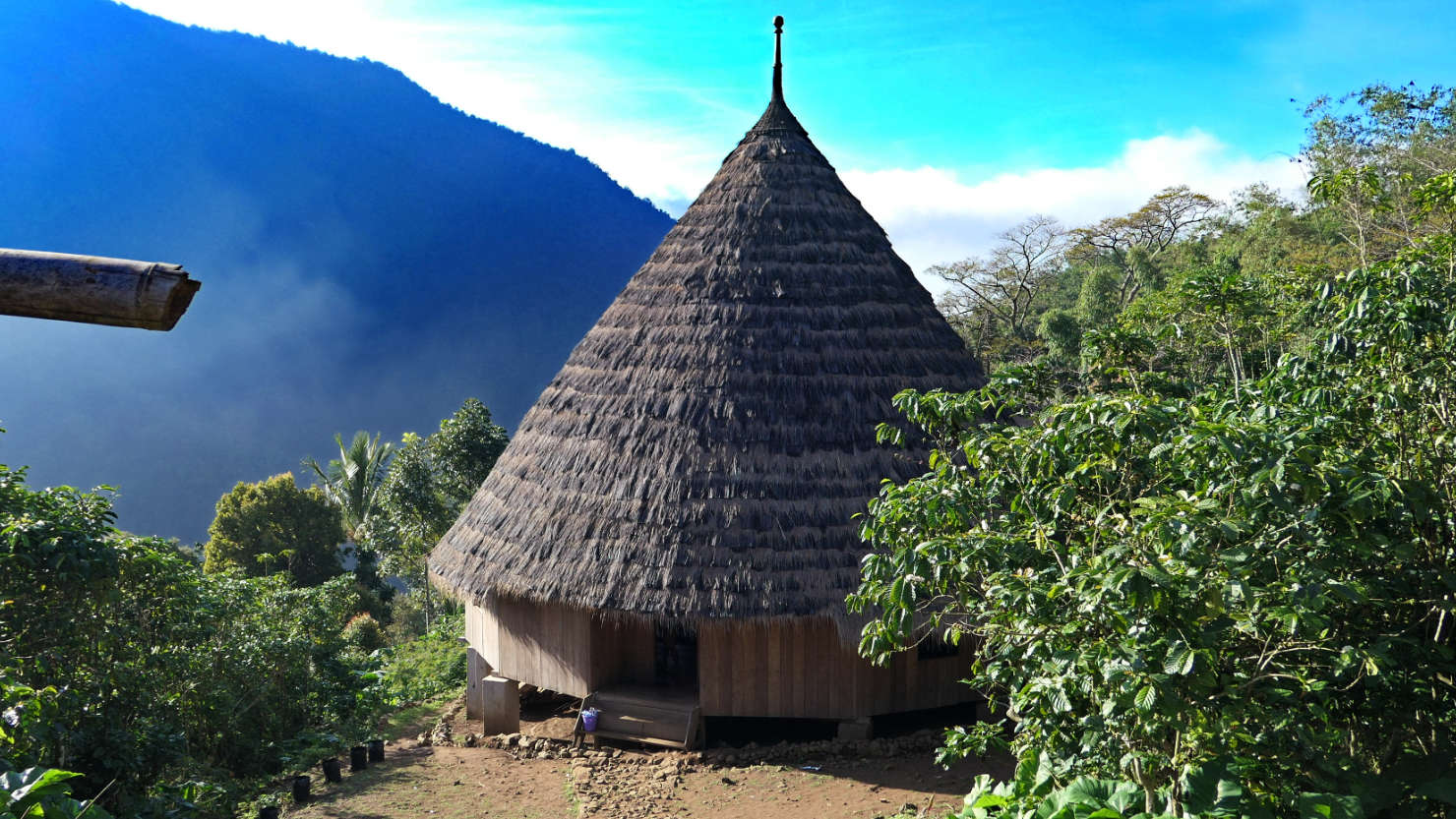
Our communal house for the night. They line mattresses along the inside perimeter of the house. And, you sleep next to some of your “new” friends. Surprisingly, the night was very quiet and was way better than we expected it would be.
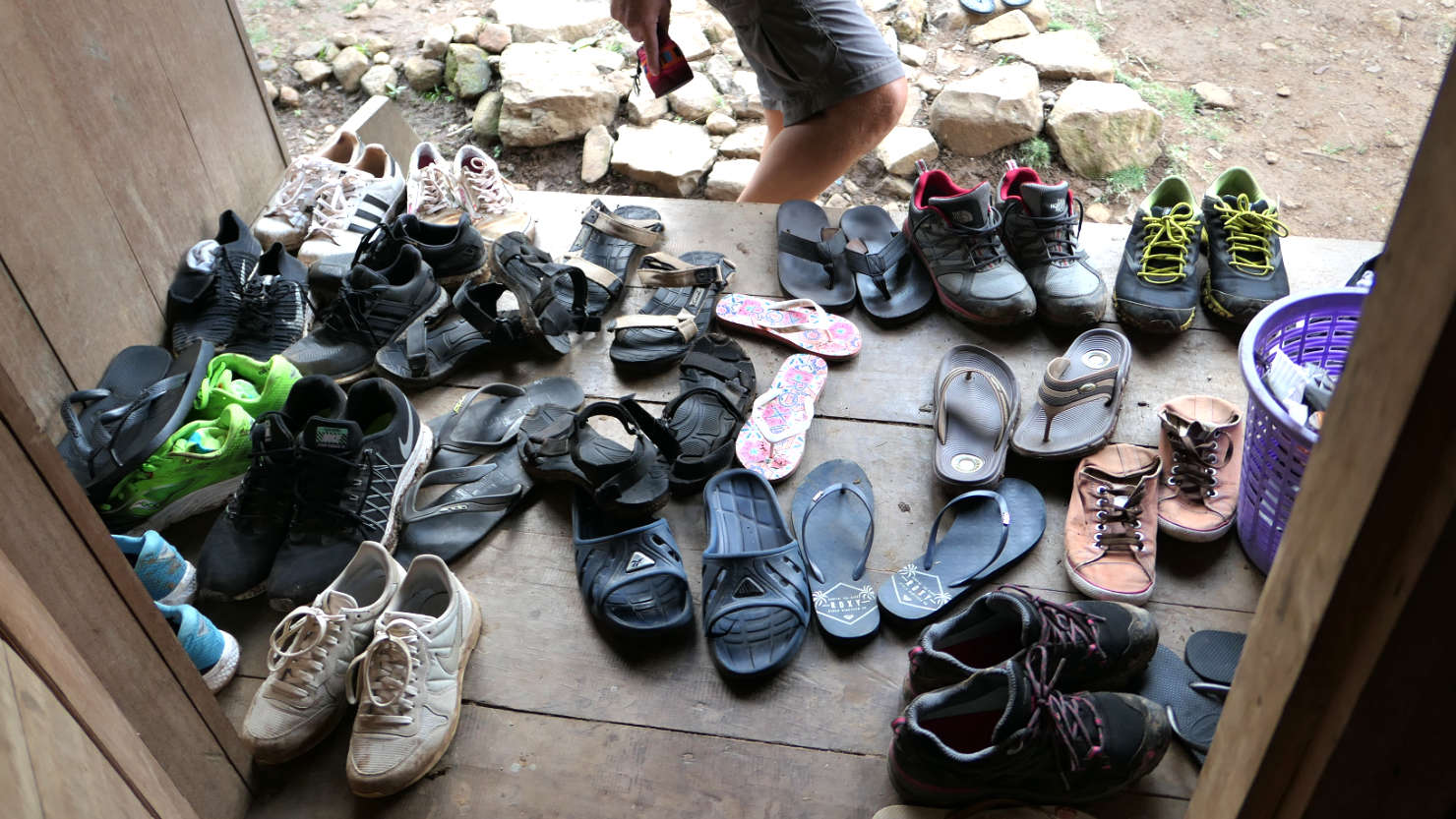
During our visit, there were roughly 25 visitors staying the night at the village. Evidence by the pairs of shoes outside the communal house entrance.

Panorama of the traditional village houses and the hillside in the fog.
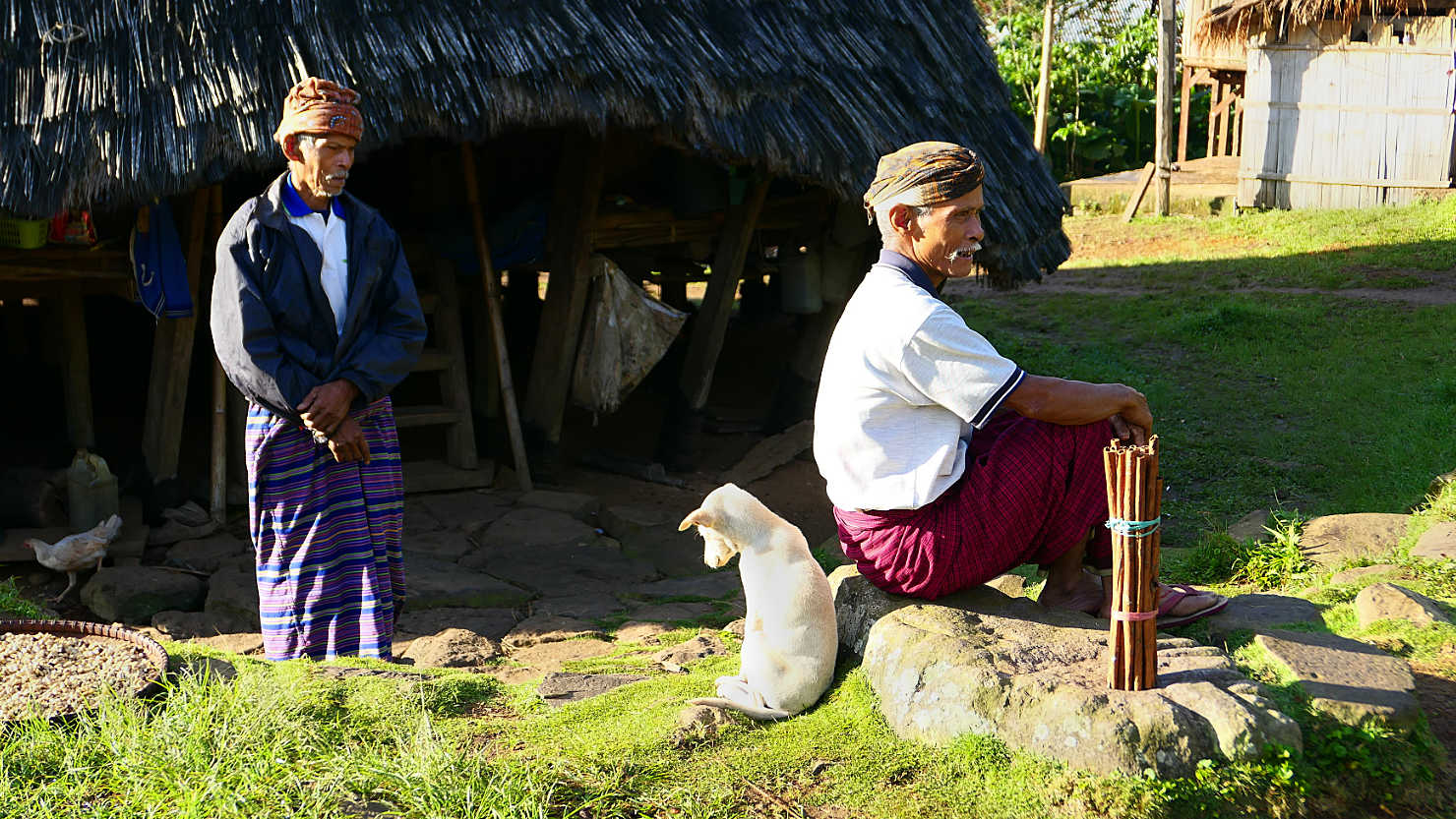
The village chief sitting in the morning sun with a cute little dog friend behind. Note the size of the very large cinnamon sticks standing upright to the right of the chief. These were the biggest cinnamon sticks we’ve ever seen…they harvest them here.
Video – 7 Days Overland #1, Indonesia (Flores)
Continuing Our Road Trip to Mt Kelimutu

Rick and Jimmy (our guide/driver) standing next to our ride for the next 6 days. We switched cars and drivers on day 2 after our Wae Rebo visit.
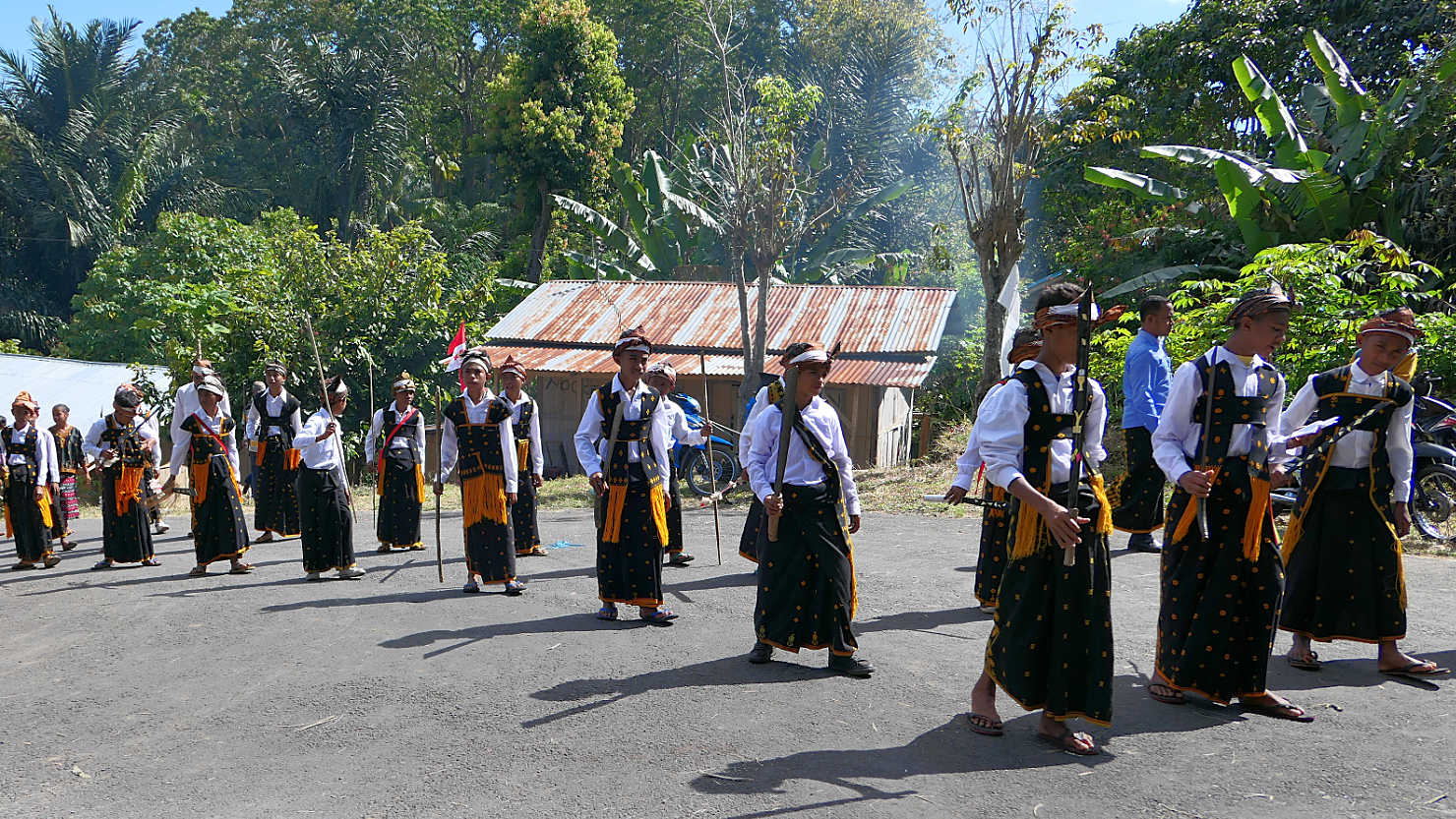
On our 2nd day on the road, we came across these local kids practicing their traditional Manggarai dance in preparation for the Indonesian Independence Day celebration on Aug 17th.

The local kids were very excited to meet us. They all lined up and waited their turn. They each greeted us by taking our hands and raising and touching them to their foreheads. This is how they show respect for their elders. And, afterwards they wanted their photo with us. You can see many of the girls wanted to hold Alisa’s hands and arms. This was great fun and was a nice break from the car…
Mt Kelimutu, Flores
From the top of Mt Kelimutu, 5500 feet elevation, you can see the sacred tri-colored lakes within the summit of the volcano crater (also one of the most famous attractions for travellers). The three sacred lakes vary in color from each other and are constantly changing. The westernmost of the lakes (lake of old souls) is usually dark blue. The other two lakes (lake of young souls and lake of naughty souls) are green or red respectively and are only separated by a crater wall. These lakes were shades of green during our visit. The local people consider the lakes a resting place for the departed souls and those who have died will sit by the lakes based on their merits in life. We visited the sacred lakes at sunrise along with many other tourists. Even with the large number of other people and several days driving to get here, our visit to see these special and sacred lakes was well worth it.

Lake of the young souls and naughty souls lit by the full moon.
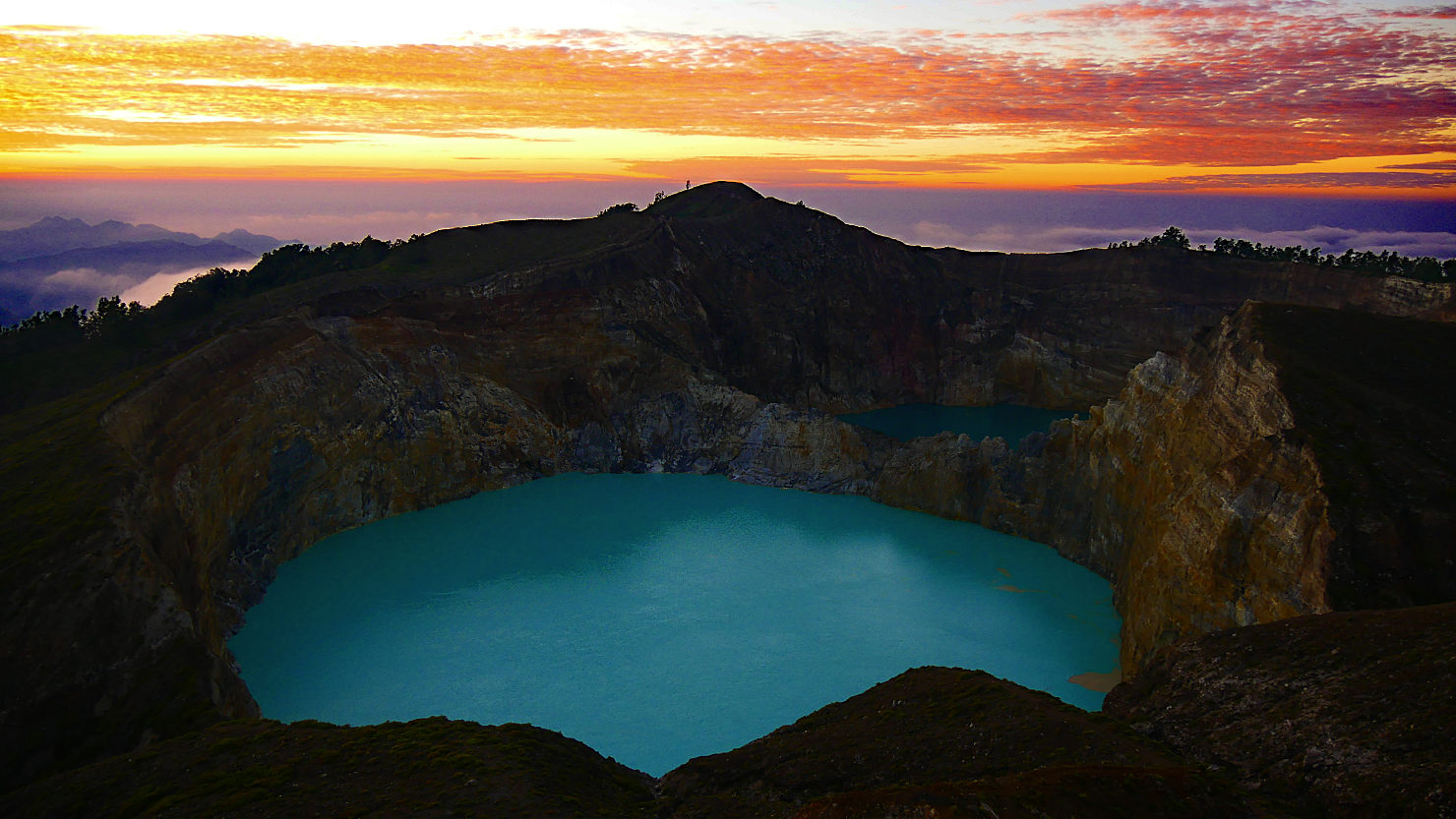
Lake of the young souls and naughty souls right before sunrise.

Lake of the elderly souls was fogged in.
Video – 7 Days Overland #2, Indonesia (Flores)
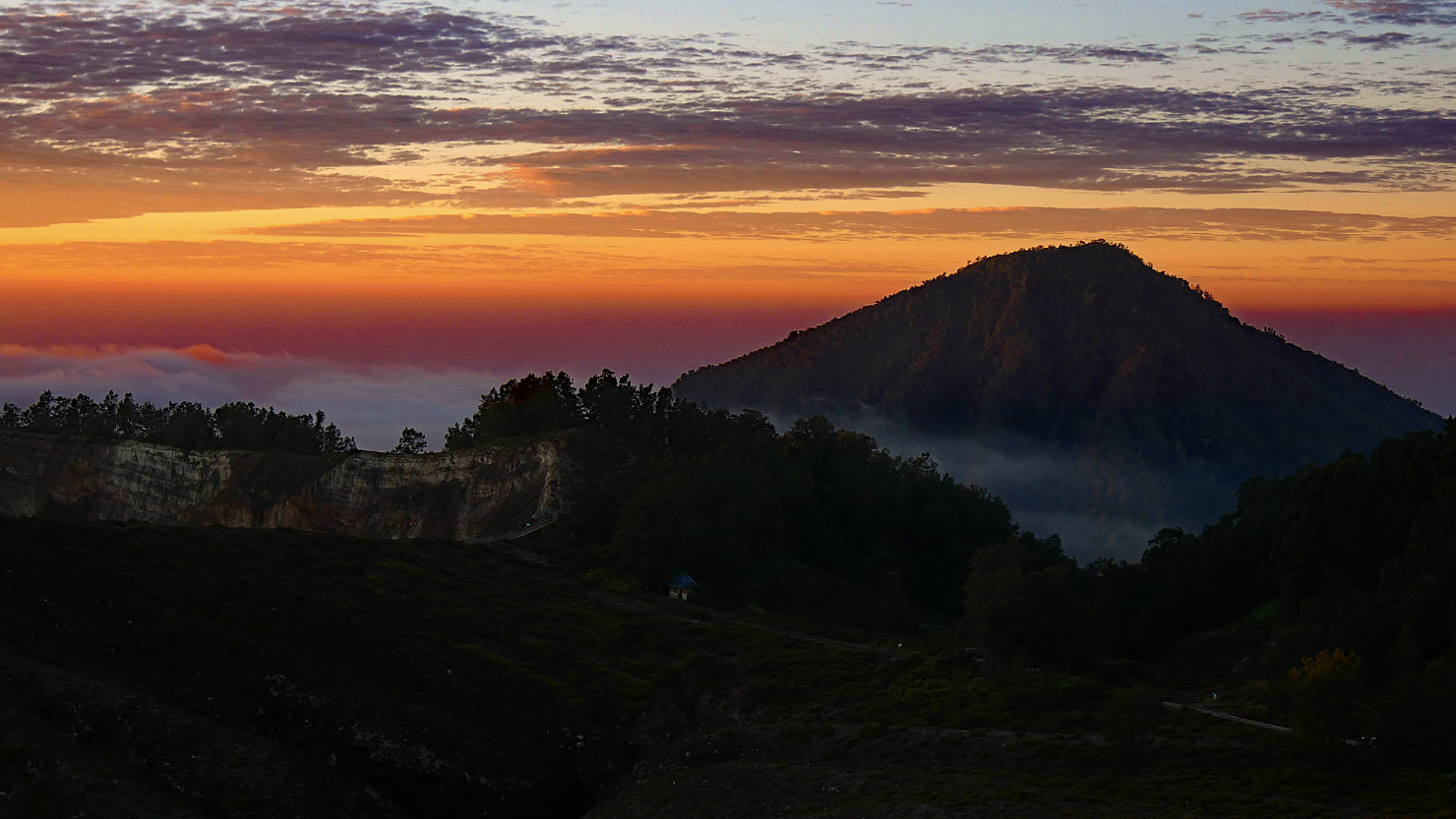
View from Mt Kelimutu of the volcano to the north at sunrise.

Close-up of the lake of the young souls and lake of the naught souls. Jimmy, our guide, mentioned the week prior the color of the lake of young souls (the closest lake) was pure white, you can see it is changing back to green. Both lakes were shades of green, but other times the lake of naughty souls may turn to a blood red color.
Starting Our Drive Back to Labuan Bajo
The furthest point we drove on Flores was to Moni to see the Kelimutu Lakes. We then turned back and slowly made our way back to Labuan Bajo stopping several places along the way.
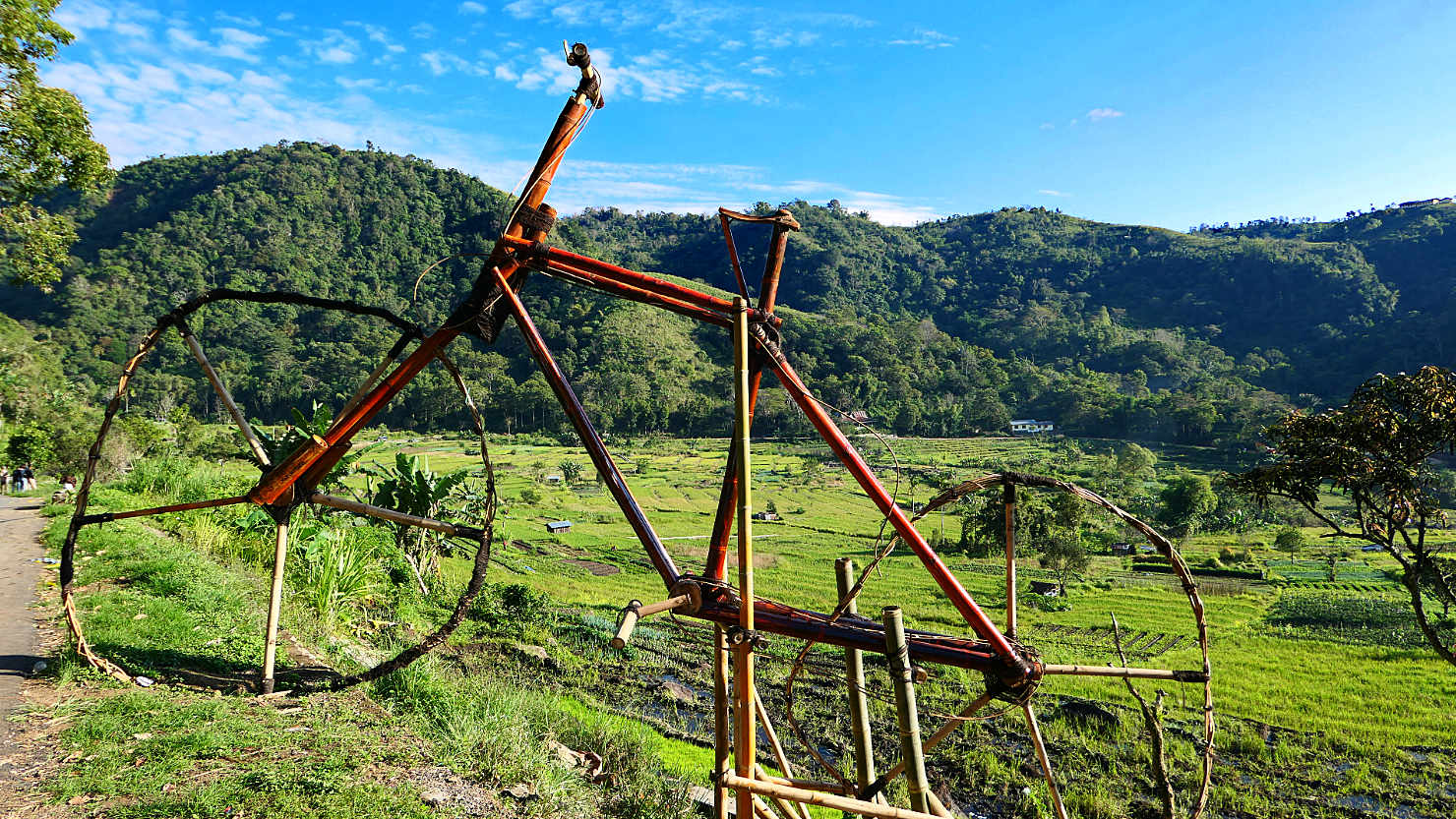
Very large bamboo bike sculpture on the side of the road outside the town of Moni.

Alisa slowly making her way across a river on a slightly worn out bamboo bridge.
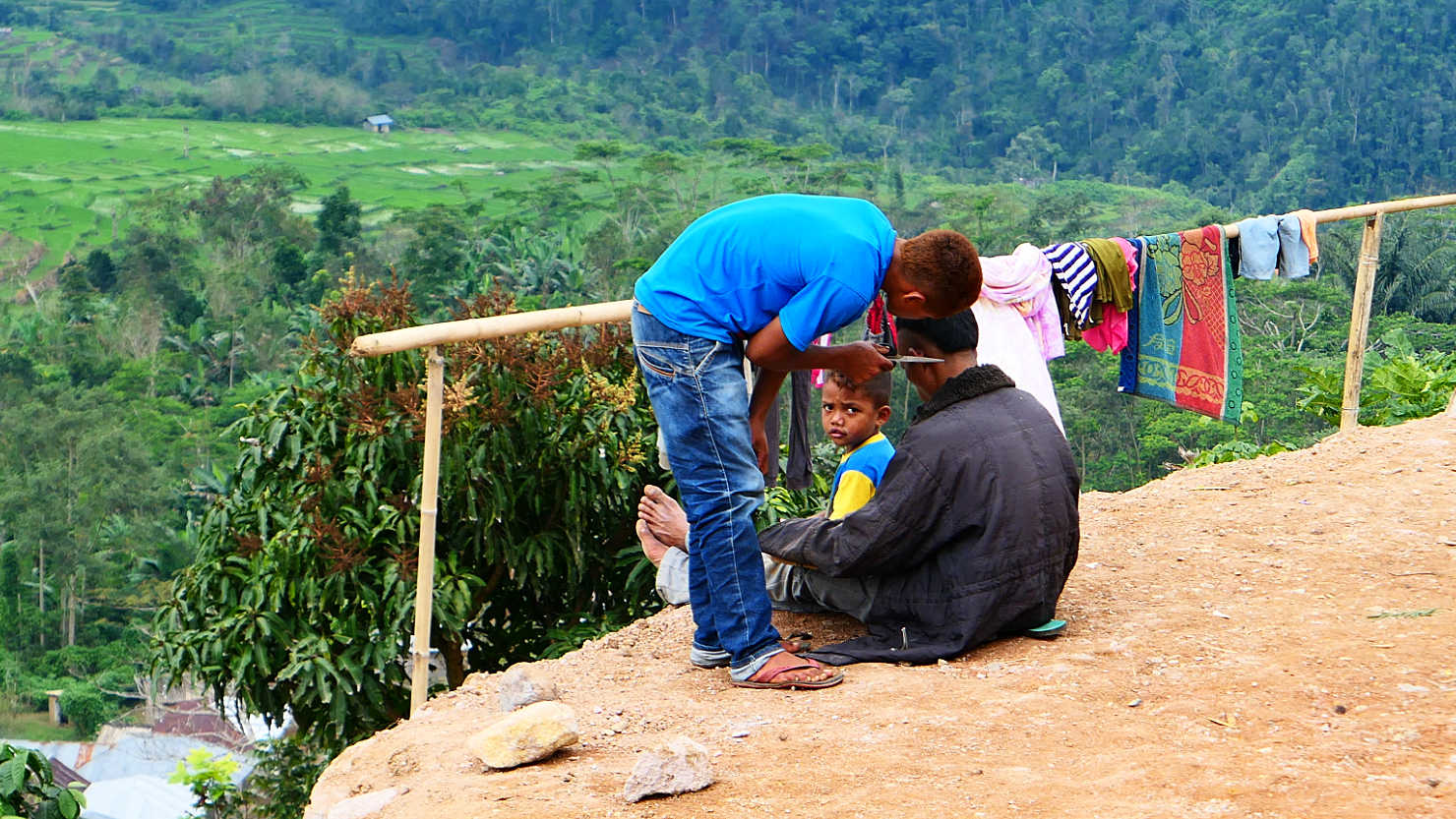
We came across this kid giving a roadside haircut.
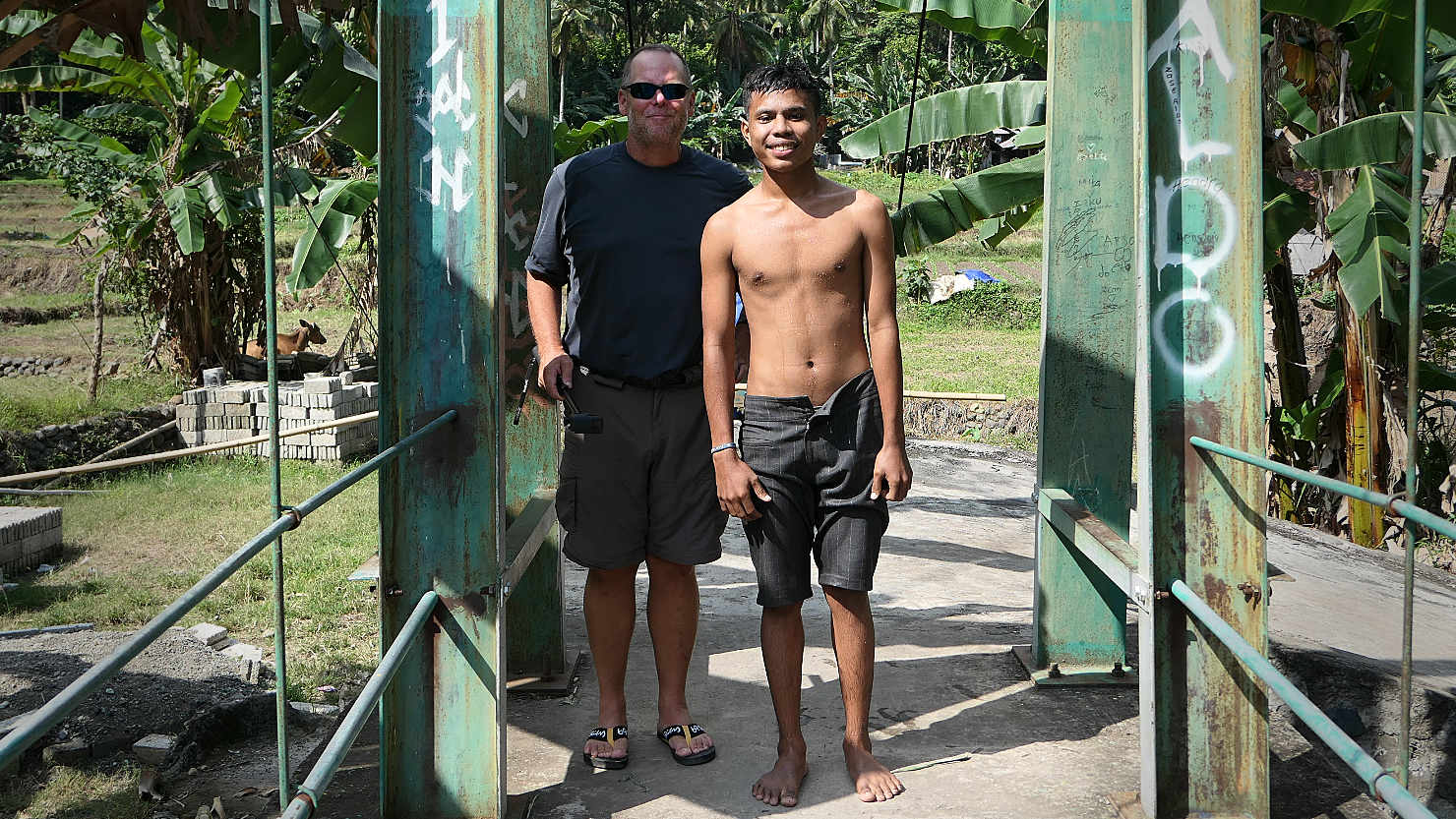
This local boy saw us on the bridge and wanted his photo with a westerner.
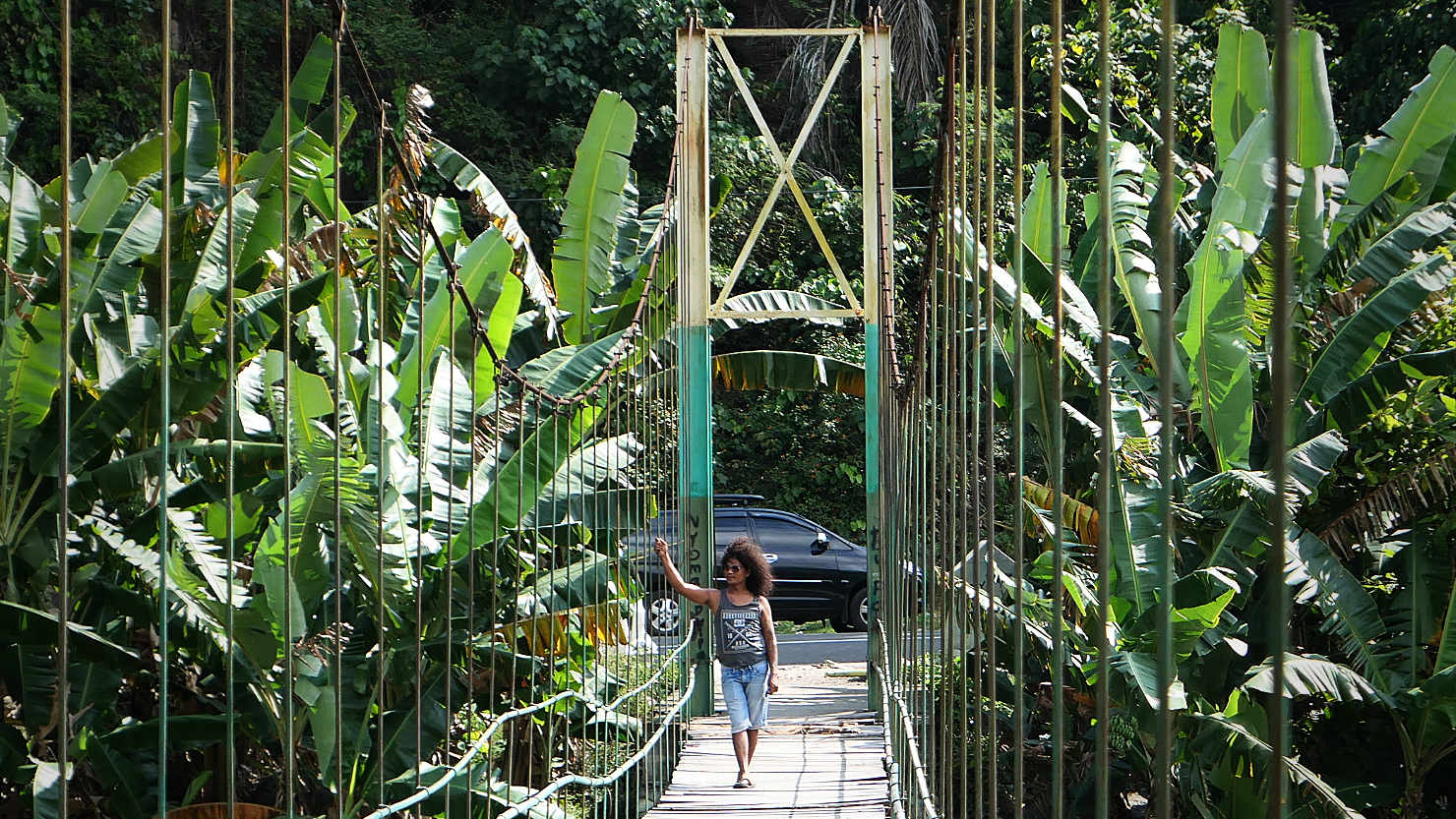
Jimmy, our guide, waiting for us.
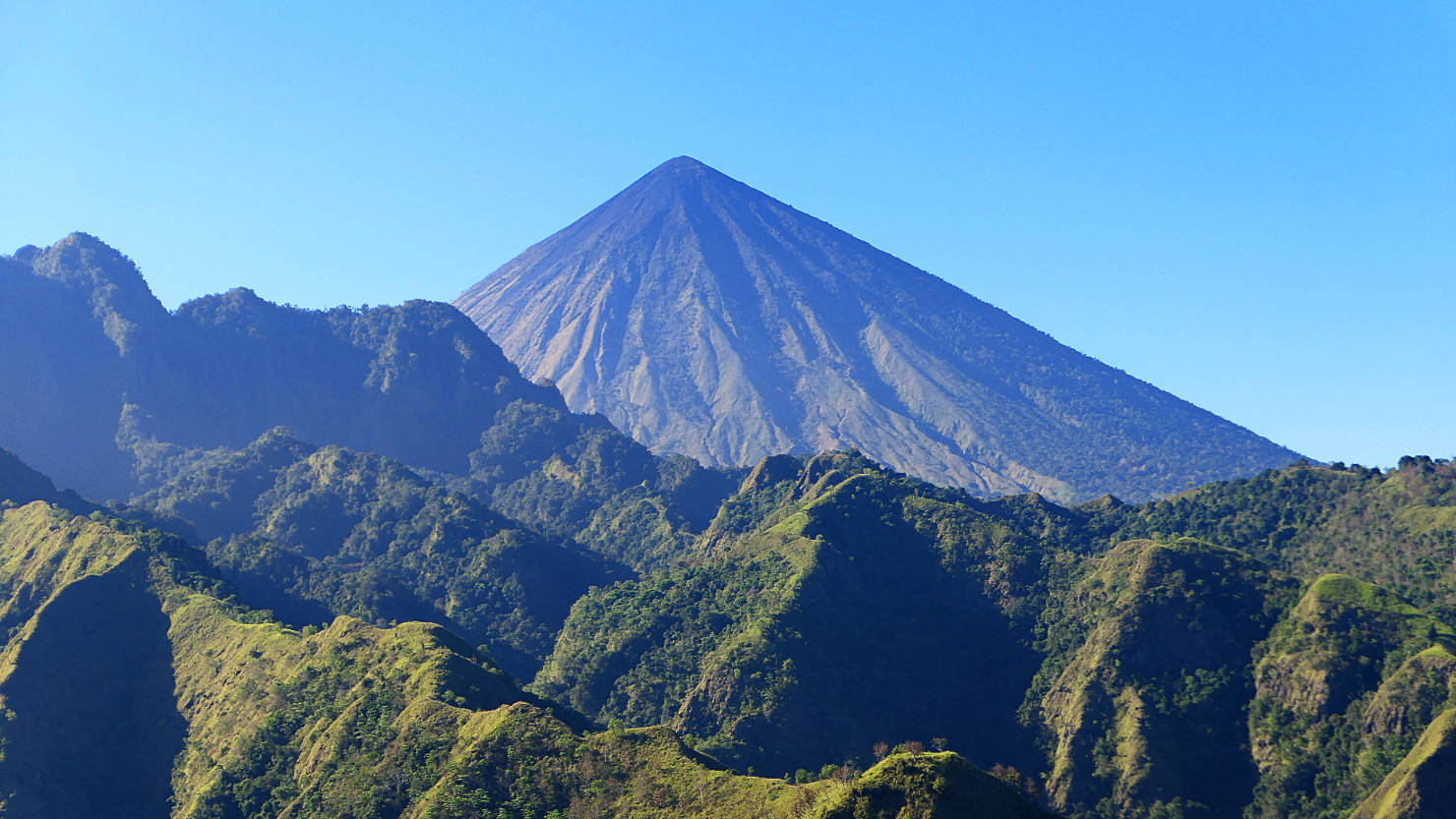
One of several large volcanos on Flores. Her translated name is Big Mama. Big Mama is currently sleeping, meaning she’s dormant…

Another one of several large volcanos on Flores. His translated name is Big Papa. Big Papa is awake and active, see the steam spewing from his top…

Small fishing boat bringing fresh fish into our roadside lunch spot. The fish is so fresh, we saw a guy swim in from the boat to drop it off.
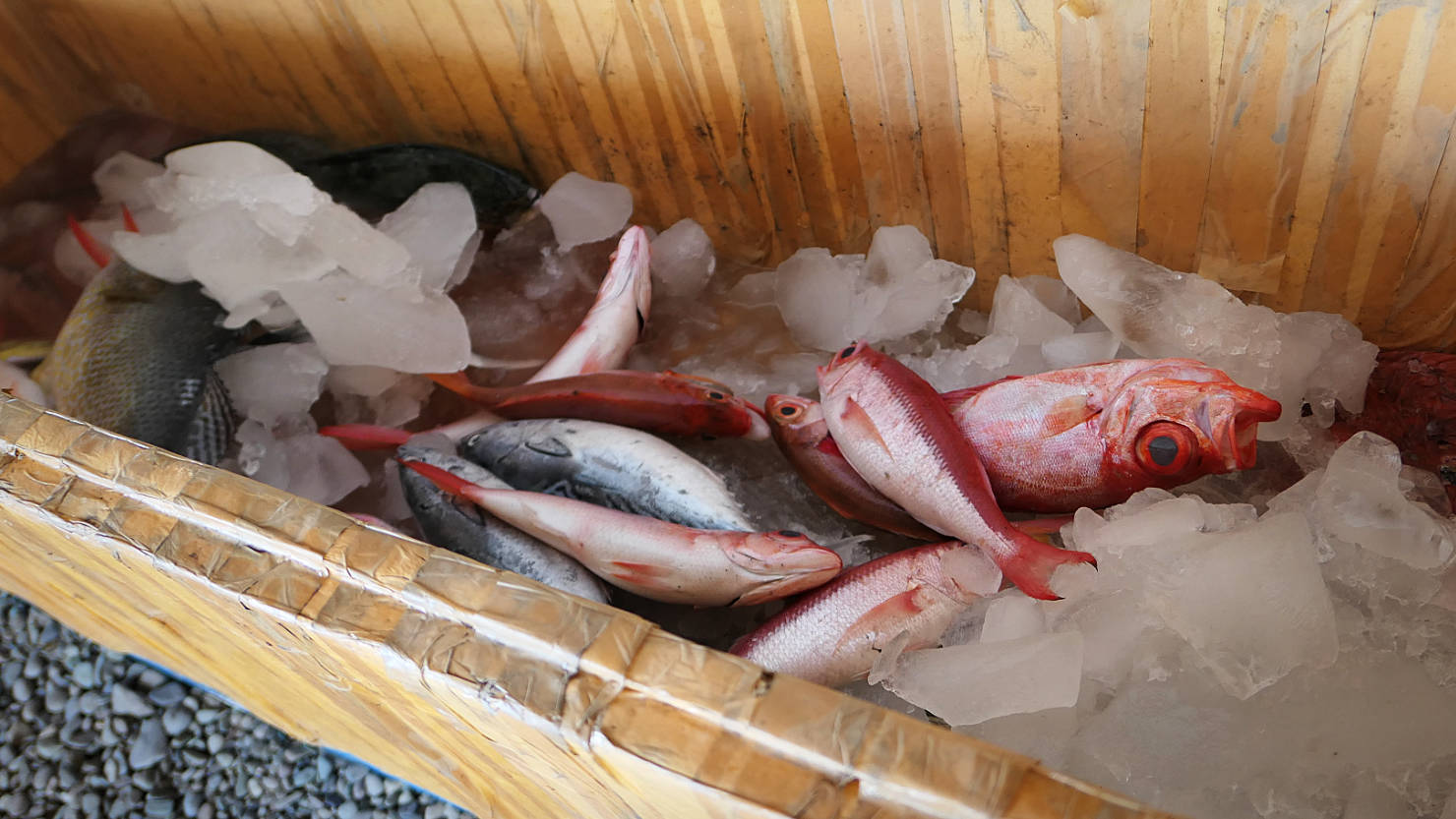
Our choice of fresh fish to throw on the barbecue for lunch.
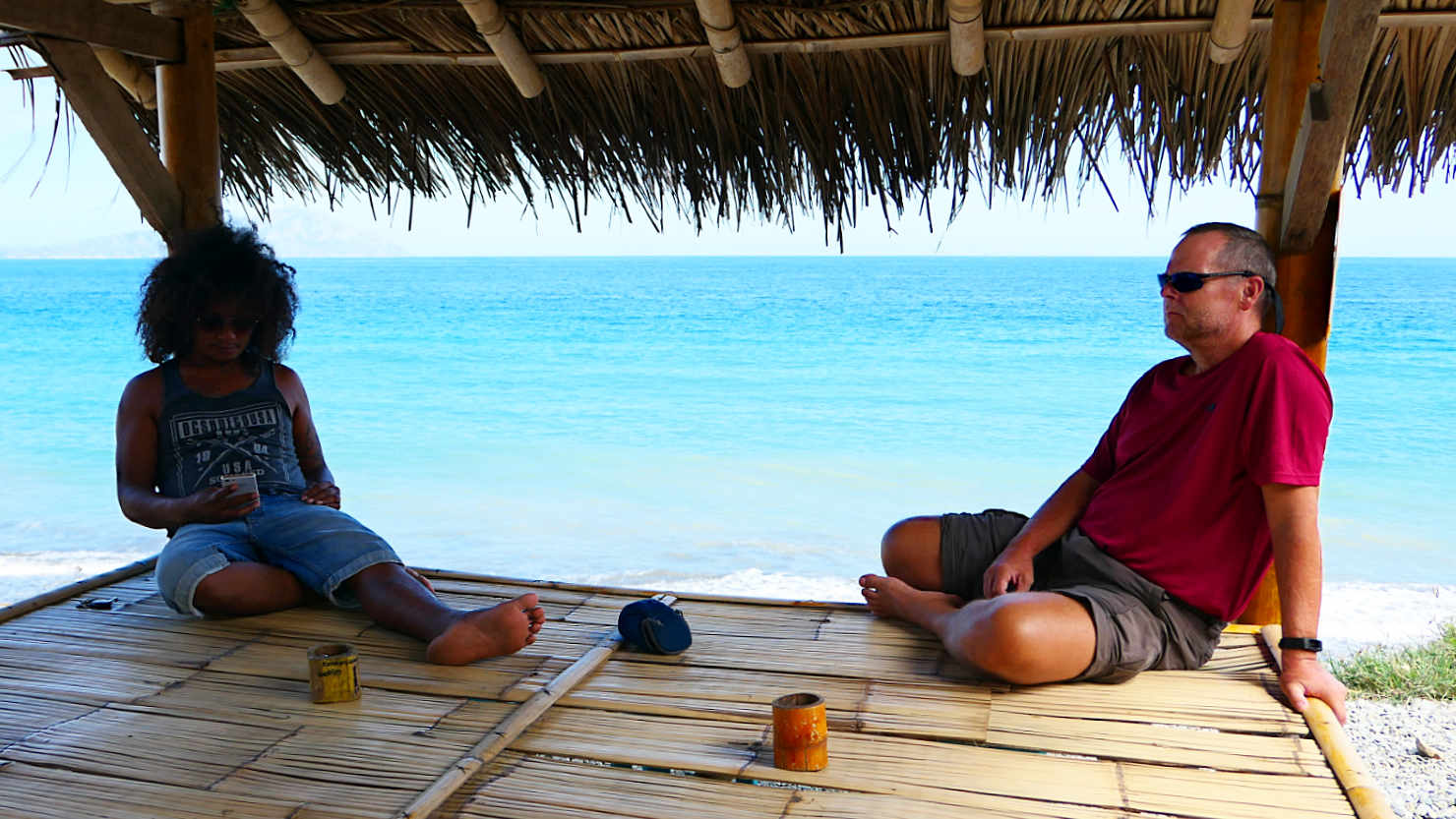
Jimmy and Rick waiting for the barbecued fish to come out.

One of our barbecued tunas. Our fish, veggie and rice lunches were absolutely delicious and for two cost us less than $10 US.
Bena Village, Flores
Bena Village is a traditional Ngada Village famous for its impressive stone formations, ancestral shrines, and Ngadanese style houses. The village is rectangular in shape and has 18 traditional houses. The Bena people continue to live a traditional way of life which includes preserving their ikat weaving technique which is unique to the village. Their beautiful ikat weavings can be purchased directly from the Bena people while walking around the village.
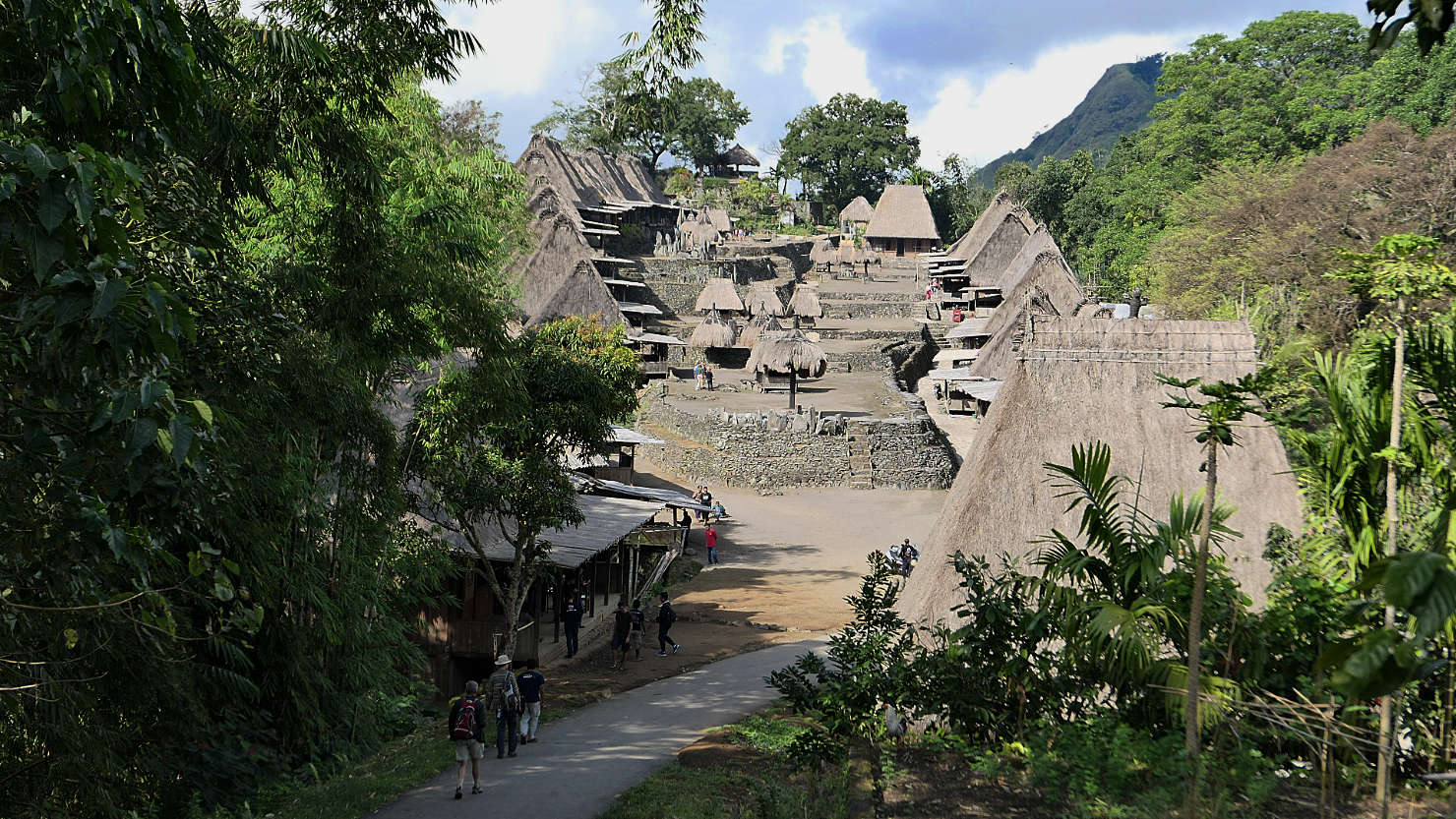
Bena Village from the entrance.

Stone memorial and ancestral shrines.
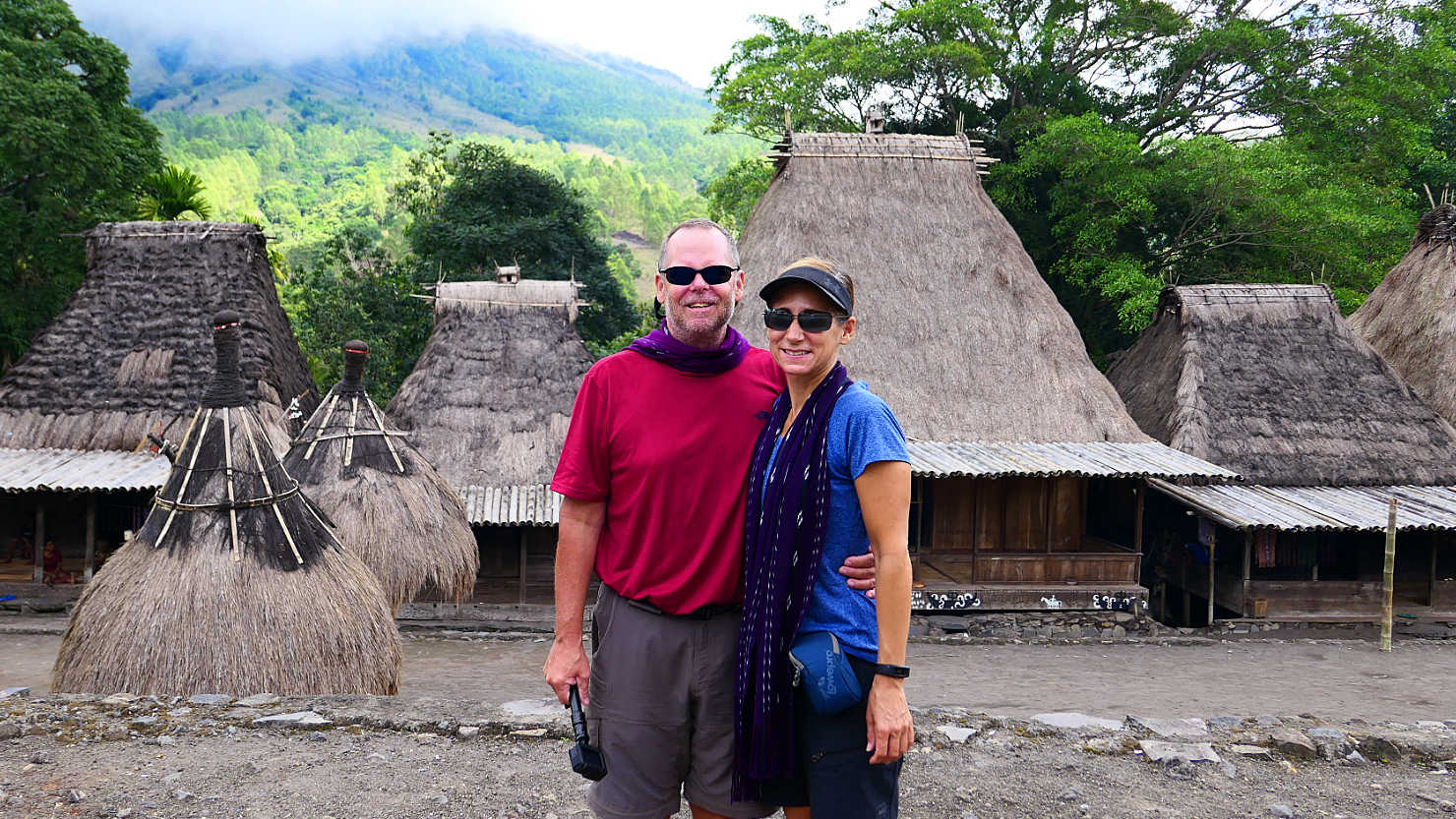
Rick and Alisa touring the village.

View from inside the village.
Continuing Our Road Trip Back to Labuan Bajo
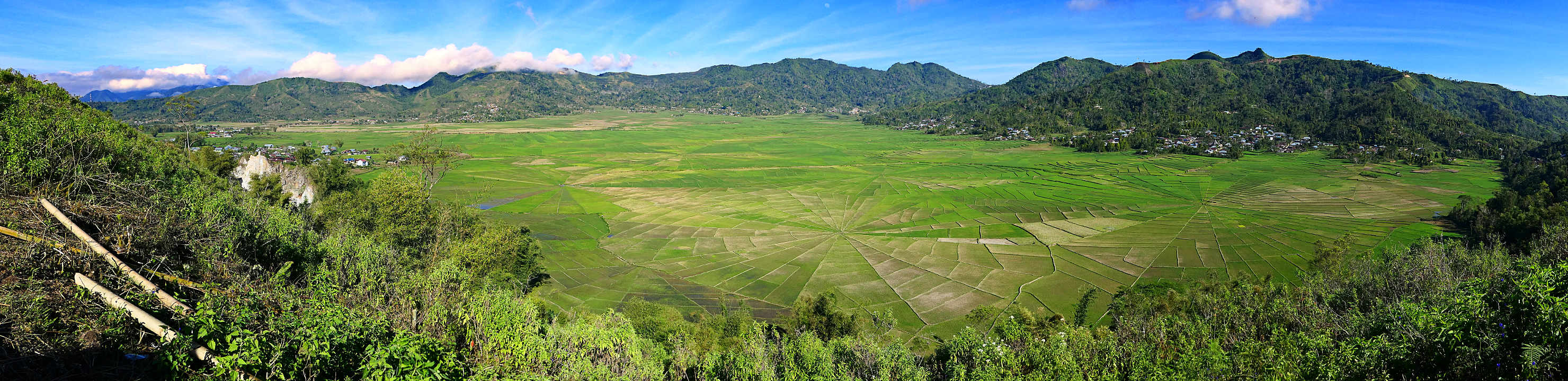
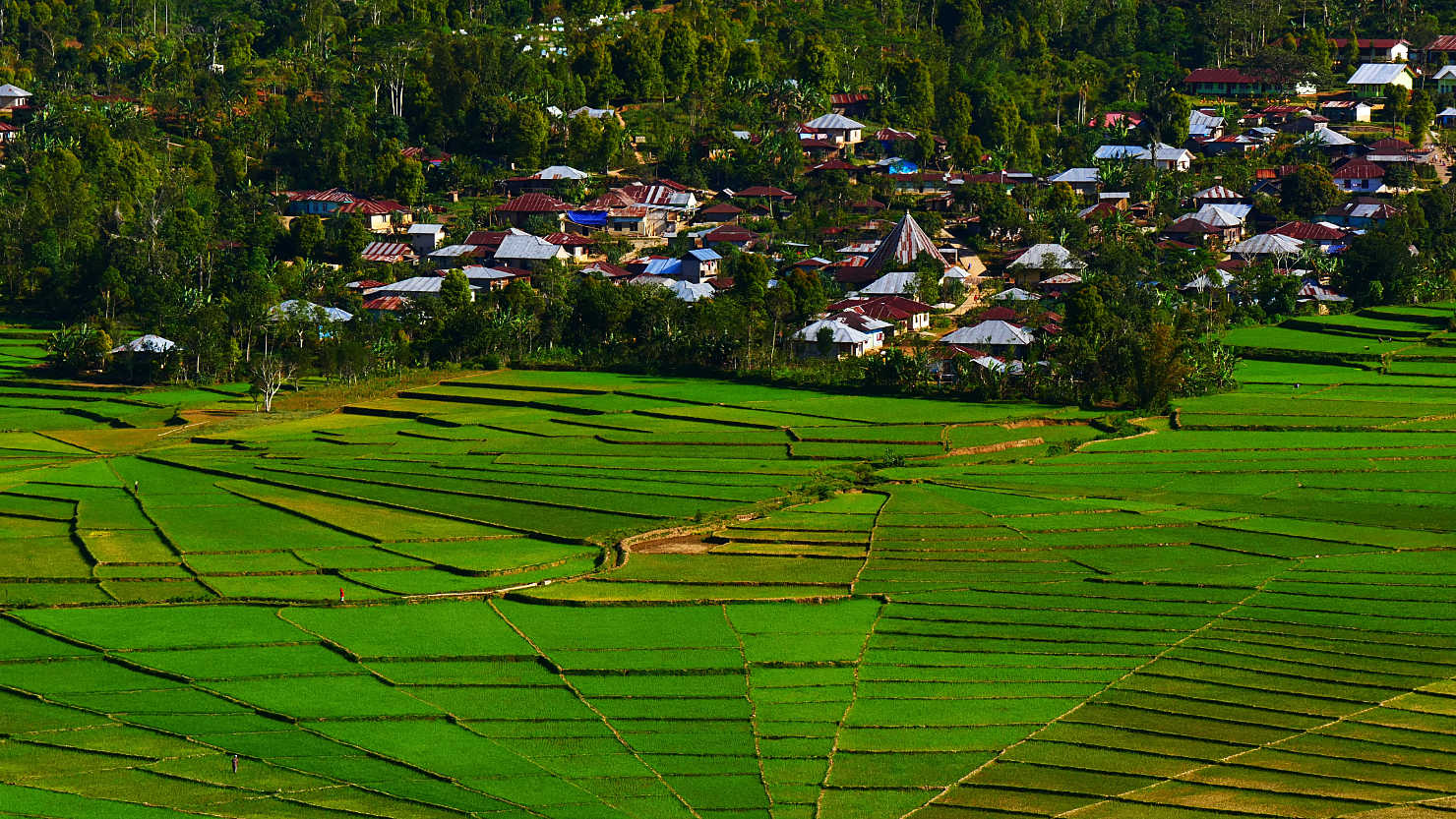
Panorama of Lingko Spiderweb Rice Fields. The Cara village spiderweb rice fields in Cancar are the most impressive and also the ones we visited. Linkgo is the traditional Manggaraian system of land possession which divides land based on family size and is still practiced today. The distribution starts from the center pole from which lines are drawn to the outer circle of the line forming the pie shaped segments.
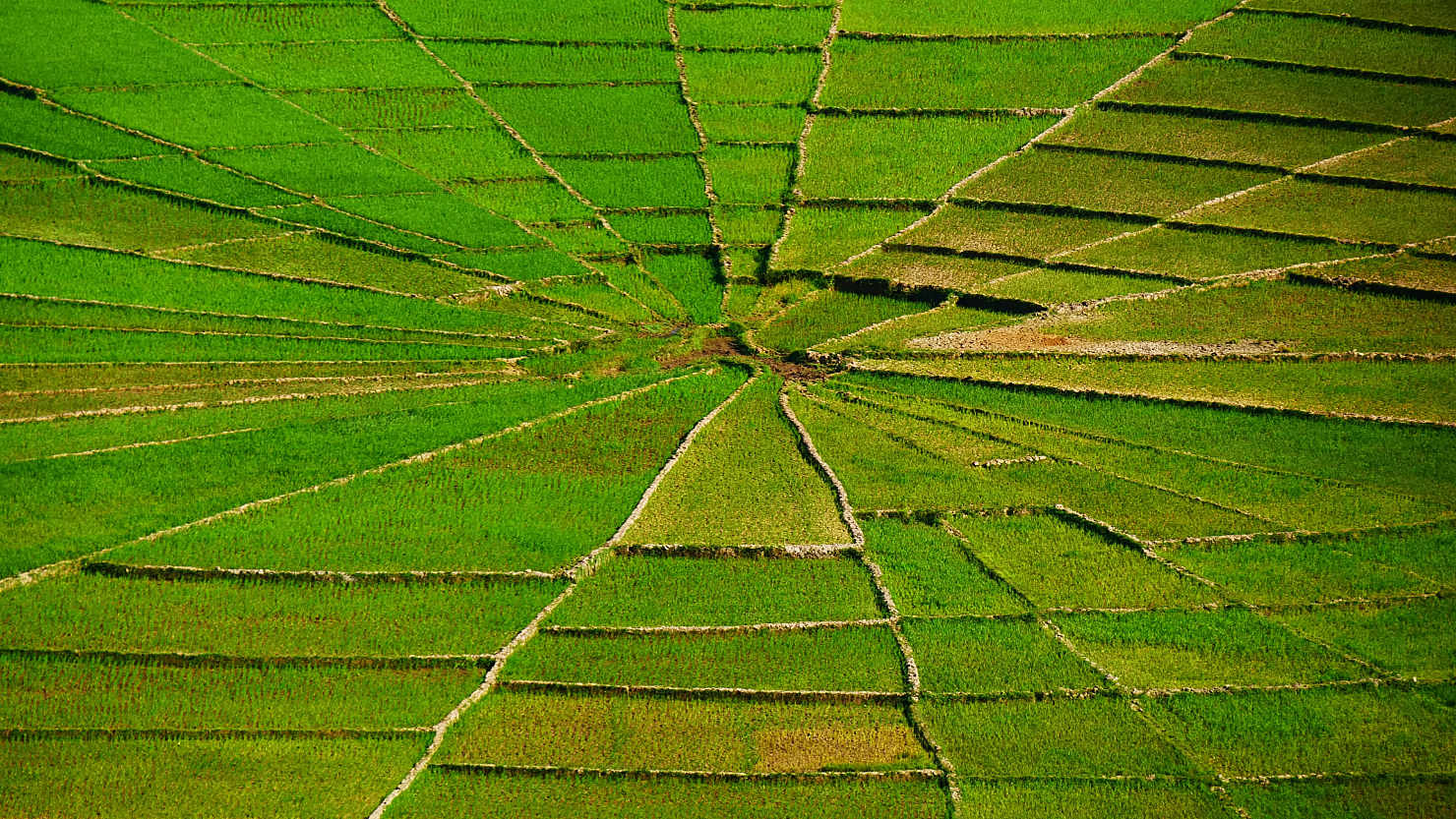
Another view of the spiderweb rice fields.
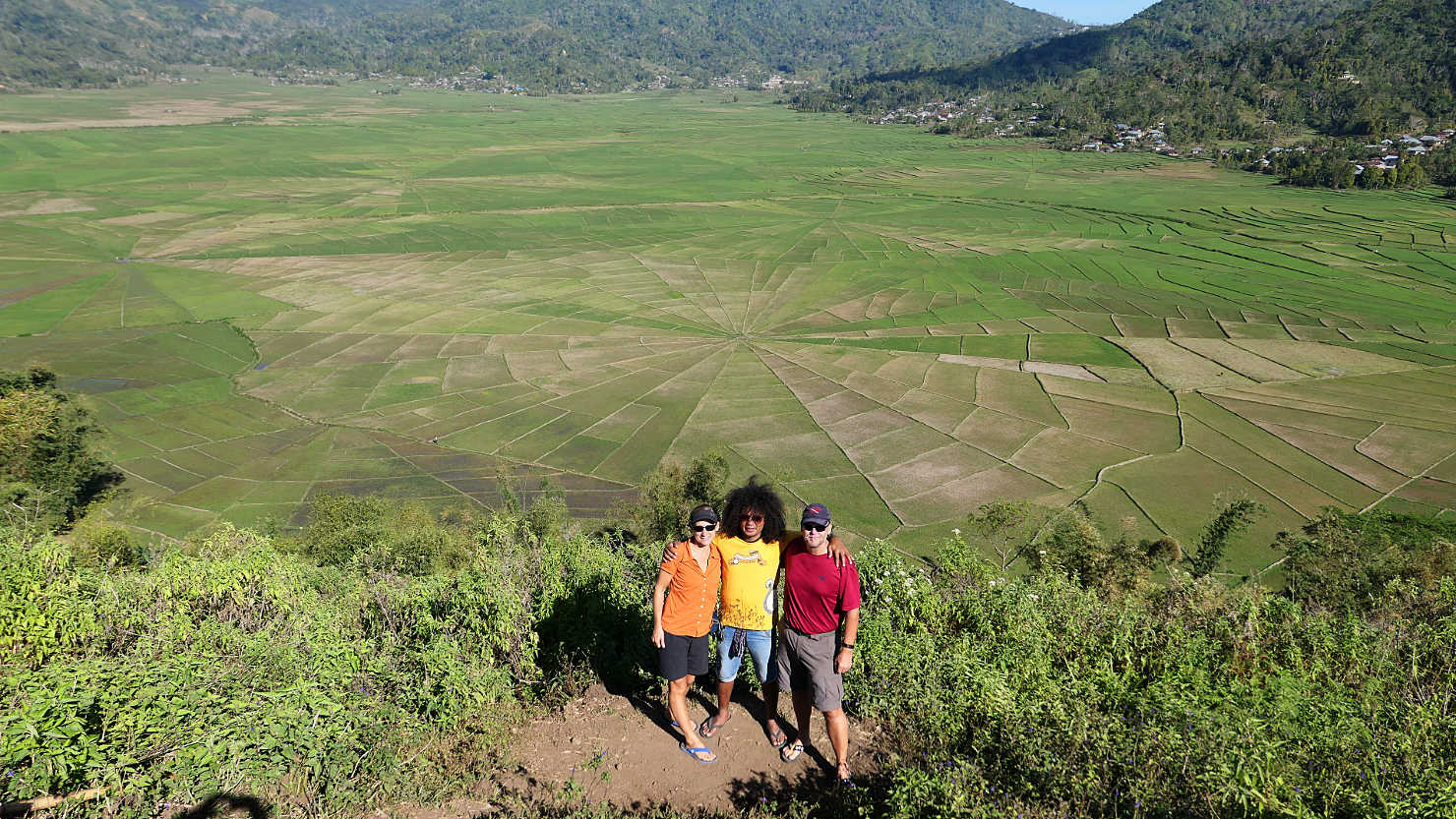
Alisa, Jimmy, and Rick at the spiderweb rice fields.