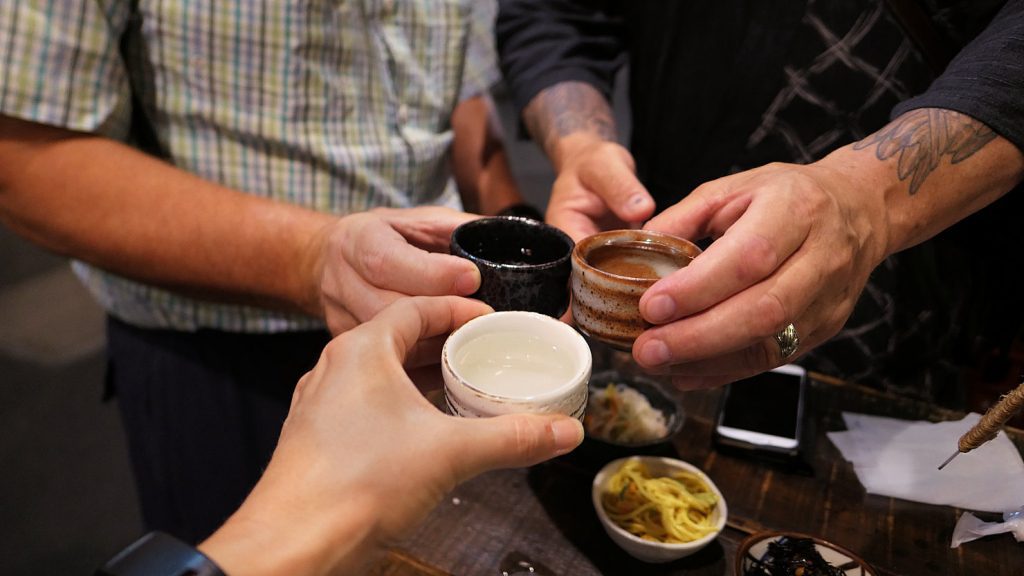
A Few Days in Japan
Aug 28 to Sep 2, 2018
Well, It’s been a few months since we uploaded a new post… The main reason is, we returned to a few destinations in both Vietnam and Malaysia which we previously visited over the course of our SE Asia travels. And, since we were hanging out at already “posted about” locations, we did not have anything new to share. Instead, we simply enjoyed a bit of travel without any cameras 🙂
As the days of July and August ticked off the calendar, we decided at the end of August it was time to move on to somewhere different in the world. And, along the way, Japan fell into our itinerary. Japan would be our last destination in our Asia travels before heading back to the U.S. Following Japan we would stay in the U.S 4 weeks before setting our sails again.
As Japan was not on our original itinerary, it just so happened our flight back to the U.S. included a layover in Japan. So, instead of simply having a few hours at the airport, we decided to add a 6 day stopover at no extra cost. While 6 days is not much time to see a country, we figured it was a good way to see a little of what Japan had to offer without breaking the bank 😉
See video and photos below highlighting our days in Japan. To see all images of this location click the link at the bottom of this post or go to our gallery.
Tokyo, Japan (Less than 1 Day)
After a 7 hour overnight flight from Malaysia, we arrived in Tokyo in the early morning. After an hour combined train and subway ride, we arrived at our Shinjuku area hotel where we dropped our luggage before heading off on foot to see a few of Tokyo’s sites.

We knew our time in Tokyo was limited, so we picked a couple recommended places within walking distance of our accommodation. Our first stop was Shinjuku Gyoen National Garden, a well-known park in the area. The park has walking trails throughout with nicely manicured lawns and gardens. It was interesting walking through a densely populated Tokyo to arrive at a large park located right in the middle of the city. This is a view from one of several trails within the park.
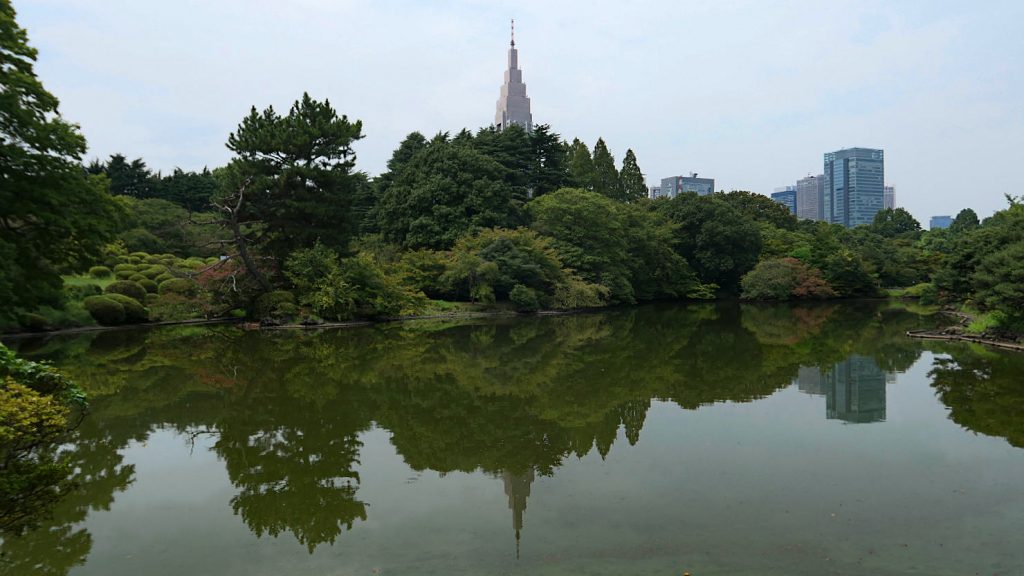
Another view from inside Shinjuku Gyoen National Garden.

Our next stop, a view of Tokyo from the 45th floor of the Tokyo Metropolitan Government Building. This government building has north and south towers in which to view the city and the Tokyo skyline. Surprisingly, the visit here was free of charge.
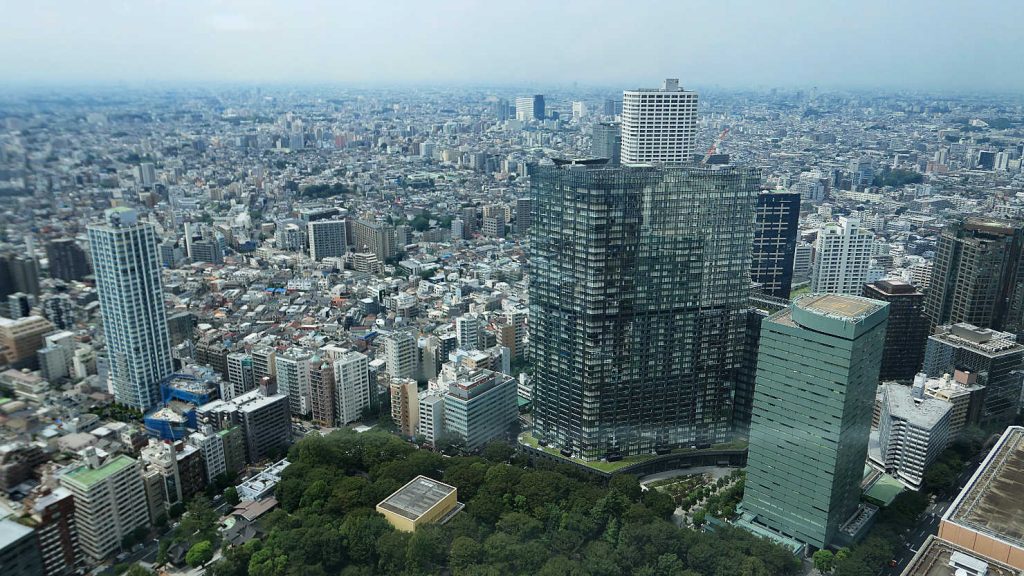
Another view of Tokyo from the 45th floor of the Tokyo Metropolitan Government Building. You can see a small park in the bottom of the photo surrounded by a very densely populated area. Tokyo proper and it’s surrounding area is packed with many buildings and people.
The rest of our day in Tokyo consisted of: (1) finding a small standing sushi bar and enjoying some fantastic nigiri for lunch; (2) continuing our walk around the Shinjuku area; (3) finding a much needed late afternoon ice cold beer with a place to sit and relax for a bit; (4) finishing with an early evening walk back to our accommodation which happened to include a walk through the famous Kabuki-cho red-light district area. Unfortunately, we made our way through the Kabuki-cho district during the daylight hours when there wasn’t much going on. We originally planned on heading to the Kabuki-cho district after dark, but our previous overnight flight combined with very little sleep the night before followed by walking all day in the hot city sun – we were absolutely exhausted and couldn’t wait until dark for our visit. So, needless to say…we didn’t include any photos as there wasn’t much to show.
Nozomi Super-Express Train (Japan’s fastest bullet train which achieves speeds of up to 285 km/h)
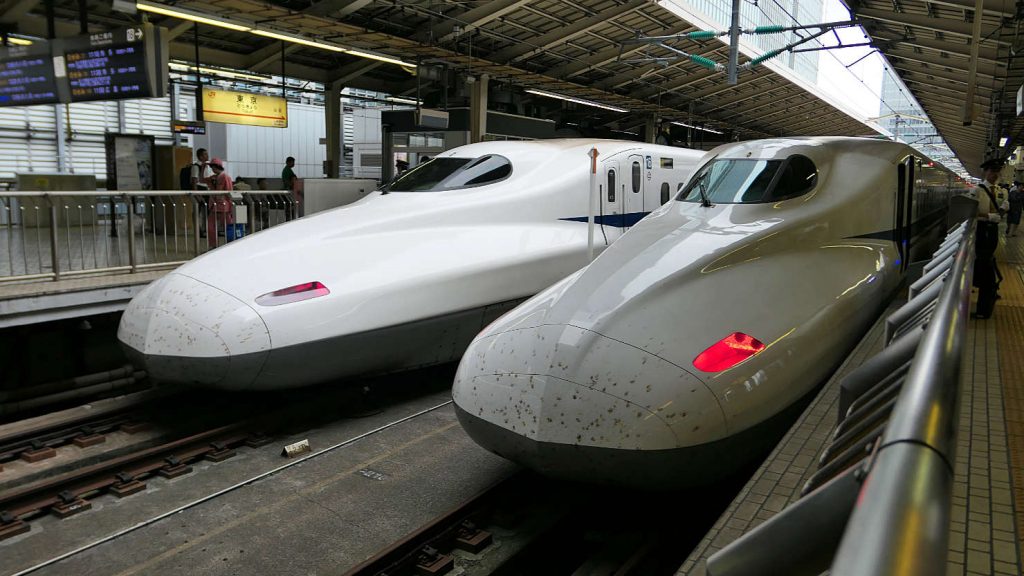
The Nozomi train on the right is the train we took from Tokyo to Osaka. We travelled a distance of 397 kilometers or 246 miles in 2 hours 35 minutes. This train was definitely the fastest and smoothest train we’ve ever been on.

The seats on our Nozomi Super-Express train.
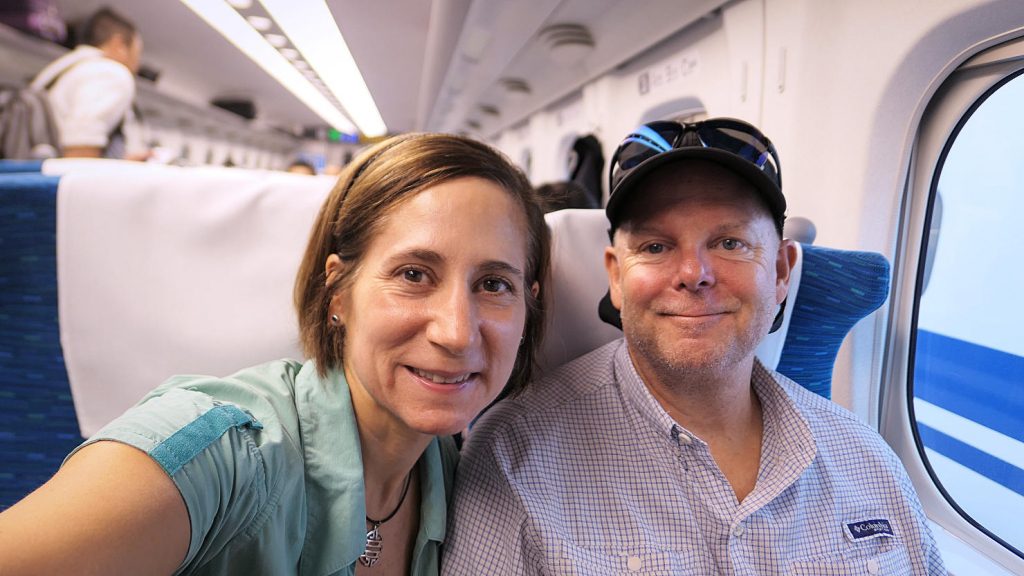
Rick and Alisa on the bullet train bound for Osaka.
Osaka, Japan
After a very fast bullet train from Tokyo and a short subway ride, we arrived in Osaka. The subway was within minutes walking distance of our accommodation and where we’d call home for 4 nights.
Subway “Self-Service” Ticket Purchasing System
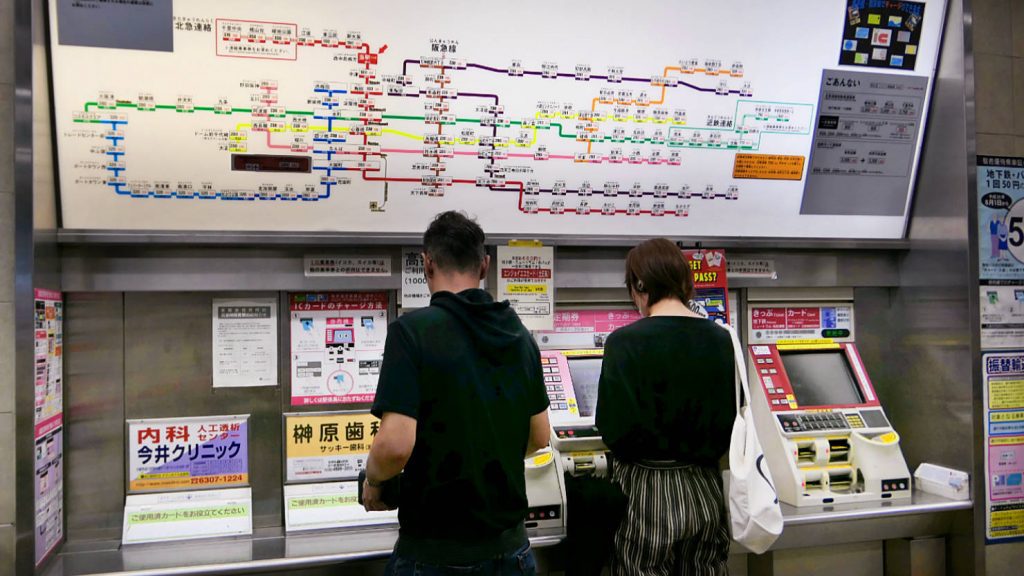
In order to ride the Osaka subway, you simply buy a ticket at one of the self-service kiosks. We knew where we wanted to go, what subway stop we needed, and the cost (all listed in the large map above the machines). It appeared easy enough – add money to the machine and the machine should spit out a couple of tickets 😉
We approached an empty machine, inserted our money, and attempted to look-up the specific subway line and stop we wanted… We attempted this several times, but had no luck. We watched other people on nearby machines enter their money and within seconds they had subway tickets and were on their way. How hard could this be…eventually, we pressed the “assistance” button and almost immediately a window to the left of our machine opened and a man appeared and poked his head out (see the photo above – the window is to the left of the machines…it didn’t even look like a window until after it opened and the man startled us). The man spoke limited English, but was helpful and came around to the front of the machines to show us how to buy our subway tickets.
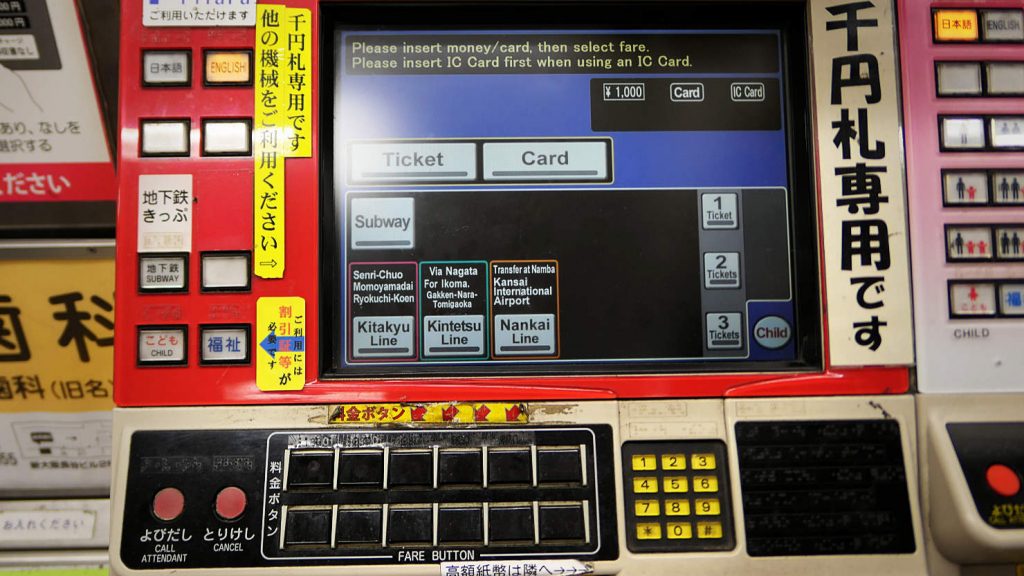
He pointed at the large map above (previous photo) and asked where we wanted to go (the destination determines the cost of the subway ticket). The man inserted our $1000 Yen bill, pushed the large “subway” button, selected “2 tickets”, and chose the “180 Yen” lighted option for the “amount” of each ticket, and that’s it…our change came out in Yen coins along with our subway tickets. Wow, we both felt silly at how simple the process really was…
The system is extremely easy once you figure out how to use it 🙂 We were trying to use the ticket machine like we did in other countries…where you enter the actual destination in the computer for the price and then you enter your money to get your tickets. If you look at the machine in this photo, it’s pretty clear they are very simple machines and not high tech computers… Funny how we tried to do something way more complicated then it really was simply because that’s what we’ve become accustomed to.
Currency Comparison – Yen $ and US $
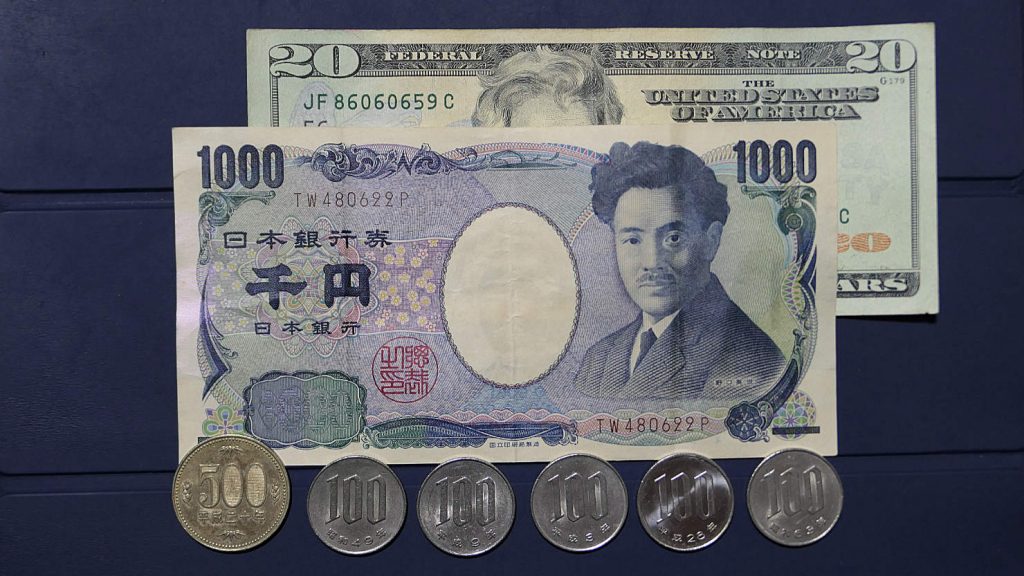
The above photo shows a $20 US bill compared the same approximate amount in Yen. From a physical size comparison, the Yen bills are slightly shorter in length and slightly wider than US bills. Also, Yen currency does not have paper money below the $1,000 bill (roughly $10 US). The denominations smaller than $1000 Yen are in coins like shown here. This took a little time for us to get used to as as 5 short subway rides using 5 – $1,000 bills yielded us lots of change in coins… As we received coins as change, we’d put them away in our backpack thinking they weren’t of much value (in our past experiences the coins never add up to much). When we realized we’d gone through $5000 Yen (roughly $50 US) in a few subway rides, we knew something was off… We pulled out our coins and counted what we had and quickly realized we had close to $4000 Yen ($40 US) in coins. In Japan the 100 and 500 Yen coins have real value and are worth $1 to $5 US dollars each. We were glad we solved the mystery of where our money was going to quickly 😉 Each countries currency is different and alway takes a few days to get used to it
Osaka Castle

Osaka Castle is a popular historical landmark. You can see the castle in the distance surrounded by a large moat.

The castle stands today in the middle of a modern urban cityscape of high-rise buildings. It’s crazy to see this large historical landmark with the busy city built right up to it’s borders. This view if looking across at the city from the castle grounds inside the main moat.

The main central tower is 55 meters high. The castle was first built around 1585, but has been destroyed and rebuilt several times over the centuries. The current castle was completely renovated in 1997, with fresh white plaster on the walls, new tiles on the roof, restored ornaments, and gold leaf decoration.
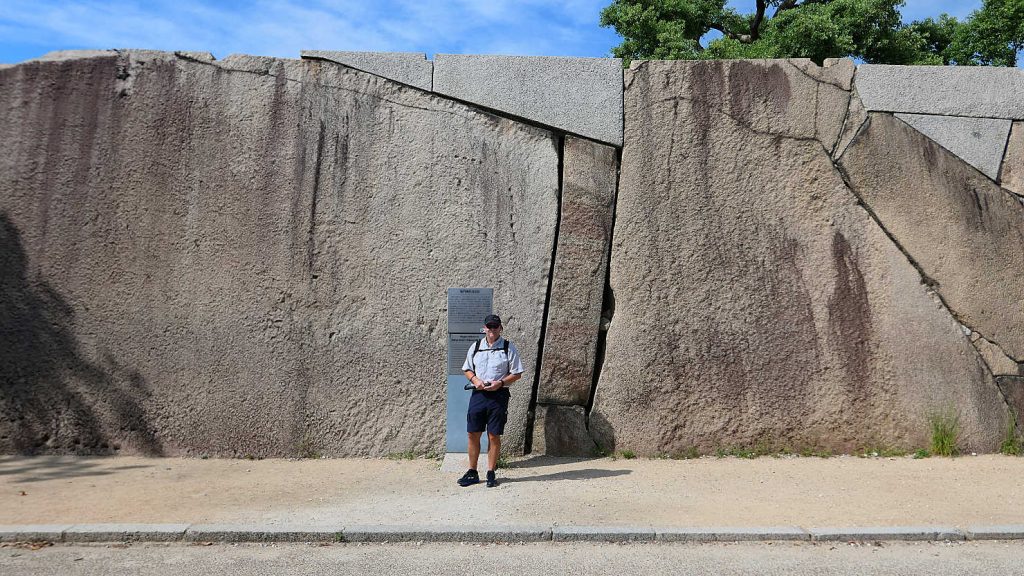
Rick standing near one of the inner walls on the castle ground. Note the size of the enormous stone slabs.
Dotonbori Area
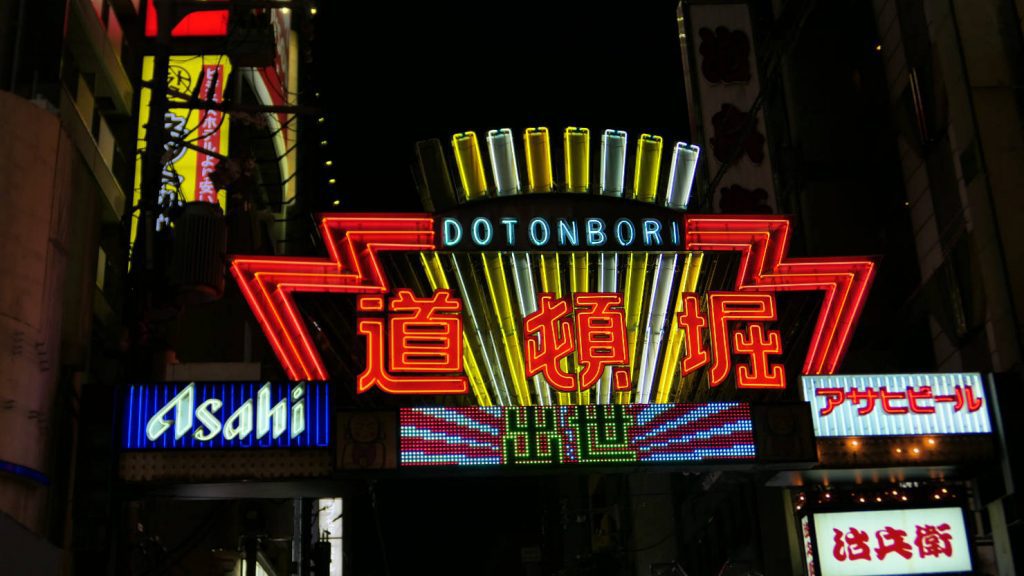
Dotonbori is located in the Namba District and is one of Osaka’s most famous tourist destinations. It’s known for its gaudy neon lights, extravagant signage, and the enormous variety of restaurants and bars. The name “Dotonbori” generally refers both to the Dotonbori Canal and to Dotonbori Street which runs parallel to the canal’s southern bank. It is one of the most colorful areas in Osaka and fun place to visit.

Panorama of one of the busy sections of the Dotonbori area during the daytime.
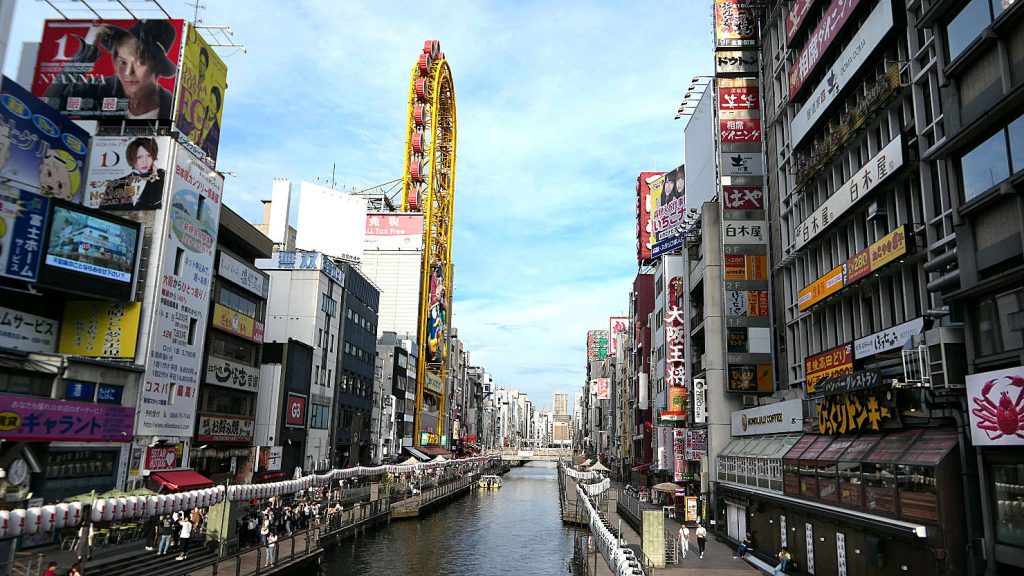
The canal section of the Dotonbori area. All the streets in the Dotonbori area are fun to walk around, but it’s particularly nice along the canal.

Another view of the Dotonbori waterfront canal area. One of the many tourist boats taking people a few minute up and down the canal.

One of the many places in Dotonbori advertising their specialty snack, Takoyaki. Takoyaki is a ball-shaped Japanese snack made of a wheat flour-based batter and cooked in a special molded pan. It’s typically filled with minced or diced octopus, tempura scraps, pickled ginger, green onion, and then drizzled with a special teriyaki-type sauce and topped with smoked skipjack flakes.

Our order of 6 Takoyaki pieces. We first tried Takoyaki in Taipei, Taiwan and they were pretty good, but nothing like the ones we had in Osaka. The Takoyaki in Japan are far superior and extremely tasty.
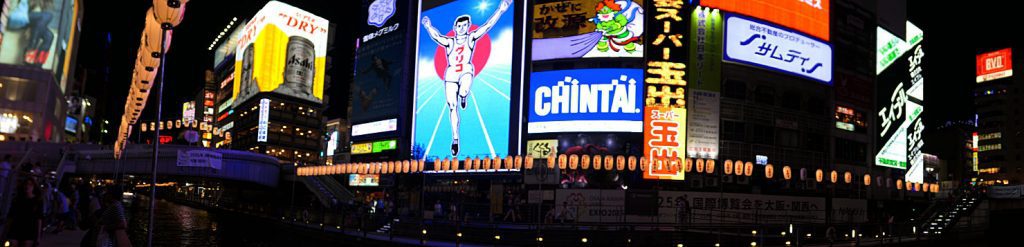
Panorama of one of the most recognizable sections of the Dotonbori area at night…the Glico Man sign.
Video – Osaka, Japan.
BONUS Photos & Video – Our “Hidden Namba” Sake Tour
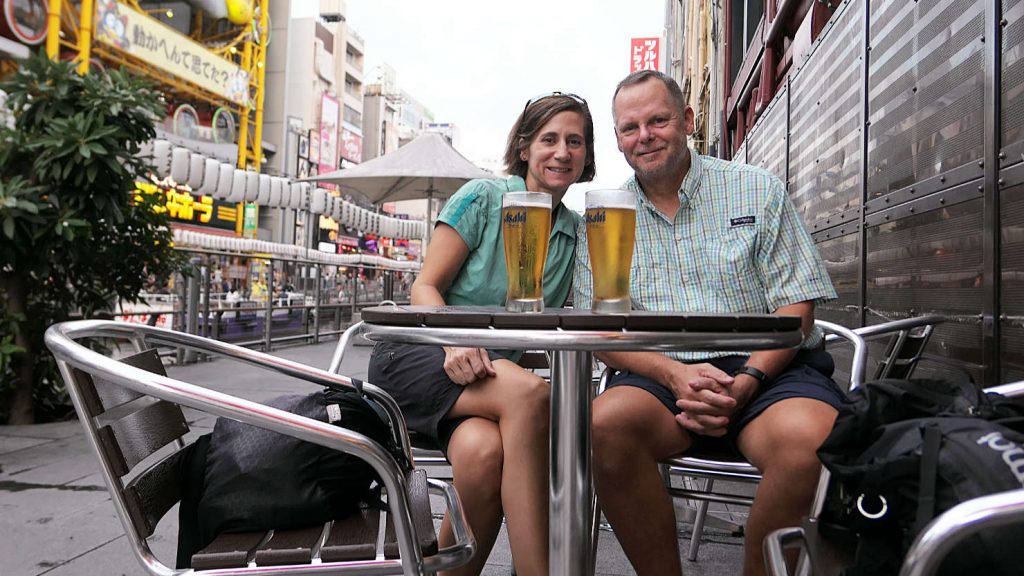
Rick and Alisa waiting to meet up with our “Hidden Namba” Sake Tour guide. It was hot and muggy out, so an ice cold beer along the Dotonbori canal before our evening tour was a perfect way to start a very fun night out.

Rick and Alisa getting ready to start their evening Sake Tour with their guide, Richard. Our evening tour itinerary consisted of 3 stops at hidden away bars in the small alleyways of the Namba district for local Sake tasting and a couple of local appetizers

Our first stop of the evening was at the Japanese Cowboy Bar. Not quite like the cowboys we’re used to seeing 😉 You need to watch the video below to see the Japanese Cowboy’s full ensemble or lack there of 🙂

Our first cups of local sakes served to us by the Japanese Cowboy. The cup sizes were much bigger than the typical ones we’re used to having. The sake was served cold, was very smooth and especially delicious when paired with our local appetizer, Okonomiyaki.
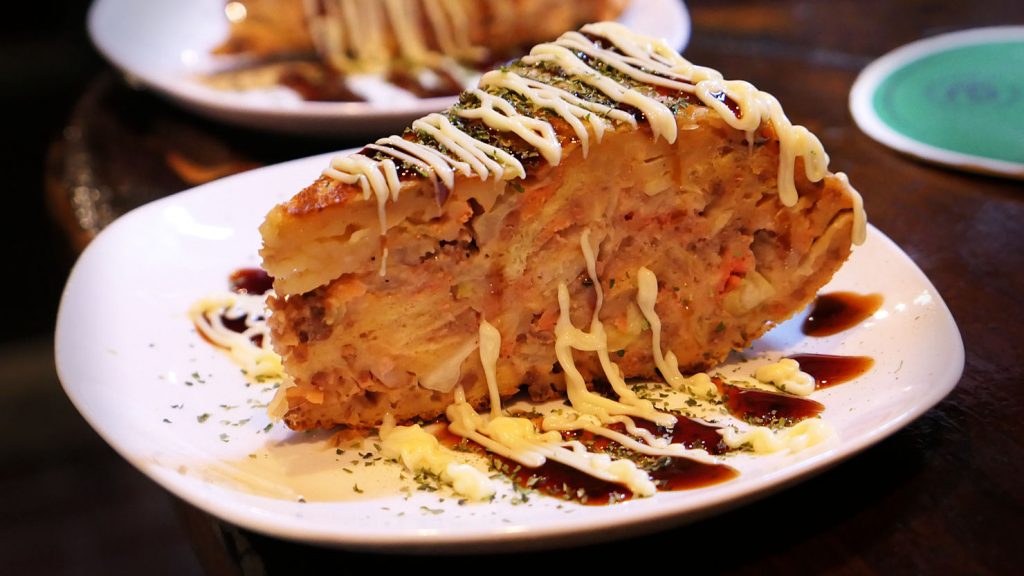
Okonomiyaki, our first appetizer of the evening, made by the Japanese Cowboy. Okonomiyaki is a Japanese savory pancake containing a variety of ingredients which can include flour, eggs, tempura scraps (tenkasu), cabbage, pork slices and topped with a variety of condiments like okonomiyaki sauce (teriyaki-like flavor), Japanese mayonnaise, dried seaweed, and dried bonito flakes. Our slices were like pieces of art with an absolutely fantastic flavor 🙂

Some friendly locals at our 2nd sake stop posing for us.

A full house at our 3rd stop.
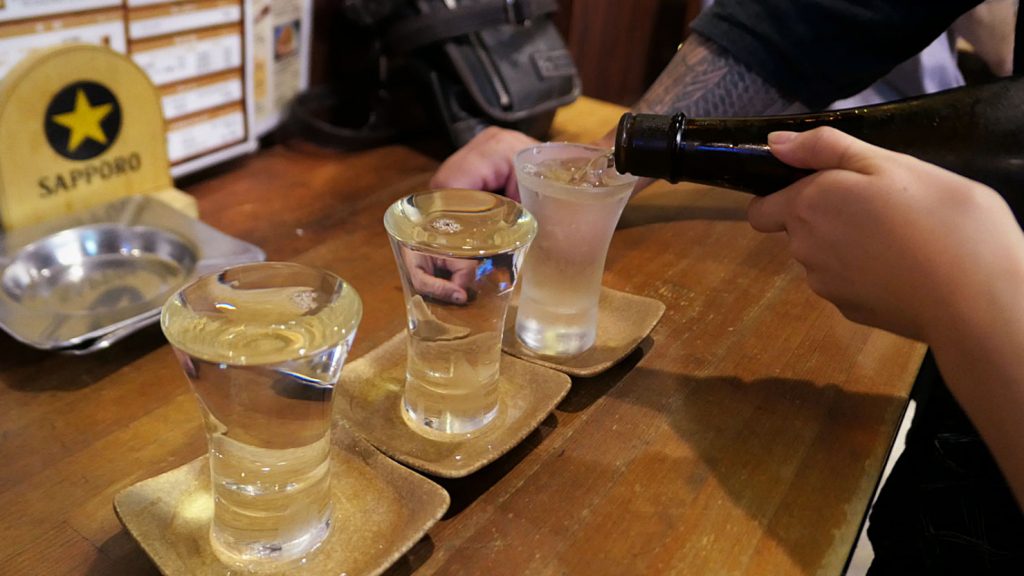
Our sakes were served to us with an “over-pour”. An “over-pour” is when the sake is overflowing into the masu (the square wooden box) which traditionally signals the wealth and generosity of the restaurant. The sake in the masu is also intended for drinking. Richard, our guide, walked us through the proper technique for drinking the over-flow portion and readying the sake glass for drinking – check out the demonstration in our video below.

Our second light bite of the evening, Tompenyaki. It was similar to an omelette filled with meat and other ingredients topped with sauce and bonito flakes. Sooo good !!!
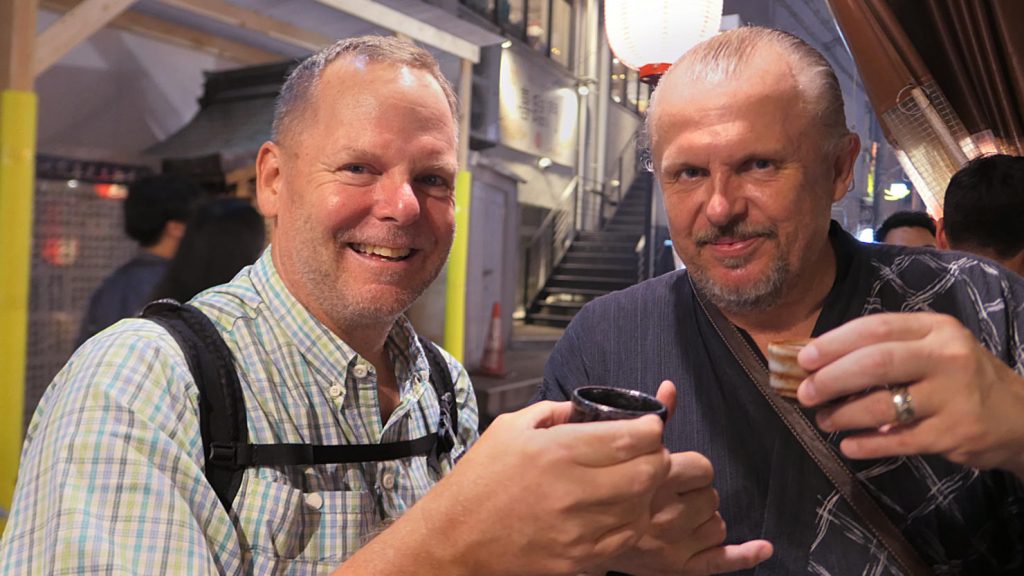
Rick and Richard, our sake tour guide, saying “kanpai” (similar to saying “cheers”) before sipping their sake at a “Bonus” 4th stop of the evening.
Bonus Video – Our “Hidden Namba” Sake Tour (Osaka, Japan)