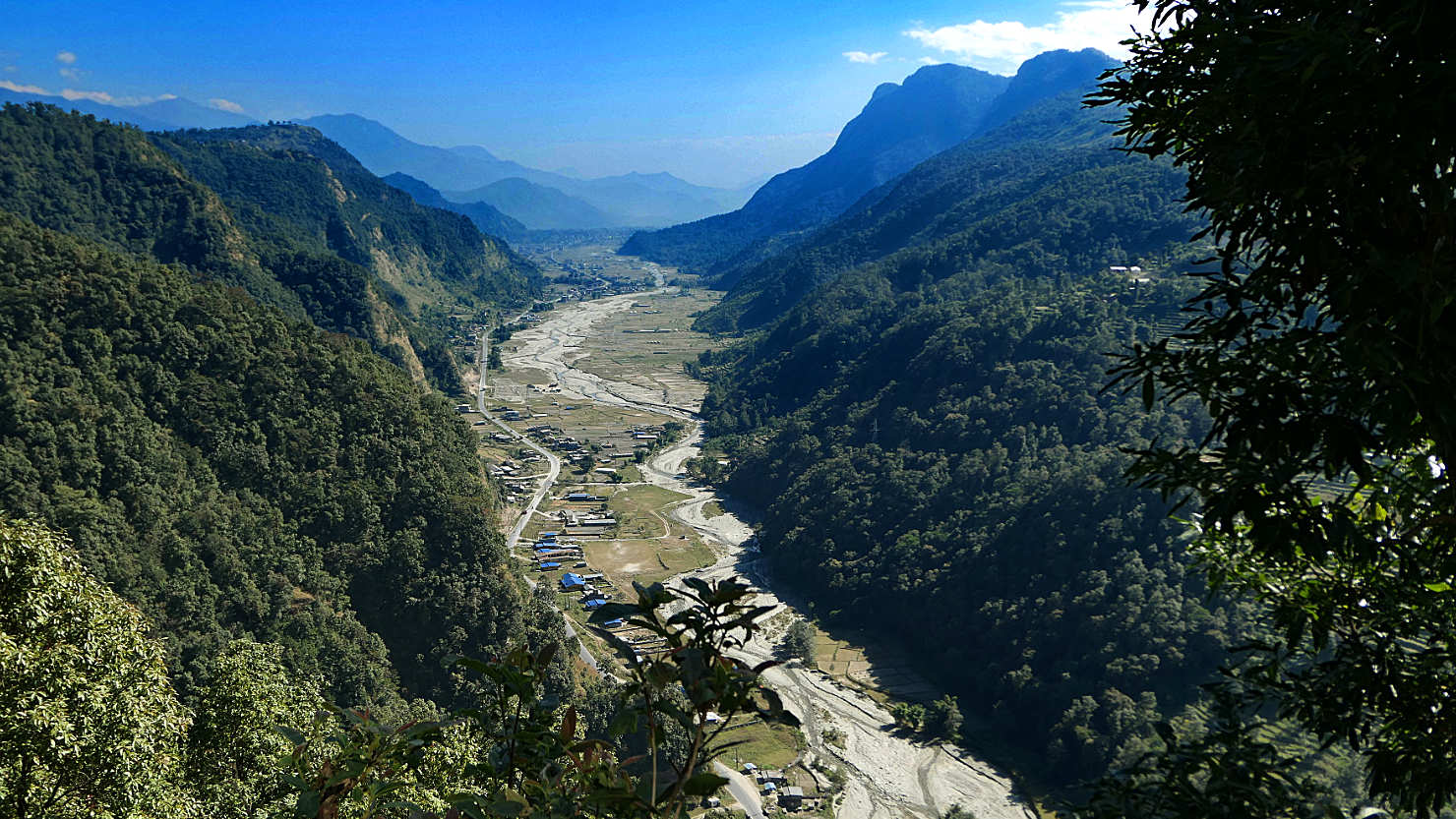
Mardi Himal Trek, Nepal – Nov 2017
In Nepal, there are two popular mountain ranges for trekkers, the Khumbu Region of the Himalayas and the Annapurna Region. During our stay, we wanted to experience both. In October, we did our first trek in the Khumbu Region of the Himalayas to Everest Base Camp and Gokyo Lakes. Our second trek would be somewhere in the Annapurna Range. The Annapurna area offers several different route choices and destinations with widely varying trip lengths, from 3 days to 21 days or longer. After careful consideration, we decided on the 7 day Mardi Himal Trek.
Our first days took us through beautiful mossy jungles and large rhododendron forests containing the biggest rhododendron trees we’ve ever seen, some tree trunks were 2-3 ft. in diameter. Springtime on this trail is said to be quite a sight with thousands of flowering trees, but even without flowers the forests are spectacular to see. On day three and four, we moved above the tree line onto a rugged mountain ridgeline and up to our highest point on the trek, the Mardi Himal Viewpoint at 13,779 ft. At the viewpoint, we had unobstructed views of Mardi Himal (18,218 ft), Machhapuchhre (20,987 ft) and Annapurna South (23,684 ft). Following the viewpoint we quickly descended off the mountain ridgeline and spent our final three days trekking the rest of the way down through forests and across many quaint stone-built villages and beautiful homesteads with terraced rice and vegetable fields.
Our trip was a great way to spend a week hiking through one of the beautiful areas in the Annapurna Range of Nepal.
See video and photos below highlighting our 7 day Mardi Himal Trek in the Annapurna Range of Nepal. To see all images of this location click the link at the bottom of this post or go to our gallery.

Typical sized taxi in Nepal. Our trek started from our guesthouse in Pokhara (the main city hub for the Annapurna region) where we met up with guide and porter. All four of us including four backpacks, one large drybag, and the taxi driver piled into this small cab for an hour ride to Kande (the starting point of our trek). Video# 1 has some funny footage our our taxi ride 🙂

Rick and Raju (our guide) in Kande getting ready to start our trek. Raju was also our guide on our October EBC Trek; we liked him so much we asked for him again when we booked this trip.
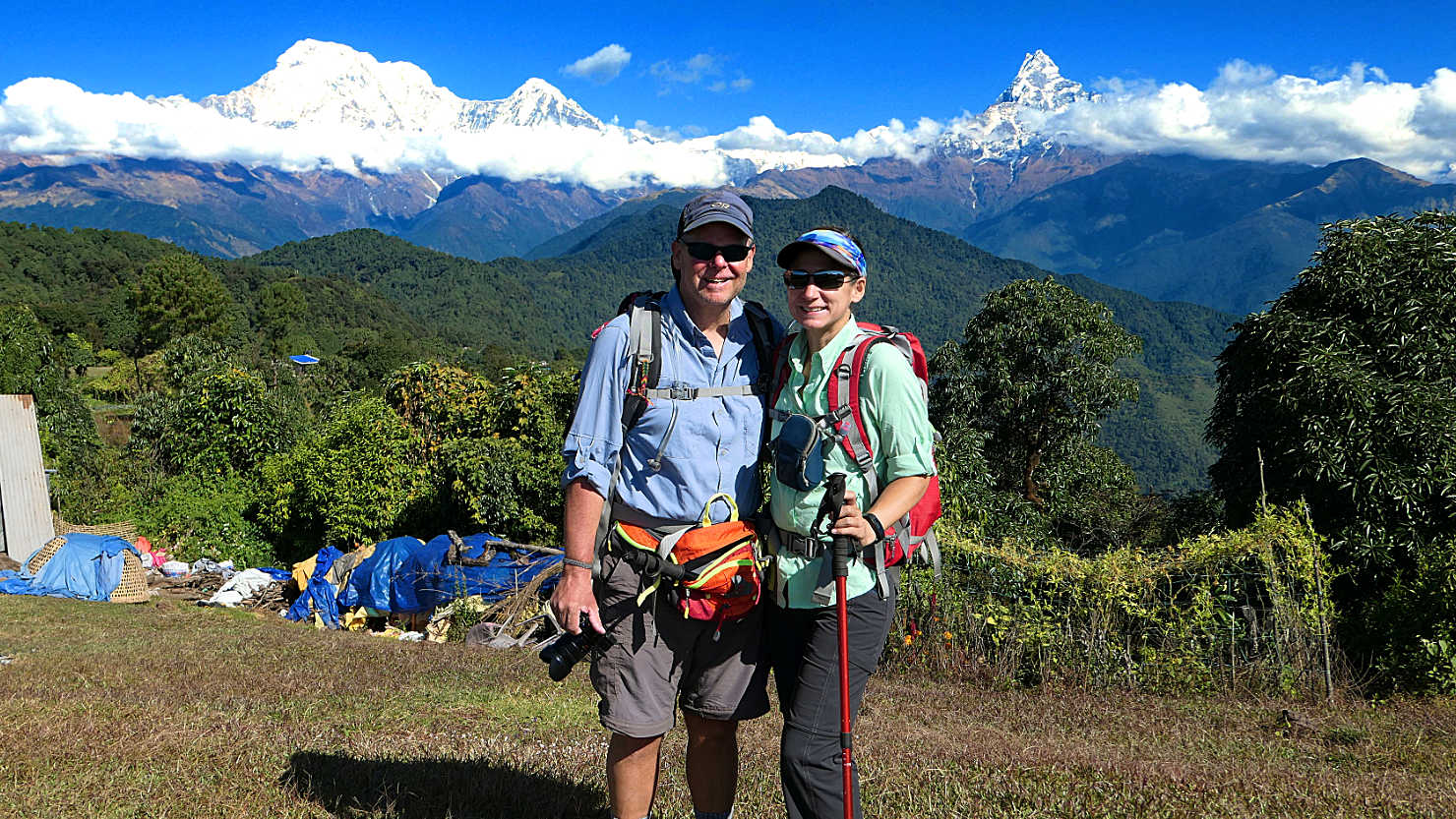
Roughly 1-1/2 hours into the trek, we came across our first glimpses of Annapurna South (left) and Machhapuchhre (right) in the distance. Three days of trekking would take us much closer to these mountains.

View of Annapurna South from our day one lunch spot.
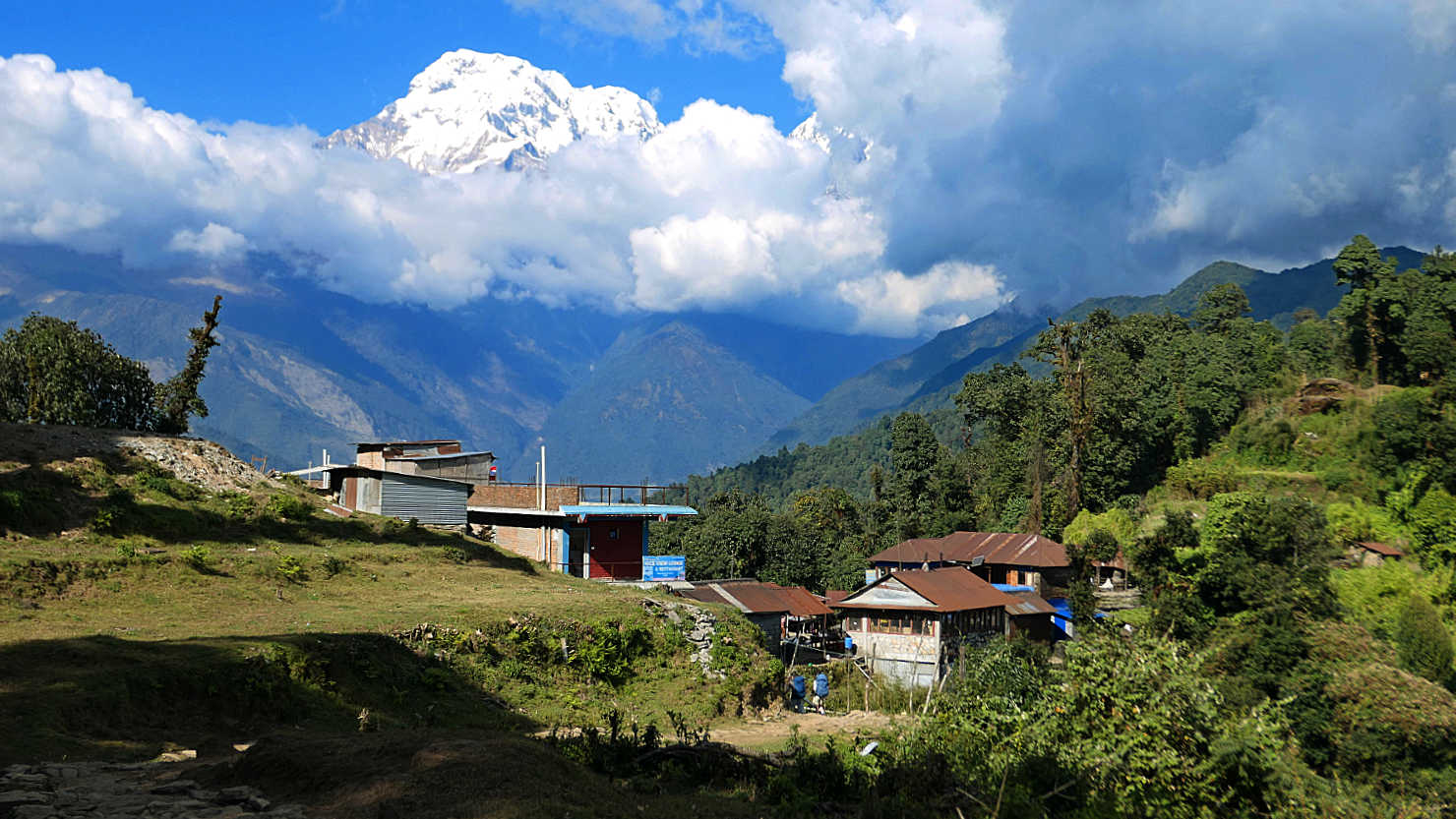
Pitam Deurali Village, our destination for our first night. You can see Annapurna South in the distance.

Sunrise view looking down the valley from Pitam Deurali Village.

Rick and Raju hiking through the mossy jungle on day two.

We hiked most of day two through the mossy jungle to this clearing at Forest Camp, our destination for the day.
Video – Mardi Himal Trek #1, Nepal. Day 1 & 2 (from Pokhara up to Kande, Pitam Deurali, and Forest Camp)
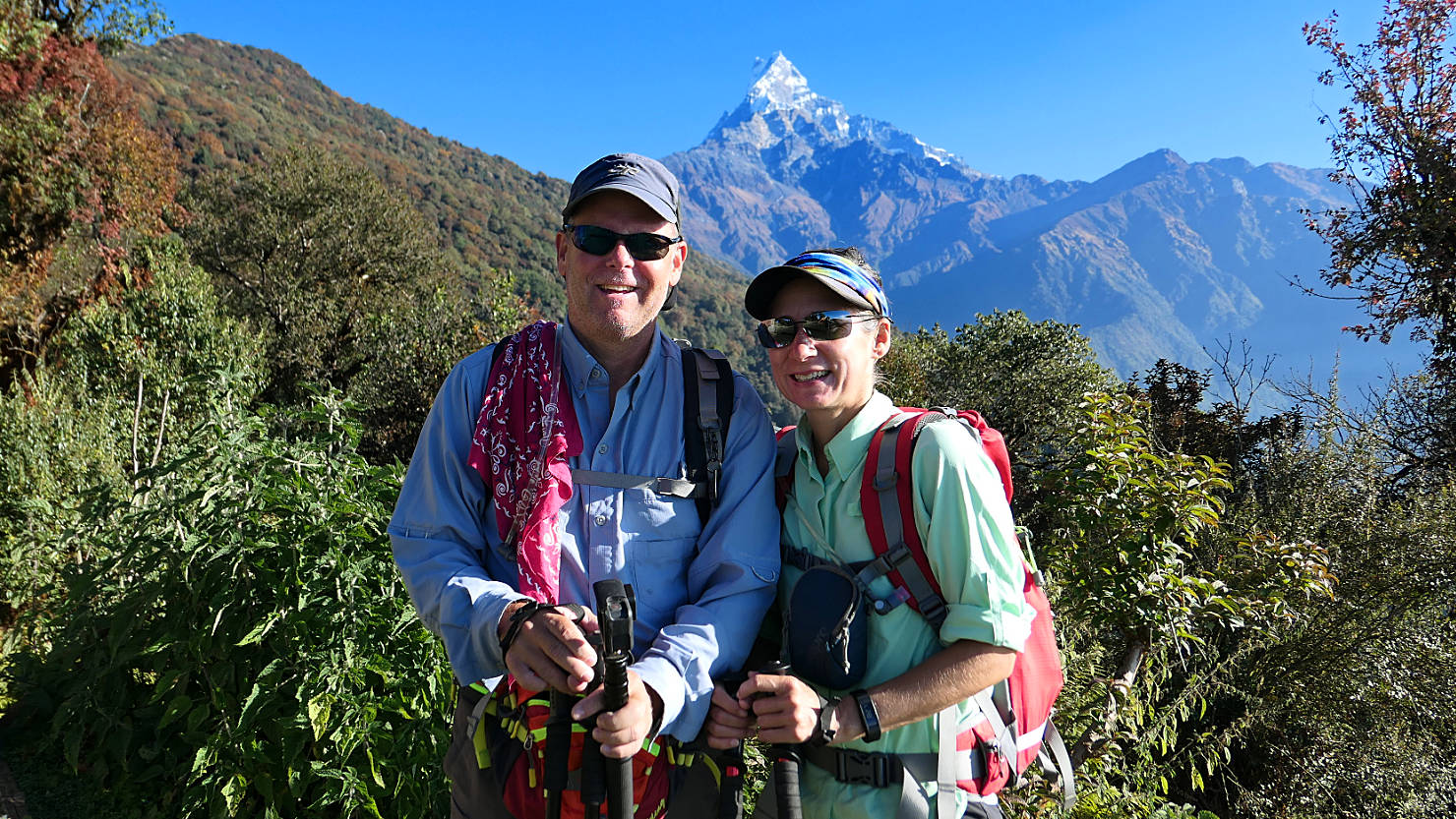
Day three took us above the forest and onto the mountain ridgeline. Machhapuchhre in the distance is getting closer.
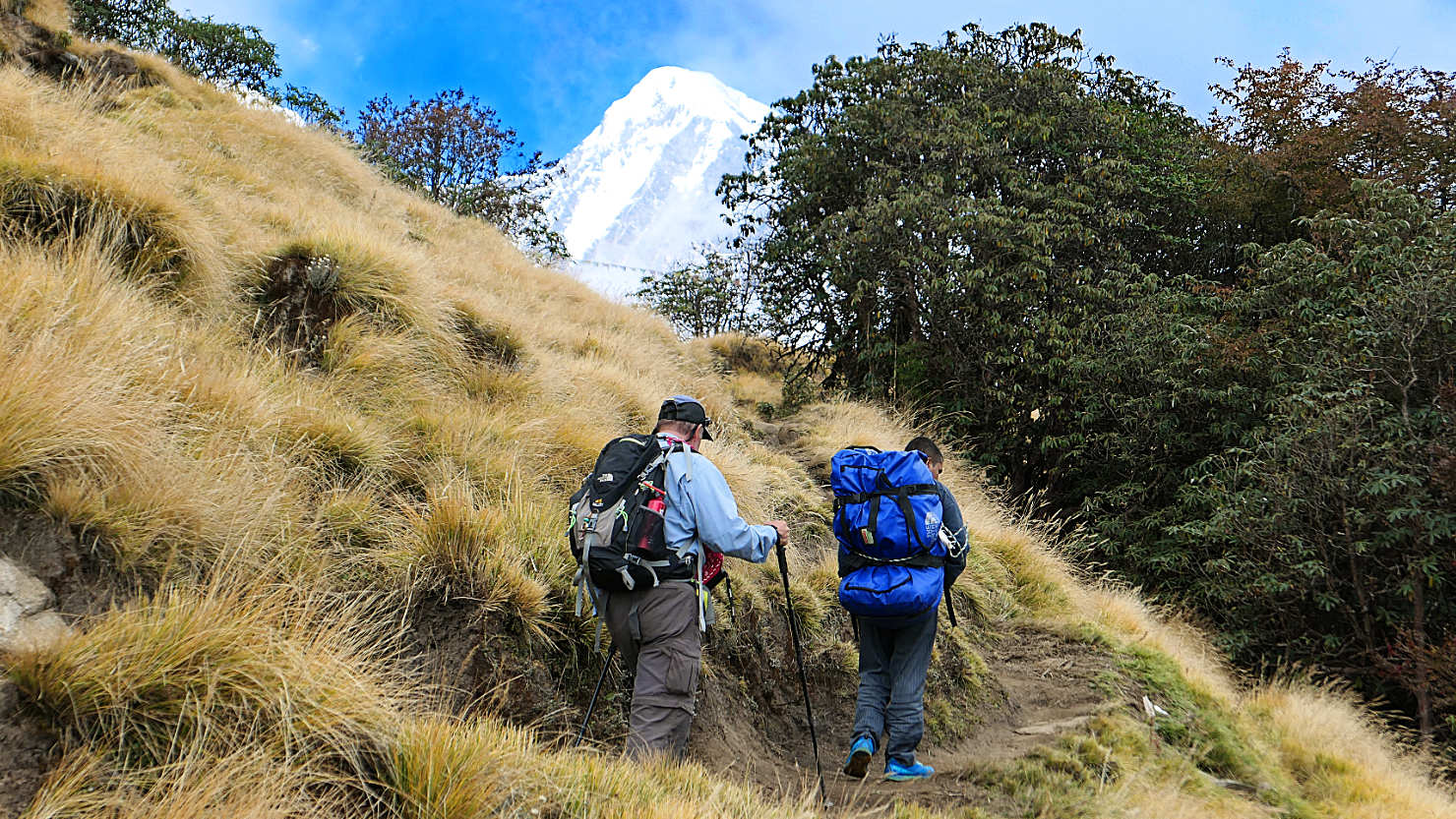
Rick and Tipi (our porter) on the trail headed to high camp.
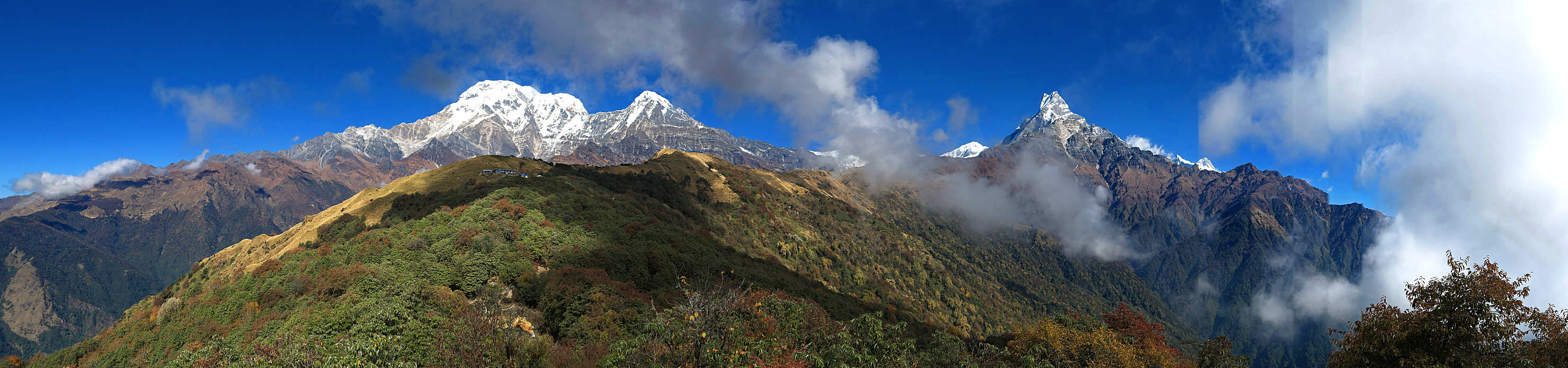
Panorama of the mountain ridgeline looking toward our destination. Annapurna South on the left and Machhapuchhre on the right.

Rick and Raju heading into the clouds on the way up to high camp. Afternoon clouds at higher elevations were typical and occurred most days.
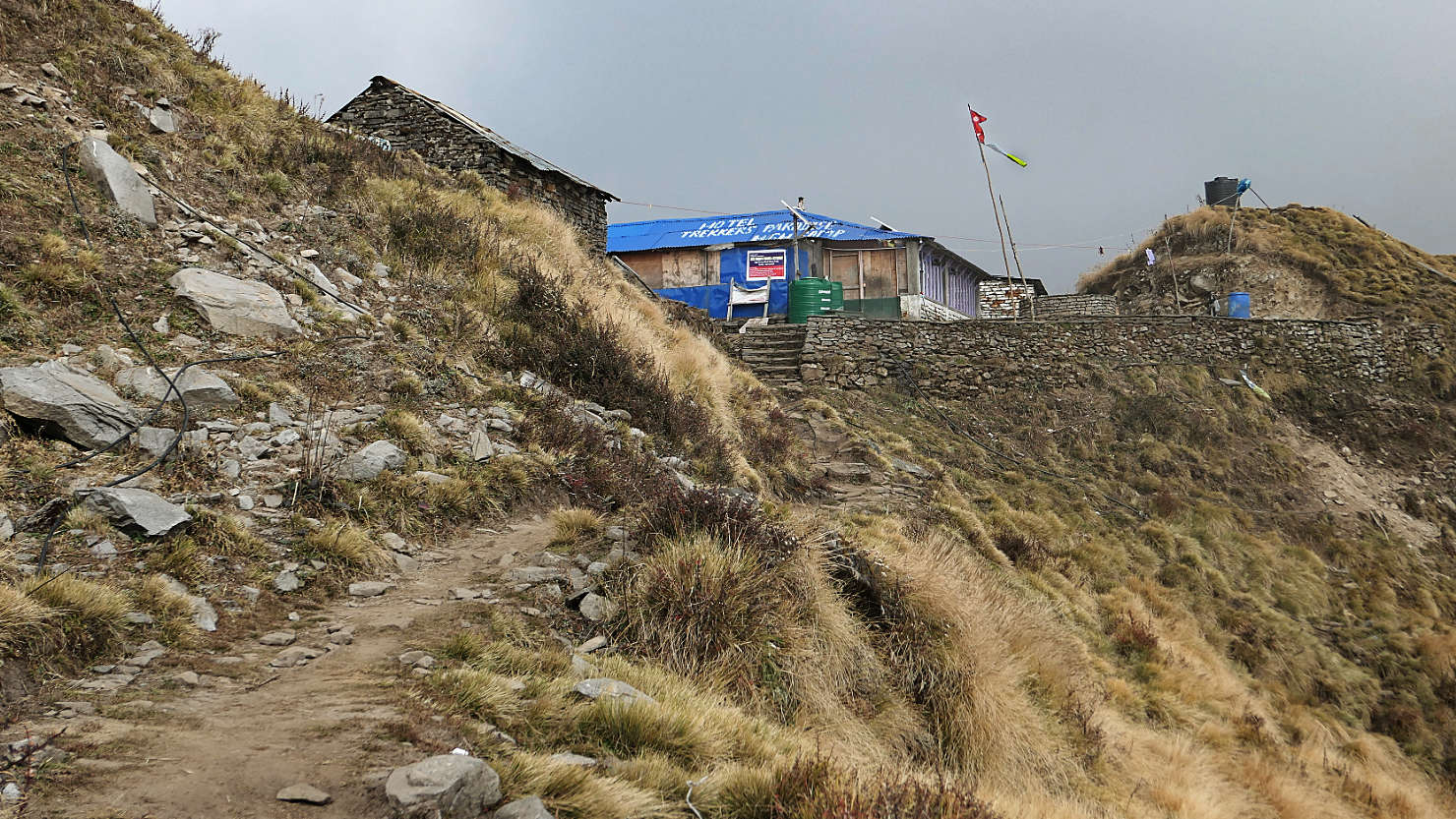
Arriving into high camp (11,811 ft), our destination for our third night. The camp was completely in the clouds when we arrived with no visibility of the nearby mountains or the valley below.
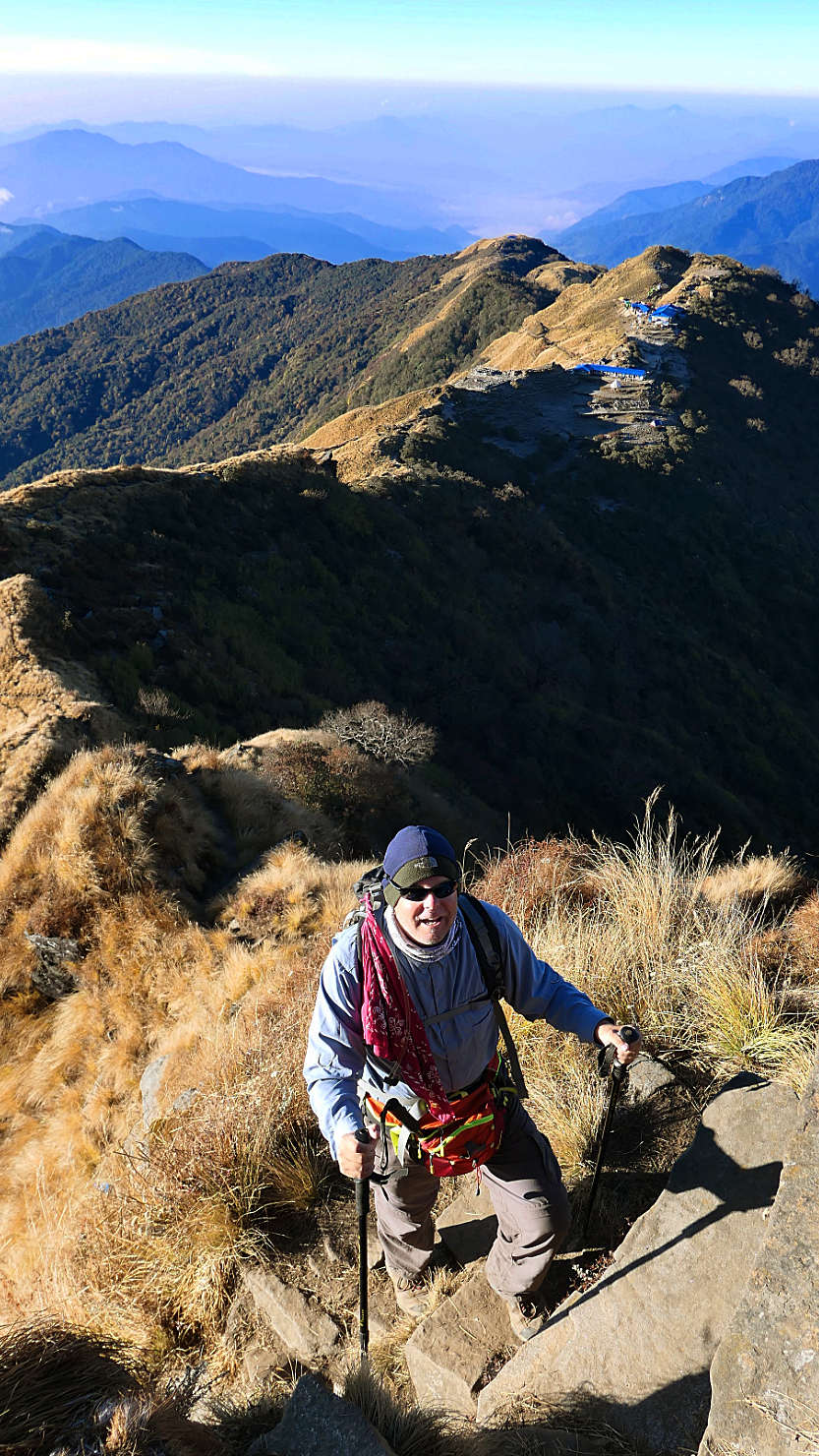
We woke to perfect weather on day four for our morning climb to the Mardi Himal Viewpoint (13,779 ft). Rick starting to make his way up the steep trail. You can see high camp on the ridge below in the distance.
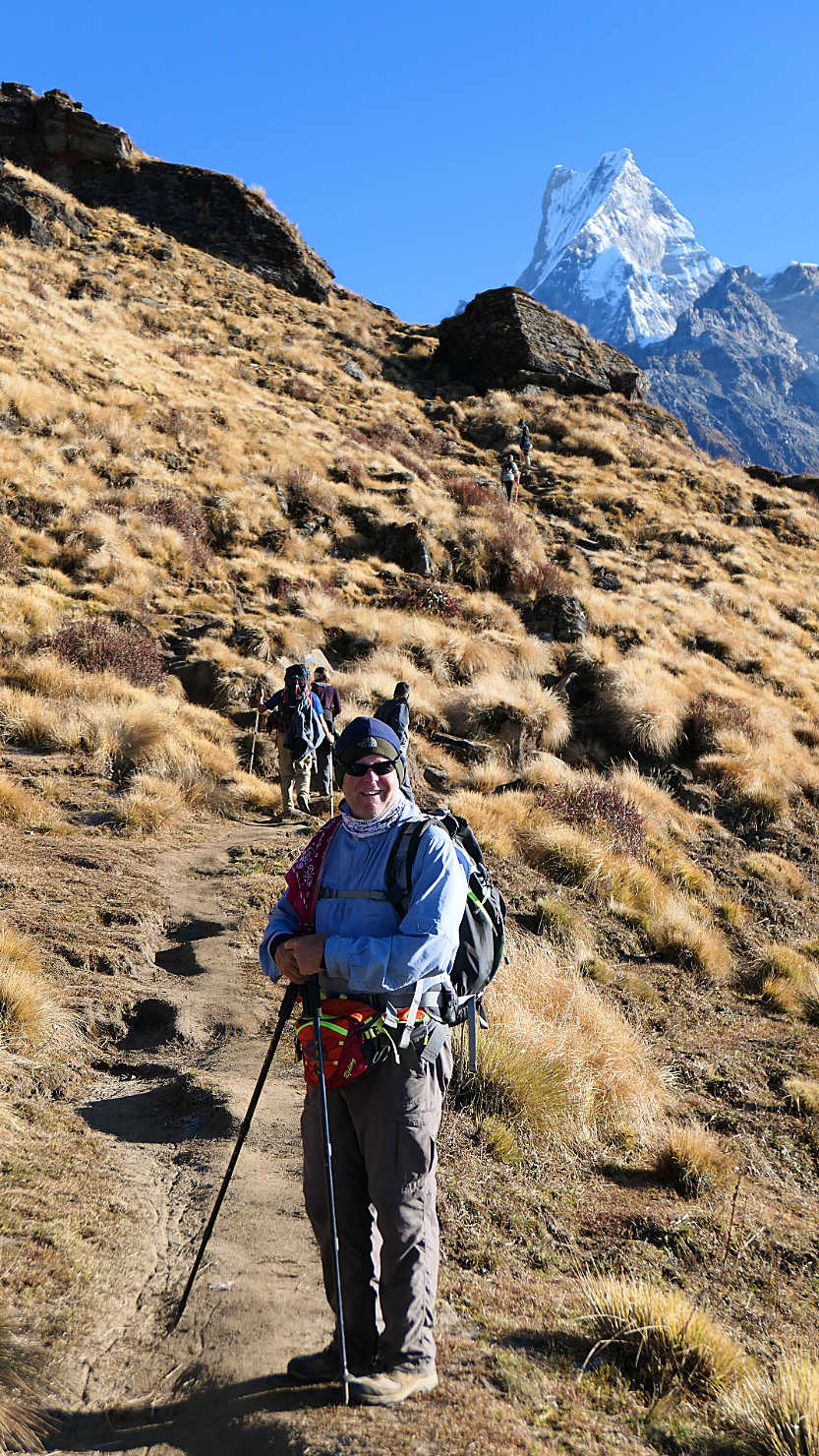
Rick steadily making his way up the trail to the viewpoint, a 2,000 ft elevation gain from our starting point at high camp. Machhapuchhre is directly behind him in the distance.

Rick and Alisa at the Mardi Himal Viewpoint (13,779 ft) with Annapurna South in the background.
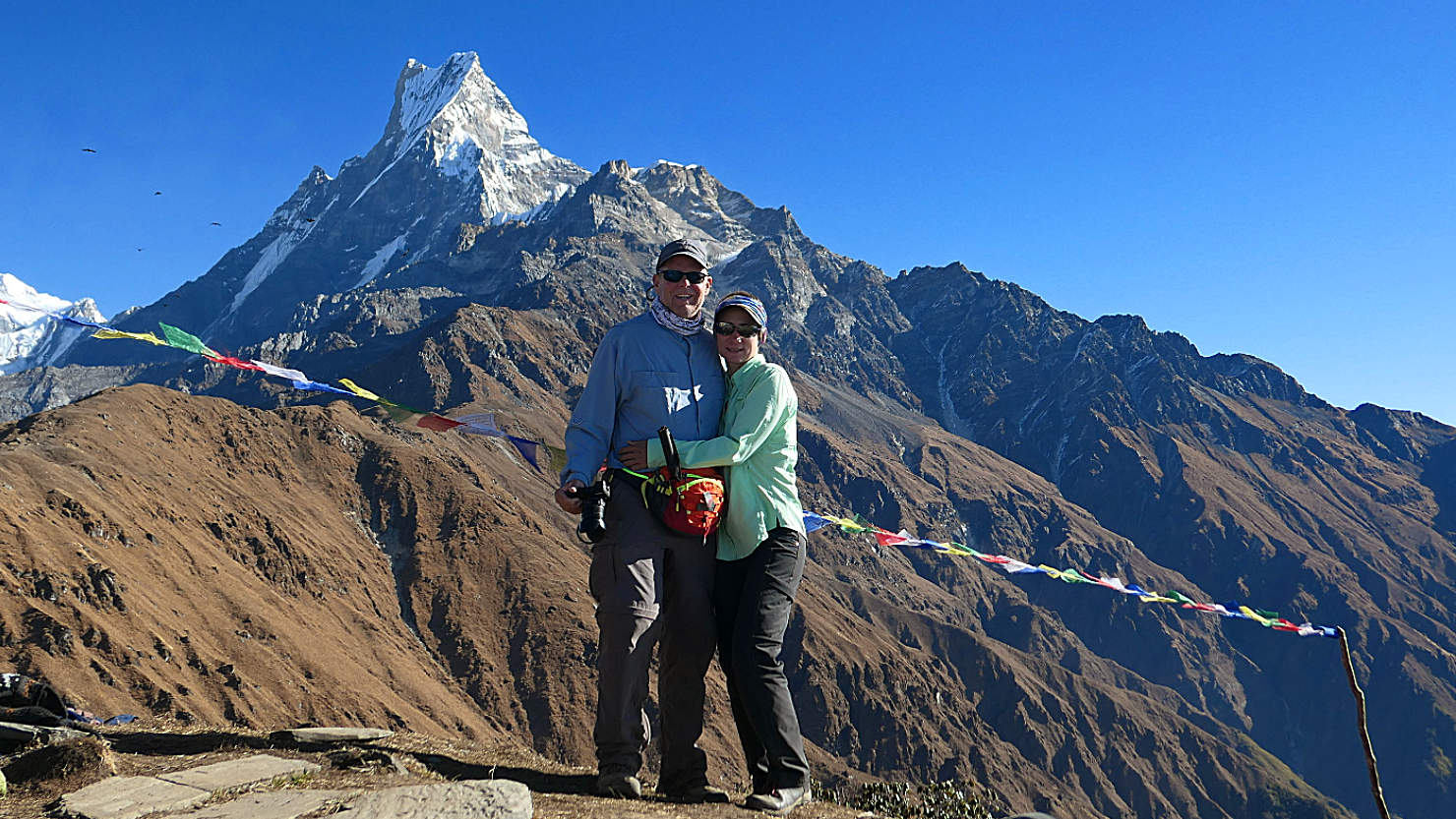
Rick and Alisa at the viewpoint with Machhapuchhre behind us.
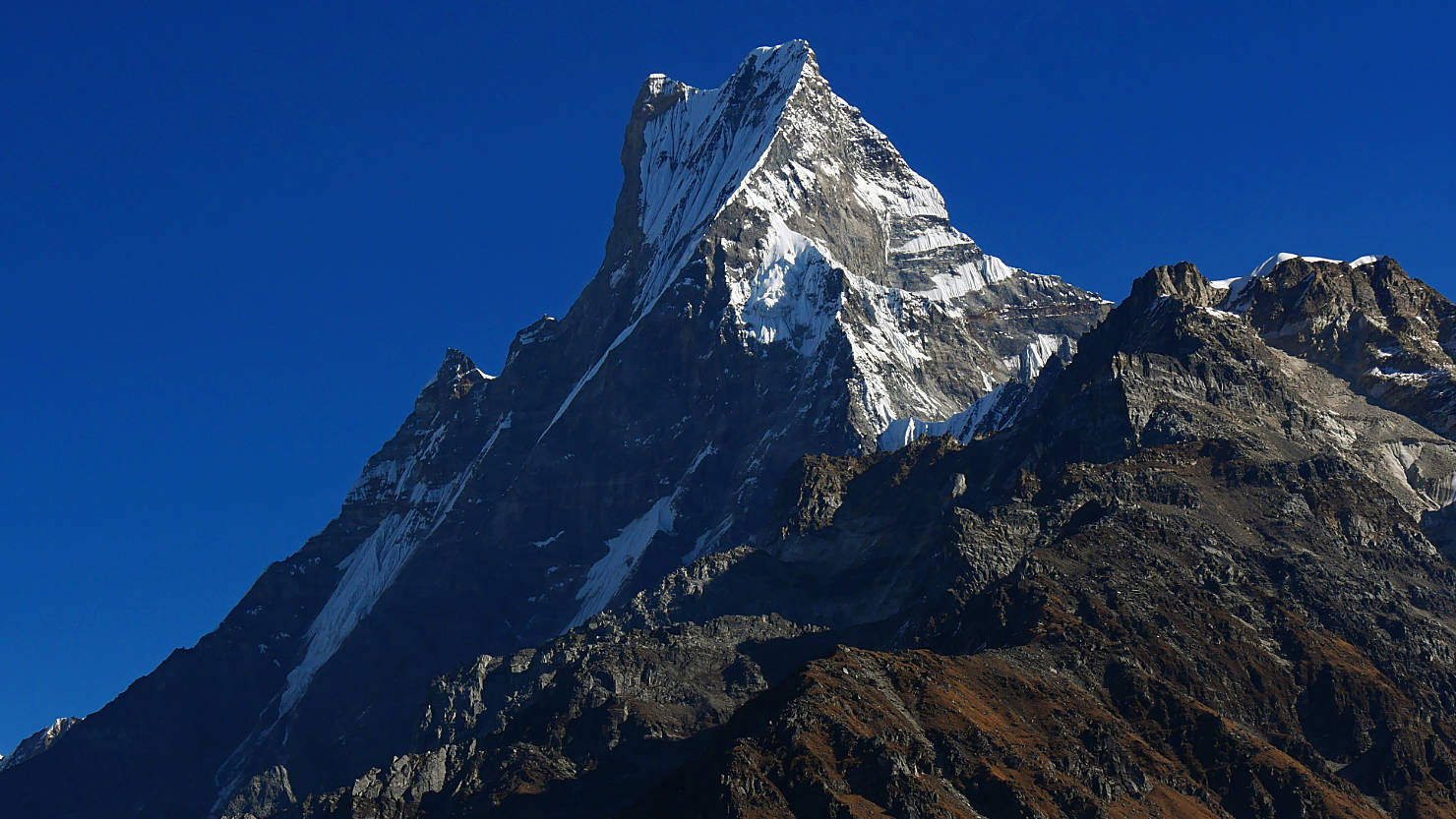
Closer view of Machhapuchhre (20,987 ft). The mountain is considered sacred and off limits to climbing (no human has ever set foot on the summit). The mountain was named for it’s shape which literally translates into “FishTail”. Mardi Himal is the the smaller darker mountain in front at 18,218 ft.

Rick and Raju descending down the trail headed for Low Camp, roughly 4,000 ft below.
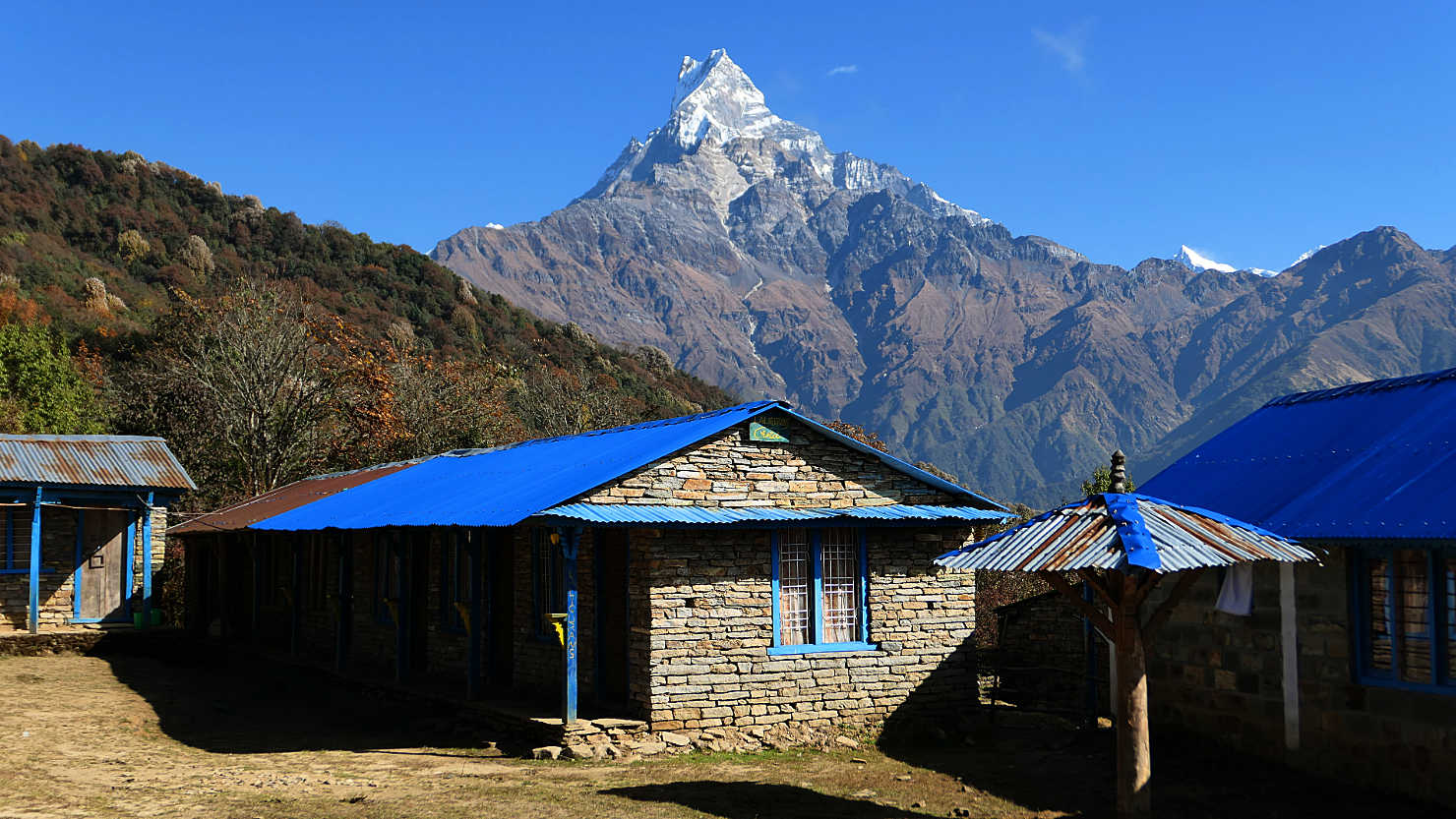
Arriving into Low Camp (10,006 ft), our day four destination. We had another perfect view of Machhapuchhre from here. The ridgeline in the distance (to the left) is where we came from earlier in the day.
Video – Mardi Himal Trek #2, Nepal. Day 3 & 4 (from Forest Camp up to the Mardi Himal Viewpoint then down to Low Camp)
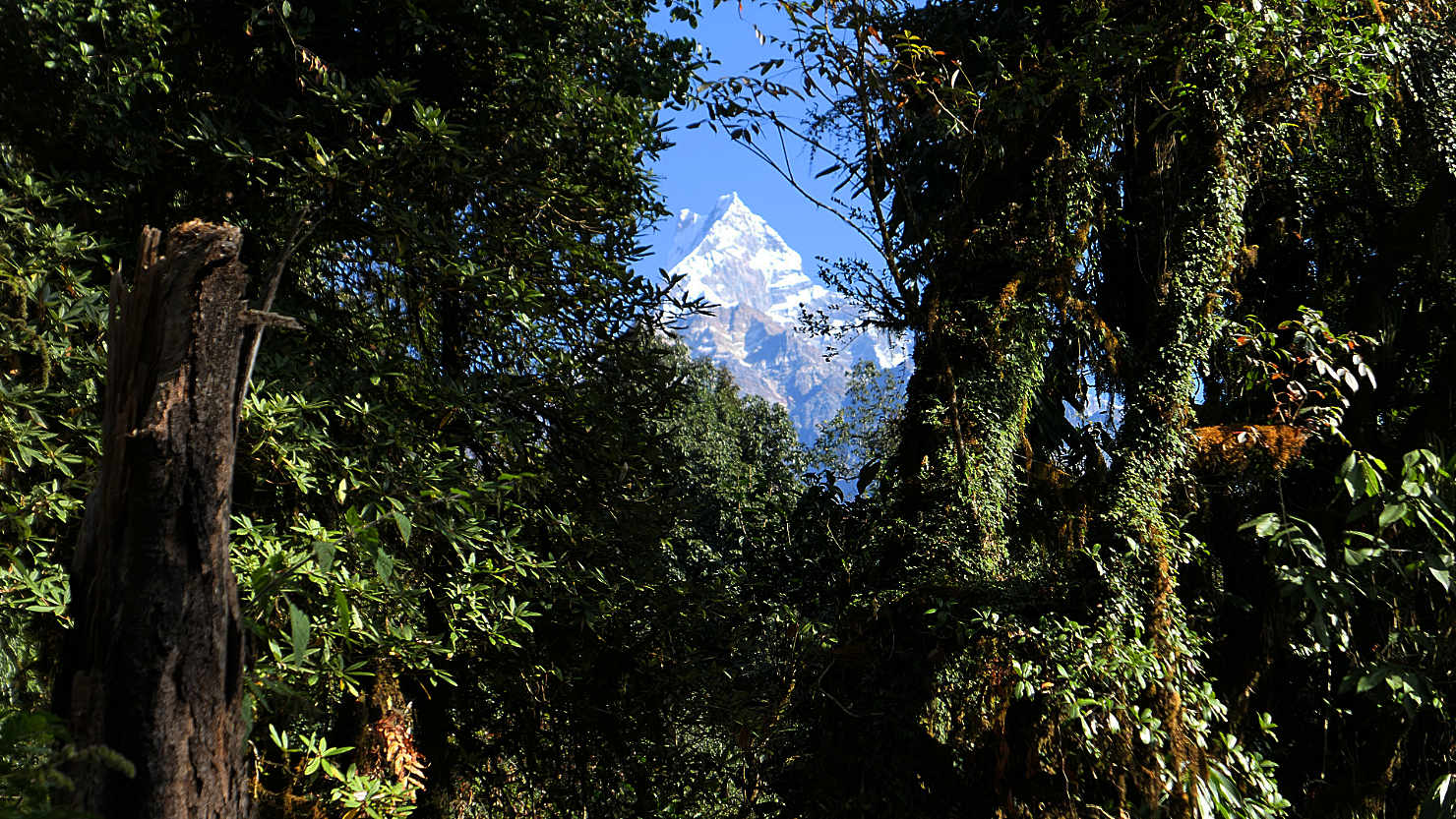
On day five, Machhapuchhre peaks through an opening in the trees along the trail.
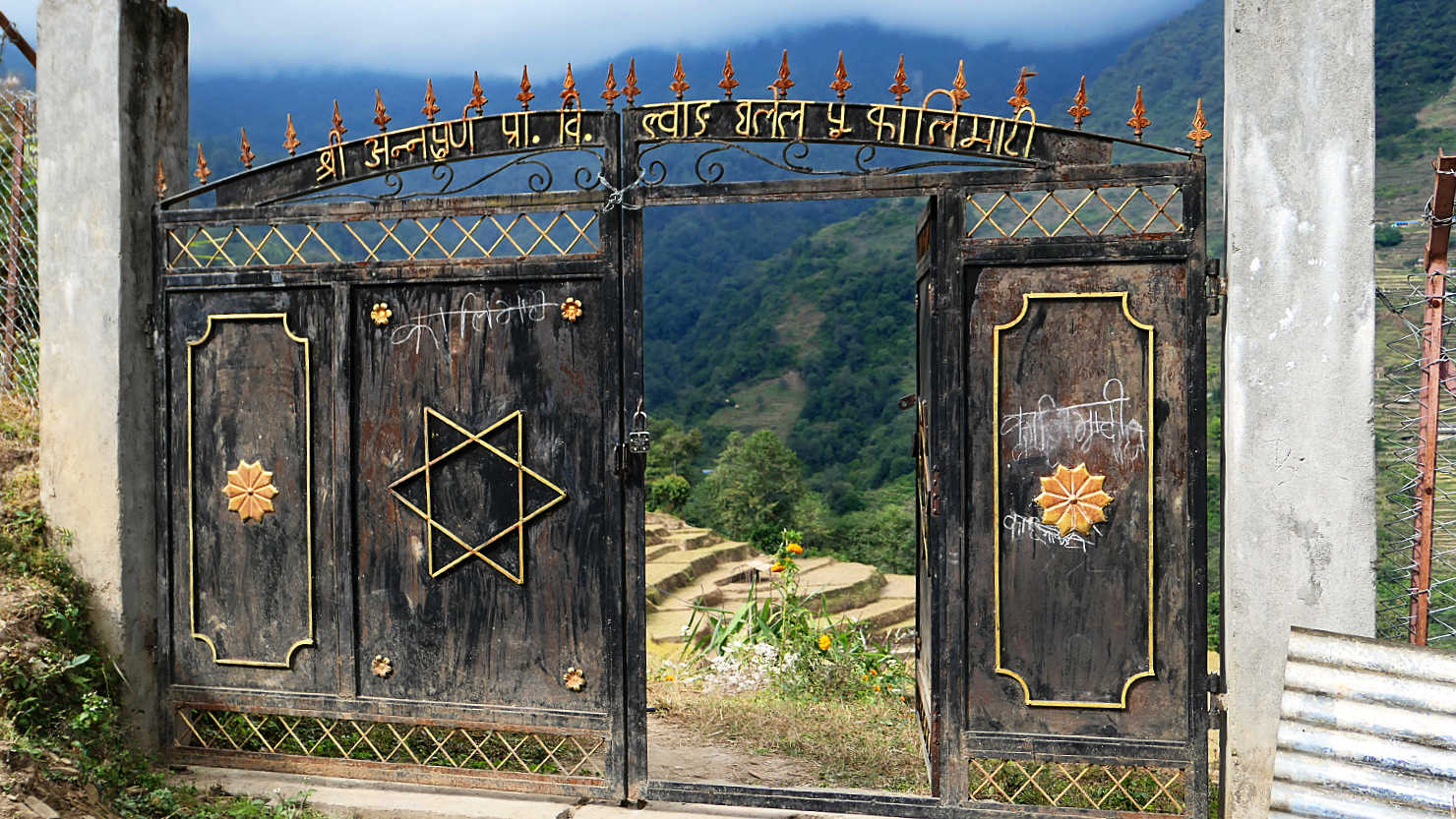
As the trail leads us out of the forest, we begin to see homesteads. This one has an ornate gate leading to it’s terraced fields.
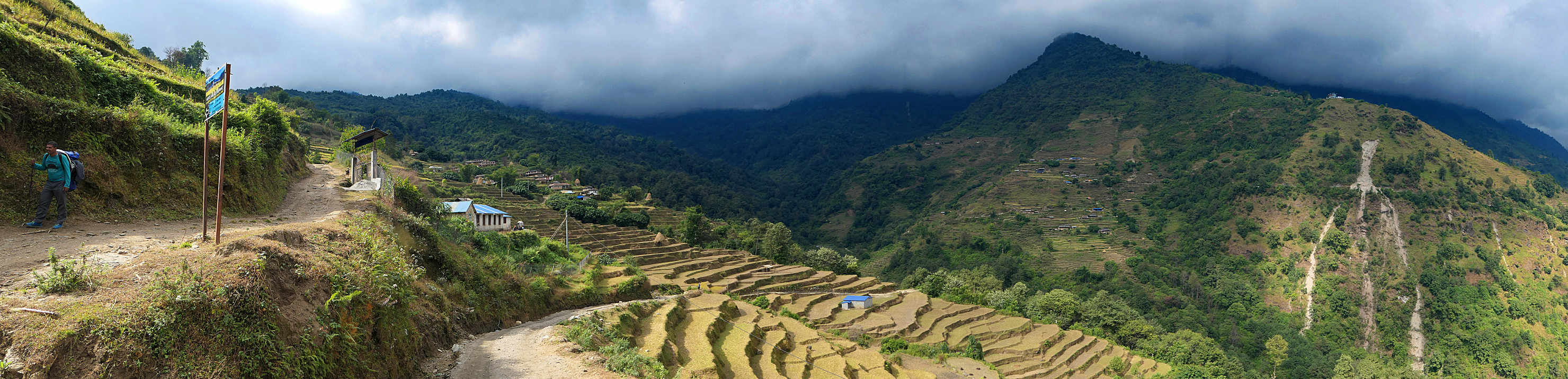
The last few days of our trek were spent hiking hillside trails through terraced rice fields and small villages.

Alisa and Raju (our guide) at sunset on day five in Kalimati Village. Once again Machhapuchhre continues to show it’s beauty with the sun lighting it in the distance.
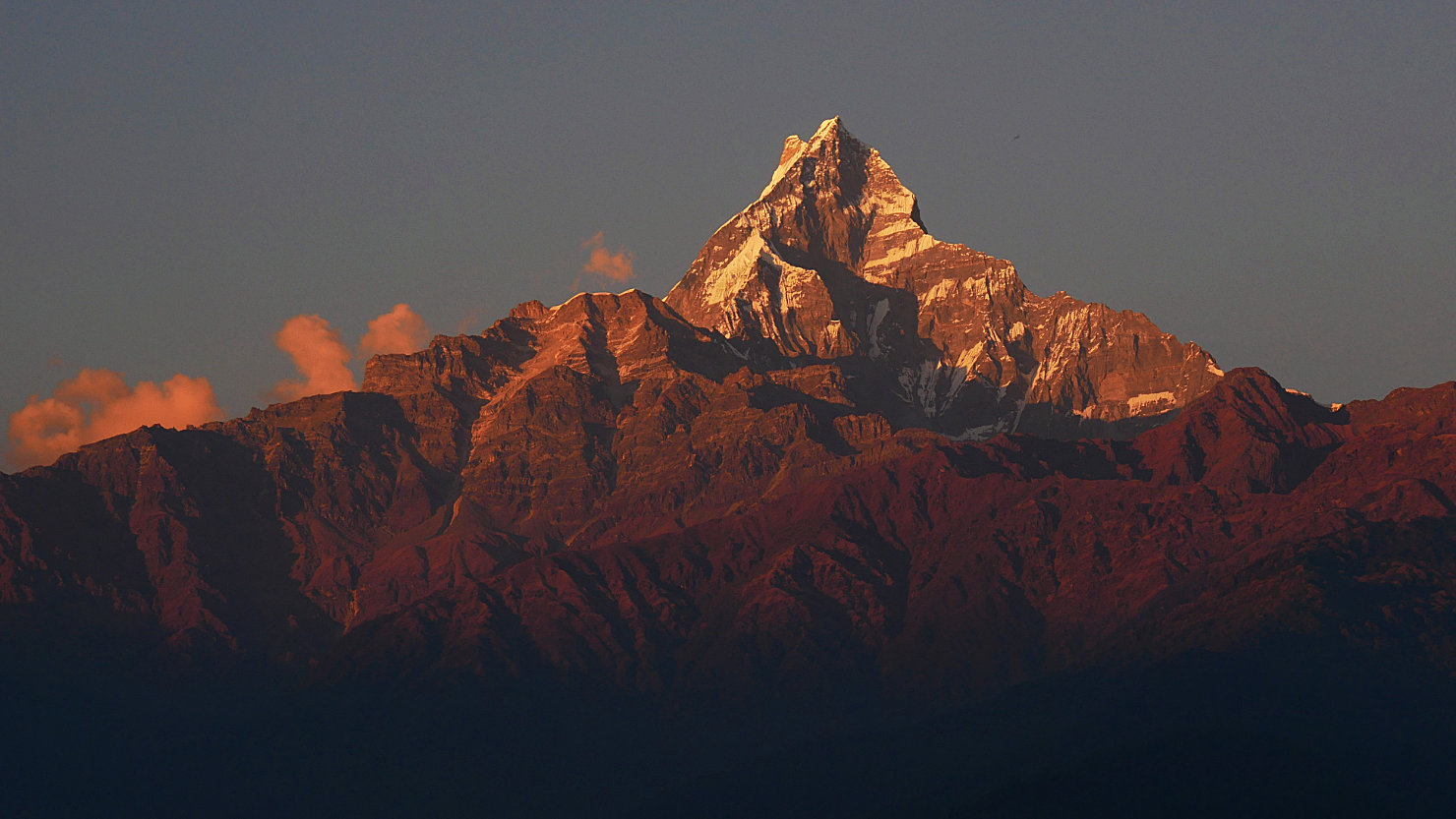
With clear skies, Machhapuchhre’s peak is the last thing lit at night and the first lit up in the morning as seen here at sunrise.

Morning on day six at our Kalimati Village guesthouse. Our guesthouse sat on top of a ridge with beautiful views looking at the mountains or the valley below. They set up a table outside for us to have coffee and breakfast with a view.

Our breakfast table overlooking the valley below. Coffee and muesli with “fresh” buffalo milk and honey. They do not have cow’s milk, the milk is either powdered or fresh from buffalos. They also make curd (yogurt) from fresh buffalo milk. The milk and curd are both very good.
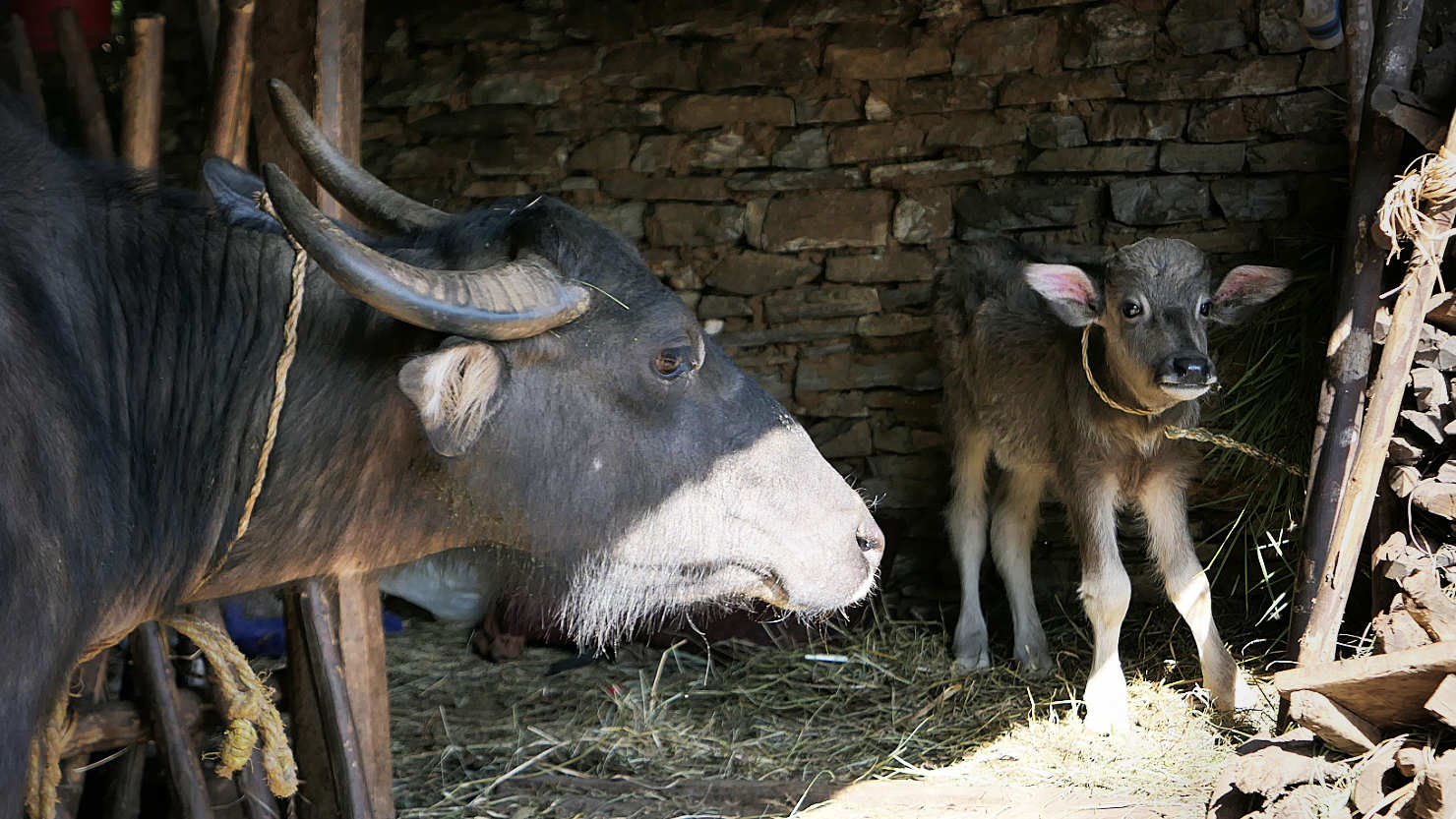
Speaking of fresh buffalo milk, here’s a mom and her 18 day old baby in one of the many buffalo barns we saw along this section of the trail.

18 day old baby buffalo. We came across several young ones along the way. This guy was the youngest and was super cute.
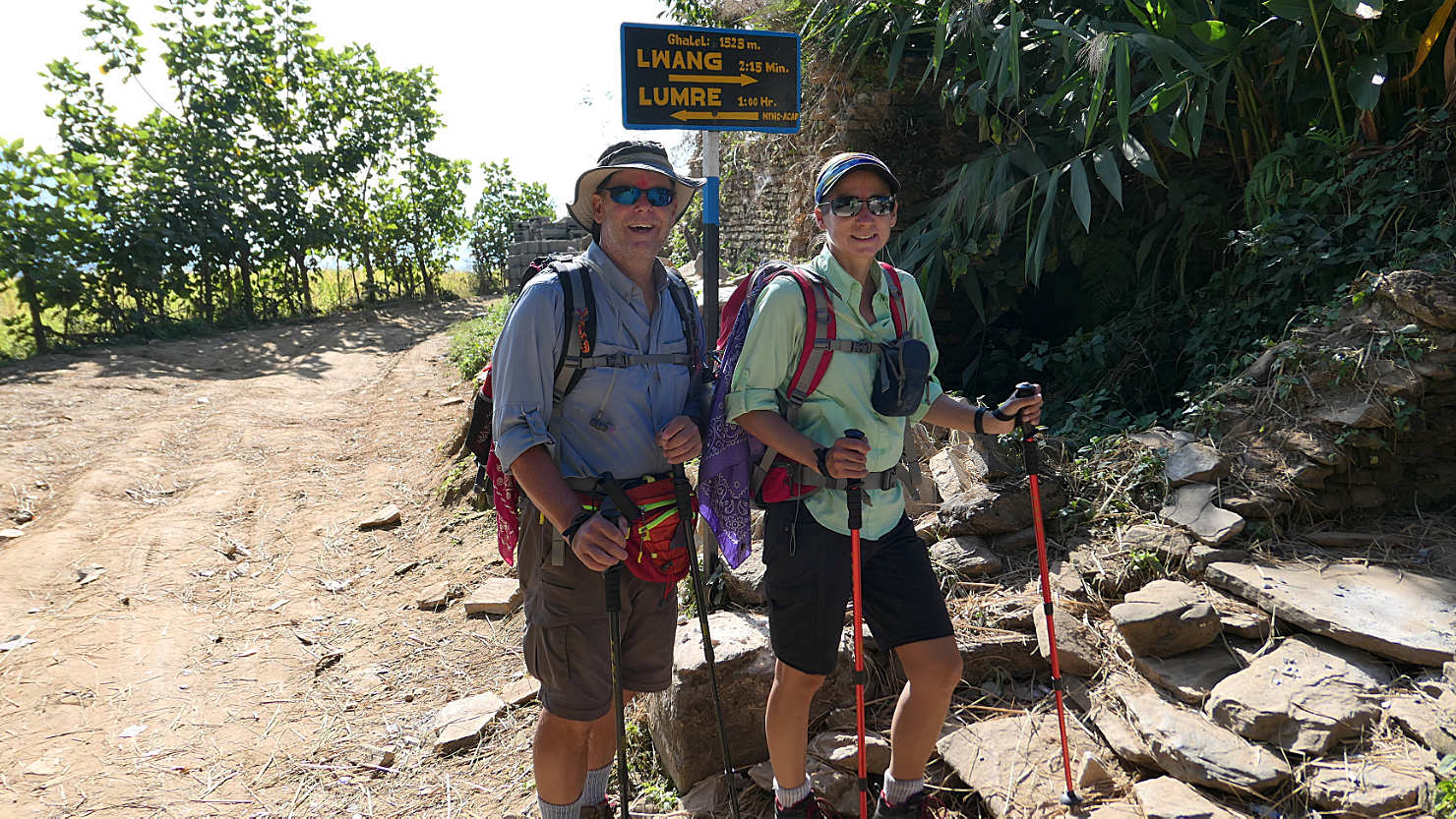
Making the turn off toward Lwang Village towards our last night’s homestay on the trip.

Passing through one of the villages. These stone buildings housed a bunch of roosters (in the window on the left) and chickens.
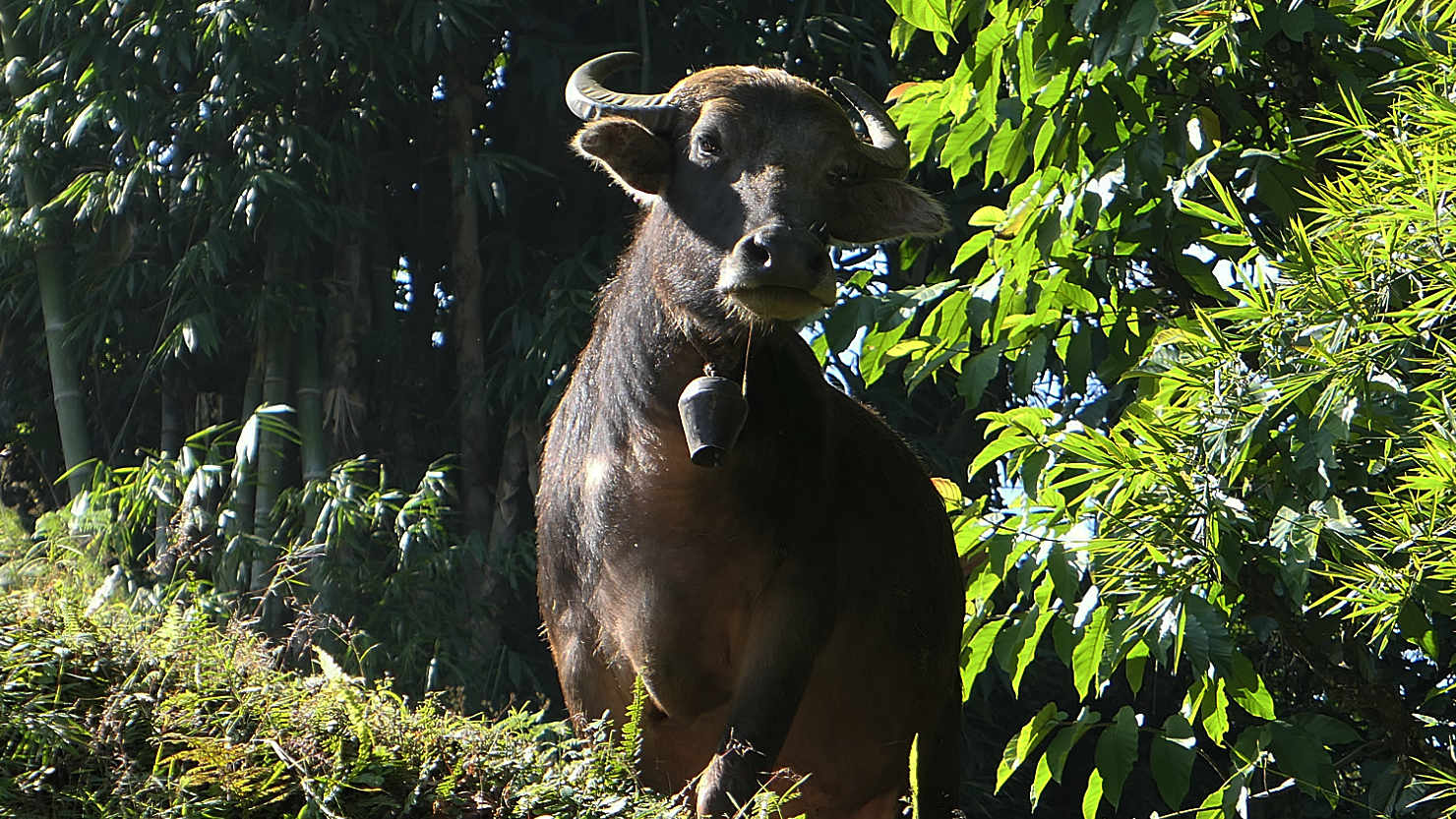
Buffalo were grazing at nearly every homestead. This one was hanging out in an upper rice terrace and took a quick break from eating to look down on us as we passed.
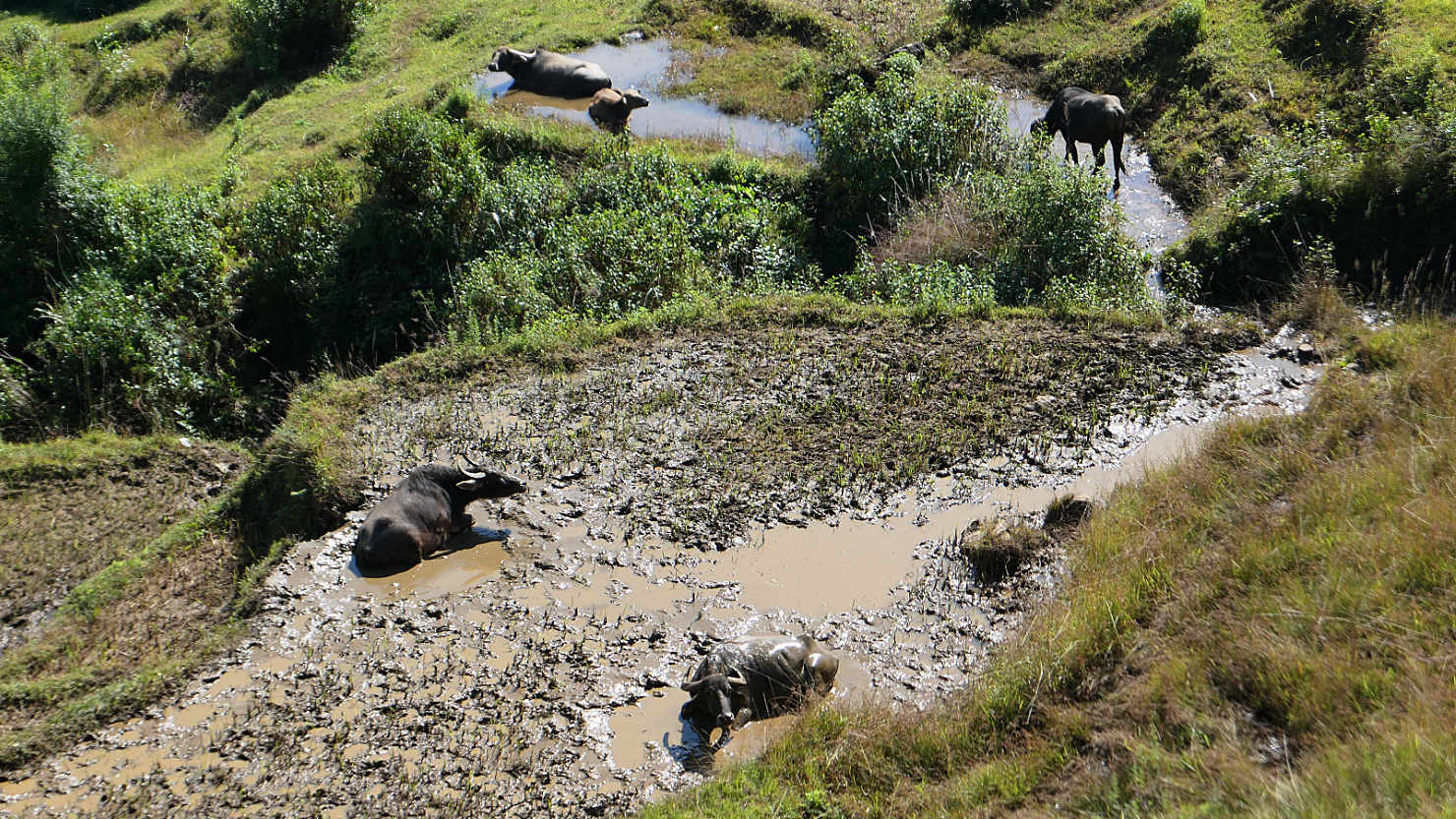
If the buffalos weren’t grazing, they were rolling around in mud puddles.
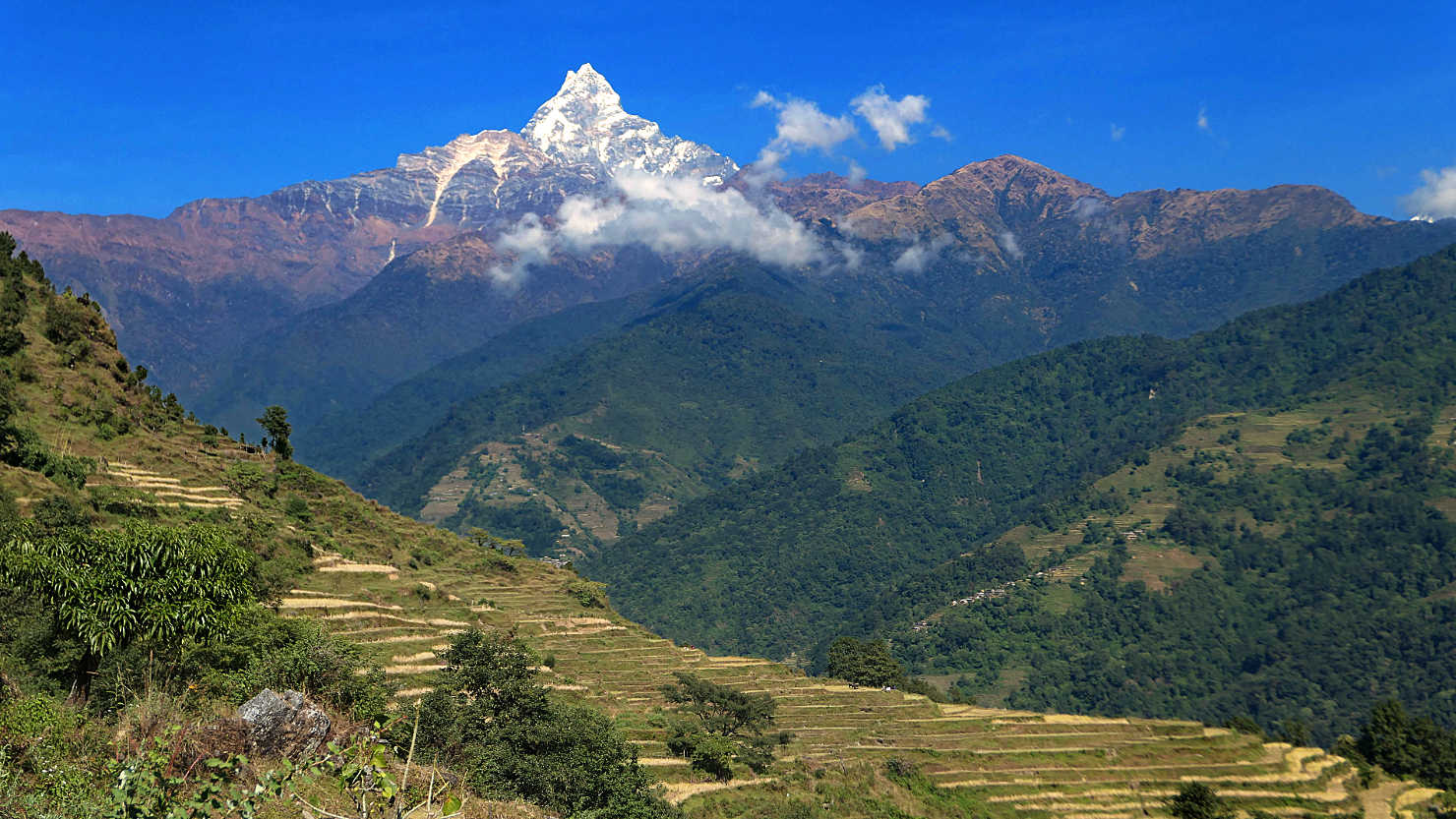
The last couple of days hiking through the terraced fields was beautiful and completely different from the previous days of our trek. The one constant each day was views of Machhapuchhre. As the trail navigates through and around the various forests and mountains, Machhapuchhre never disappeared for long. It’s as if the mountain has a watchful eye over everyone and everything below. It’s easy to understand why the Nepalese have deemed it sacred.
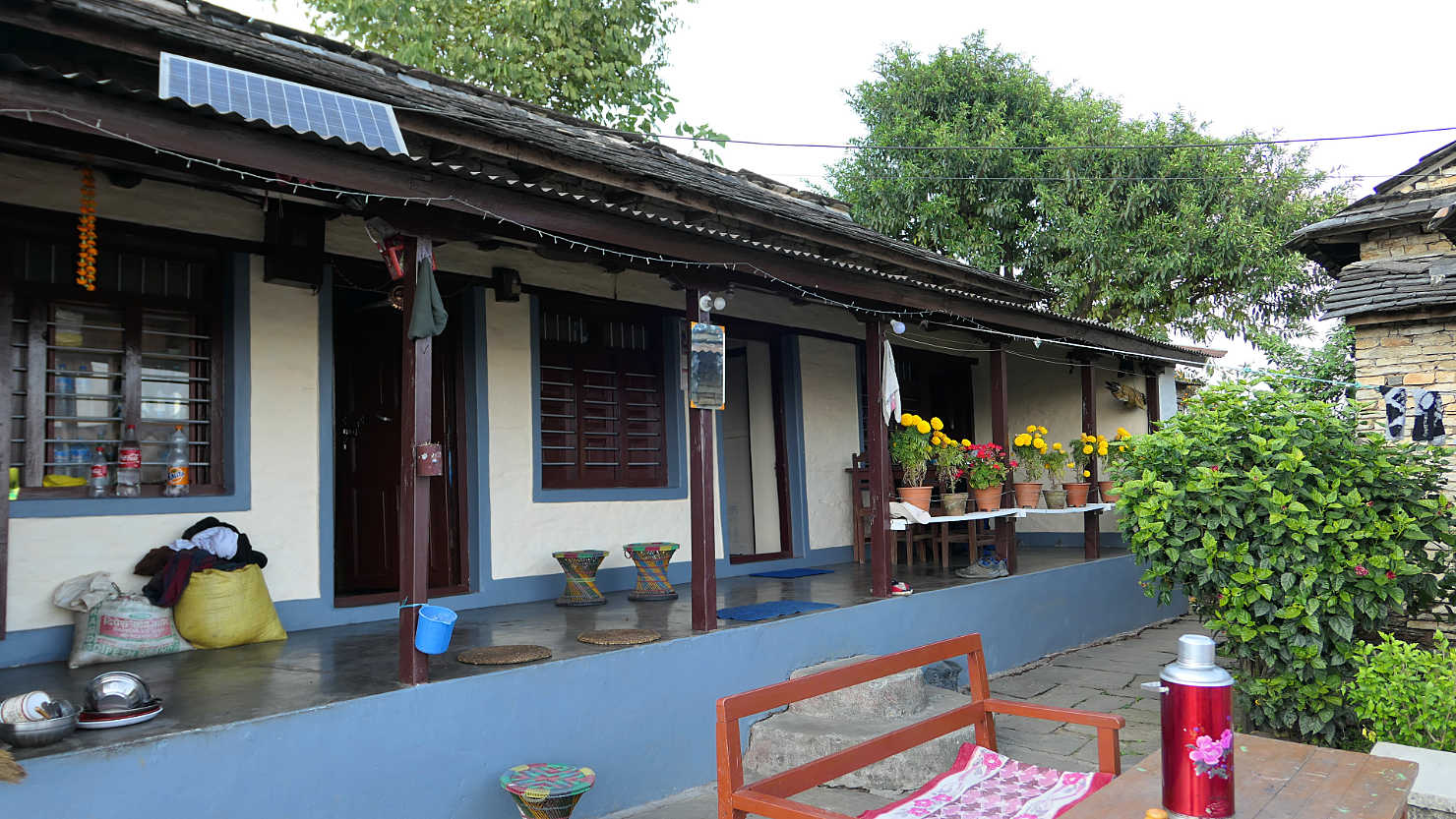
Our Lwang Village homestay and where we stayed on the last night of our trek.

A snack at our homestay. They called it popcorn, but it’s different from the western version. It’s made by first drying the corn while on the cob and in it’s husk for several days. The kernels are then removed and fried. It was very crunchy and delicious.

A group photo with our two hosts from our Lwang homestay minutes before we departed for our final day of hiking. Our hosts made each of us marigold leis and dotted our foreheads with vermillion in an offering to wish us good luck and safe travels.